Accidentally Put Too Much Water In Formula (What To Do)
If you’ve ever stood in the kitchen at 2 a.m. trying to make a bottle while running on almost no sleep, you already know how easy it is to mess up formula measurements.
One extra ounce of water, one distracted moment, and suddenly you’re staring at the bottle wondering if you just made a huge mistake.
The good news is that this happens to a lot of parents.
Seriously, a lot more than people admit.
Most of the time, a single accidental diluted bottle is not going to turn into a major emergency. Still, it’s important to know why formula ratios matter and what you should do next.
In this post, I’ll show you what to do if you accidentally put too much water in formula.
What Happens If You Put Too Much Water In Formula?
When too much water is added to baby formula, the mixture becomes diluted.
That means your baby is no longer getting the proper amount of nutrients, calories, and minerals intended in each bottle.
Formula is carefully designed to provide a very specific nutritional balance, so even small changes in the water-to-powder ratio can affect its strength.
A diluted bottle may fill your baby’s stomach, but it won’t provide the same level of nourishment as correctly prepared formula. Over time, this can lead to poor weight gain or nutritional deficiencies because the baby is taking in fewer calories and nutrients during feedings.

Also Read: Accidentally Put 2 Scoops Of Formula In 2 Oz
That said, a one-time mistake usually does not cause major problems, especially if only a small amount of extra water was added.
Is It Dangerous For Babies?
If you accidentally added a little extra water one time, there’s a very good chance your baby will be perfectly fine.
Many parents realize the mistake after the bottle is already gone, and nothing serious happens.
The bigger concern comes from heavily diluted formula or repeated dilution over time. In more serious situations, babies can develop something called water intoxication.
That happens when excess water lowers sodium levels too much.
Babies under 6 months are more sensitive to this because their bodies are still developing rapidly. Their kidneys simply aren’t equipped to handle large amounts of extra water.
These few factors can increase concern:
Very young infants
Formula that was heavily diluted
Multiple diluted bottles in a short time
A baby acting unusual afterward
Still, one accidental mistake does not automatically mean danger. Most pediatricians would tell you to monitor your baby and return to properly mixed formula right away.
What To Do If You Put Too Much Water In Formula
What you should do depends on the situation.
If you notice the mistake before feeding the bottle, the easiest and safest option is simply to throw it away and remake it correctly.
It’s frustrating, especially because formula is expensive, but accuracy matters more.
If your baby already drank some or all of it, just go back to correctly prepared formula for the next feeding.
A lot of parents immediately wonder if they should “balance it out” with a stronger bottle later. Don’t do that. Formula shouldn’t swing from too diluted to too concentrated. Both can be hard on a baby’s system.
It’s also important not to beat yourself up over it. Parenting involves constant measuring, prepping, cleaning, and multitasking while exhausted. Mistakes happen.
This is one of those things many parents experience at least once.
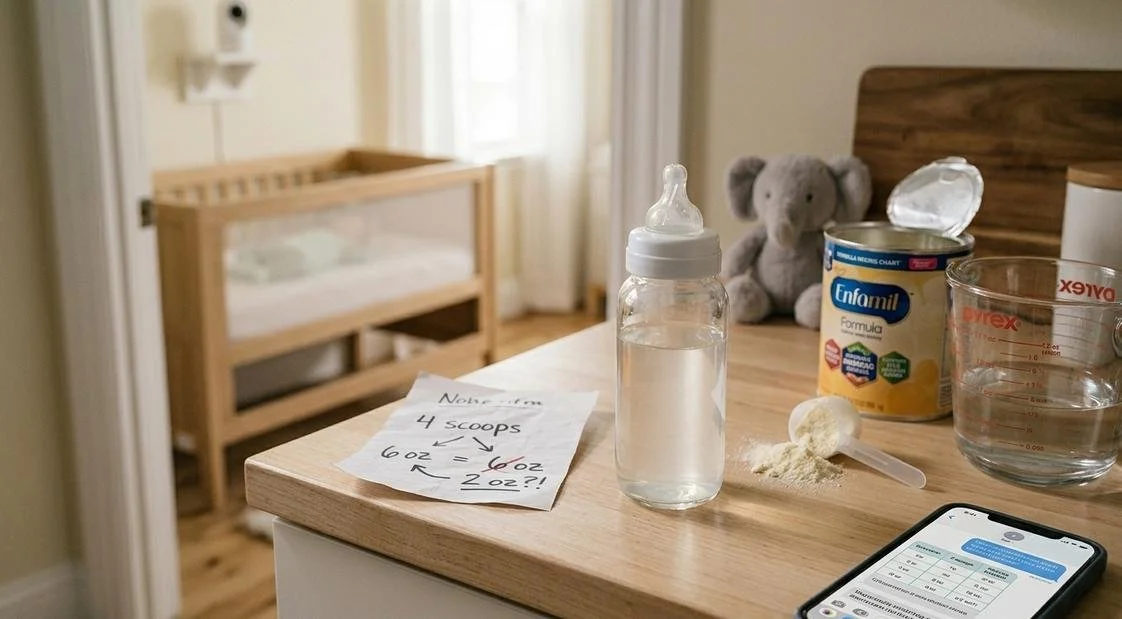
Also Read: Can You Return Unopened Formula?
Should You Try To Fix Diluted Formula?
No, it’s best not to try fixing it.
A lot of people think, “I’ll just add an extra scoop.” Sounds logical at first, but it can quickly throw the ratios off even more.
Once measurements become guesswork, it’s hard to know exactly how concentrated the formula actually is. And overly concentrated formula comes with its own risks.
Too much powder can strain a baby’s kidneys and digestive system.
If the bottle is noticeably diluted, just remake it from scratch.
This is also why many pediatricians recommend preparing bottles carefully in a calm environment instead of rushing through it while distracted. Easier said than done with a crying baby nearby, of course, but even a quick double-check can help prevent mistakes.
Common Formula Mixing Mistakes to Avoid
Adding too much water is common, but it’s definitely not the only formula mistake parents make.
Some other common mistakes our nannies at Karen’s Nanny Agency see include:
Using heaping scoops instead of level scoops
Adding cereal directly into bottles without medical advice
Mixing formula incorrectly after switching brands
Using outdated or expired formula
Formula preparation is more scientific than it seems. Small measurement differences can matter quite a bit for tiny babies.
That doesn’t mean you need to become anxious every single time you make a bottle, though. A little attention and consistency go a long way.
Final Thoughts
Thankfully, one mildly diluted bottle usually does not cause serious harm. In most situations, the best thing you can do is remake future bottles correctly and keep an eye on your baby.
Formula instructions exist for a reason, and sticking closely to them helps make sure babies get the nutrition they need to grow and thrive.
Still, parenting is messy sometimes.
People get distracted. Babies cry. Sleep deprivation is real. Mistakes happen.
The important thing is learning from it without spiraling into guilt or panic. Most parents have their own “oops” feeding story tucked away somewhere. This may just become one of yours.