Why Is My Child Rubbing On Furniture?
If you’ve noticed your child rubbing against furniture, it can feel confusing at first.
Maybe you caught it randomly during playtime or right before bed and thought, “Wait… what is going on?”
You’re definitely not alone here. A lot of parents notice this at some point, especially with toddlers and younger kids, and it usually looks more alarming than it actually is.
The thing is, this behavior can happen for a few totally normal reasons.
Kids experience the world through their bodies, and sometimes that includes movements that seem odd to adults. In most cases, it’s harmless and part of growing up, even if it feels a bit awkward to talk about.
In this post, I’ll explain why your child is rubbing on furniture.
#1 Sensory Exploration
Kids are basically little scientists, constantly experimenting with how things feel. Textures, pressure, movement, all of it is new and interesting.
So when a child rubs against furniture, it can simply be about sensation.
Maybe the fabric of the couch feels soft, or the pressure feels oddly comforting, and they keep doing it because it grabs their attention.
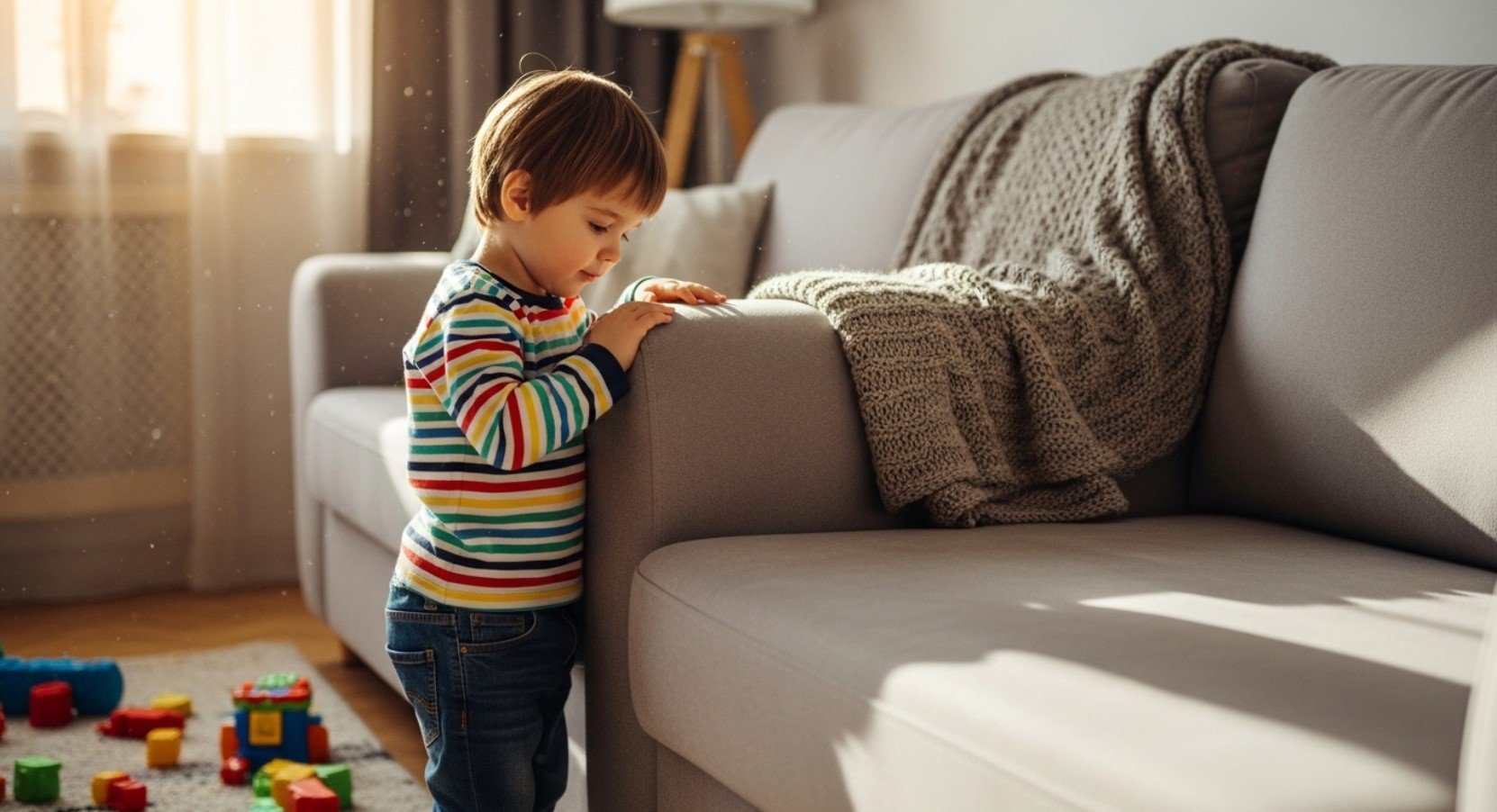
This is especially common in toddlers who are still figuring out their bodies.
They don’t see it as strange or inappropriate, it’s just another experience, like touching a fluffy blanket or splashing water.
Their curiosity leads the way, and they follow whatever feels interesting in the moment.
It can look repetitive too, which might make you worry, but repetition is actually how kids learn. They do something again and again to understand it better, and this is just one of those situations.
Also Read: What Age Is Chuck E. Cheese Good For?
#2 Self-Soothing Behavior
Sometimes, your child is rubbing on furniture for comfort.
Kids, just like adults, look for ways to calm themselves down.
For some, that might be thumb-sucking, rocking back and forth, or holding onto a favorite toy. For others, it might be rubbing against furniture.
You might notice it happening at certain times, like when your child is tired, bored, or overwhelmed.
It can become a little routine they turn to without even thinking about it. Almost like their own version of unwinding after a long day.
This is just their body finding a simple way to feel safe and settled. Once you start noticing patterns, like it happening mostly before naps or during quiet time, it often starts to make more sense.
#3 Curiosity About Body Sensations
As children grow, they naturally become more aware of their bodies. That includes noticing sensations that feel good or different, and wanting to explore that a bit more.
This is a normal part of development and doesn’t carry the same meaning adults might attach to it.
From a child’s perspective, it’s not about anything inappropriate. It’s closer to curiosity, like discovering they can wiggle their toes or make funny sounds.
They’re learning what their body can do and how it responds to different movements.
It can feel uncomfortable for parents to see this because we view it through an adult lens. But for kids, it’s much simpler and much more innocent.
Understanding that difference helps take away a lot of the worry.
Also Read: 2 Month Old Baby Breath Smells
#4 Physical Discomfort Or Irritation
Every now and then, there might be a physical reason behind the behavior. Something could be bothering your child, and they’re trying to deal with it the only way they know how.
Here are a few things that might be worth checking:
Tight or uncomfortable clothing, especially seams or tags
Skin irritation, rashes, or dryness
Mild infections or itchiness in the genital area
If it’s linked to discomfort, you’ll usually notice other signs too, like fussiness, redness, or your child seeming irritated rather than calm.
In that case, addressing the underlying issue often stops the behavior pretty quickly.
Is Baby Rubbing On Furniture Normal?
In most cases, yes, it’s completely normal. It tends to show up in younger kids and often fades as they grow older and find other ways to explore, play, and self-soothe.
It's one of those phases that feels big in the moment but doesn’t stick around forever.
What really matters is the overall picture. If your child is happy, active, and developing as expected, this behavior on its own usually isn’t something to stress over.
Kids go through all kinds of quirky habits, and this is just one of them.
It might come and go too. You could see it for a few weeks, then it disappears, then maybe comes back briefly. That’s pretty typical and not a sign that something is wrong.
Also Read: Great Nicknames For Julian
When Should Parents Be Concerned?
Even though it’s often harmless, there are times when it makes sense to pay a bit closer attention. You don’t need to panic, but you do want to stay aware of what’s going on.
Here are a few signs that might mean it’s worth looking into further:
It happens very frequently or feels compulsive
Your child seems upset, distressed, or unable to stop
It interferes with normal activities like playing or interacting
There are signs of pain, redness, or physical discomfort
You notice sudden changes in behavior alongside it
If any of these stand out, it’s a good idea to check in with a pediatrician.
Most of the time, it turns out to be something minor, but getting reassurance can really put your mind at ease.
What To Do If Child Is Rubbing On Furniture?
Your reaction matters a lot here, and keeping things calm and low-key is the best approach.
Kids pick up on your tone, so if you stay relaxed, they’re more likely to feel okay too.
Start with gentle redirection. If you notice the behavior, guide your child toward something else, maybe a game, a toy, or even just a change of environment. No need to make a big deal out of it, just shift their focus.
As your child gets older, you can introduce simple boundaries in a neutral way.
You might say something like, “That’s something we do in private,” without adding shame or making them feel like they’ve done something wrong.
Also Read: Awesome Nicknames For Josiah
It also helps to look at the bigger picture.
Are they bored? Tired? Need more physical activity? Small changes in routine, like more playtime or better sleep structure, can reduce how often it happens.
And of course, if you suspect discomfort, check clothing, hygiene, and skin condition.
Fixing a small irritation can sometimes solve the whole issue.
Bottom Line
Seeing your child rub against furniture can definitely catch you off guard, but in most cases, it’s just part of normal childhood behavior. It often comes down to curiosity, comfort, or simple sensory exploration, not anything harmful or serious.
The best thing you can do is stay calm, avoid overreacting, and gently guide your child when needed.
Keep an eye on patterns, trust your instincts, and step in for extra help if something doesn’t feel right.
Most of the time, this is just a phase that passes quietly.