8 Month Old Not Babbling (Should You Be Worried?)
If you’ve found yourself leaning in a little closer lately, listening for that classic “ba-ba” or “da-da” and wondering why it hasn’t shown up yet, you’re not alone.
The moment babies hit around eight months, babbling suddenly feels like a big deal, and it doesn’t help that everyone from Google to random relatives seems to have an opinion about when it should start.
The truth is, baby development isn’t as predictable as milestone charts make it seem.
Some babies love making noise early on, while others take their time, soaking everything in before they decide to use their voice.
In this post, we’ll talk about why an 8month old not babbling yet can still be completely normal, when it might be worth paying closer attention.
What Babbling Usually Looks Like at 8 Months
Around 8 months, many babies start moving beyond simple coos and squeals and into what we call babbling.
This is when they experiment with consonant sounds mixed with vowels, often repeating them over and over like it’s their new favorite hobby.
You’ll hear things like “ba-ba-ba,” “da-da-da,” or “ma-ma,” usually said with a lot of enthusiasm and drool.
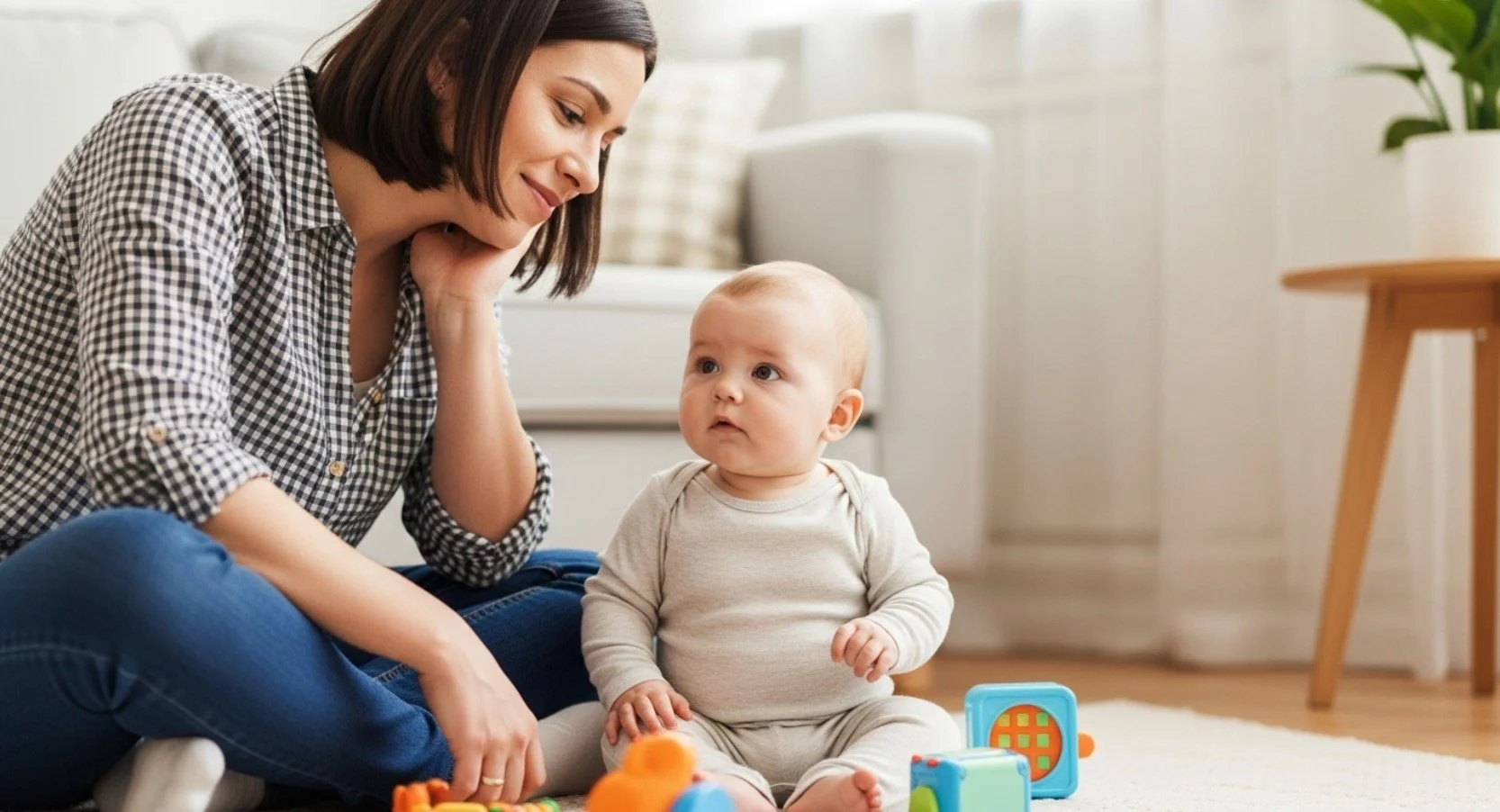
Babbling isn’t actual talking yet, but it’s a huge step toward it. Your baby is learning how to control their mouth, tongue, and breath, and they’re also figuring out that sounds can get attention.
Also Read: Why Do Babies Like Tags?
That said, babbling doesn’t look the same for every baby. Some do it loudly and constantly, almost narrating their entire day. Others offer only a few sounds here and there.
Is It Normal For An 8-Month-Old Not To Babble?
Yes, it is normal for an 8 month old not to babble.
Developmental milestones are averages, not deadlines. The age ranges you see online or in baby books are based on large groups of children, and there will always be babies who fall a bit earlier or later on the spectrum.
Some babies are simply quieter. They may be more interested in watching, touching, and moving than making noise.
If your baby is busy learning to sit, crawl, pull up, or explore everything within reach, their energy might be going into physical skills right now instead of vocal ones.
It’s also common for babies to focus on one area of development at a time, almost like they’re leveling up one skill before moving on to the next.
A calm, observant baby may not feel the need to babble constantly, especially if they’re content just taking in the world around them.
Signs Your Baby Is Still Developing Well
Even if your baby isn’t babbling yet, there are lots of other signs that things are moving in the right direction.
Communication is more than just sounds, especially in the first year. If your baby is connecting with you in other ways, that’s important.
Also Read: Is Beeswax Safe For Babies?
Here are a few reassuring signs to look for:
Makes other sounds like squeals, laughs, grunts, raspberries, or vowel noises
Responds to sounds by turning their head, smiling, or changing expression
Makes eye contact, smiles back, and enjoys interaction
Reacts when you talk, sing, or play with them
Babies communicate long before they talk. Facial expressions, body movements, and reactions to your voice all count.
When Not Babbling May Be A Concern
While a later start to babbling can be totally fine, there are situations where it’s worth paying closer attention.
You may want to take note if your baby is very quiet overall and rarely makes any sounds at all.
Another thing to watch for is limited response to sound. If loud noises, voices, or music don’t seem to get much of a reaction, that’s something to bring up with a healthcare provider.
Social engagement matters too.
If your baby avoids eye contact, doesn’t smile back, or seems uninterested in interaction most of the time, that combination with no babbling is worth discussing with a pediatrician. Trust your instincts here.
What Parents Can Do To Encourage Babbling
The good news is that you don’t need fancy toys, apps, or flashcards to help encourage babbling.
Also Read: Marilyn Nicknames
The most powerful tool is YOU. Everyday interaction makes a big difference, and it works best when it feels natural and fun, not like a lesson.
Here are some simple, real-life ways to encourage more babbling at home:
Talk to your baby throughout the day.
Narrate simple routines like feeding, diaper changes, and bath time.
Copy the sounds your baby makes.
Repeat syllables like “ba,” “ma,” and “da.”
Exaggerate your mouth movements when you speak.
Make eye contact while talking.
Read short board books out loud every day.
Sing songs with repetitive sounds.
Pause after speaking to give your baby time to respond.
Keep background noise like TV to a minimum.
Babbling grows through back-and-forth interaction.
When your baby makes a sound and you respond, they start to understand that their voice matters. That little exchange builds confidence and keeps them practicing.
When to Talk to a Pediatrician
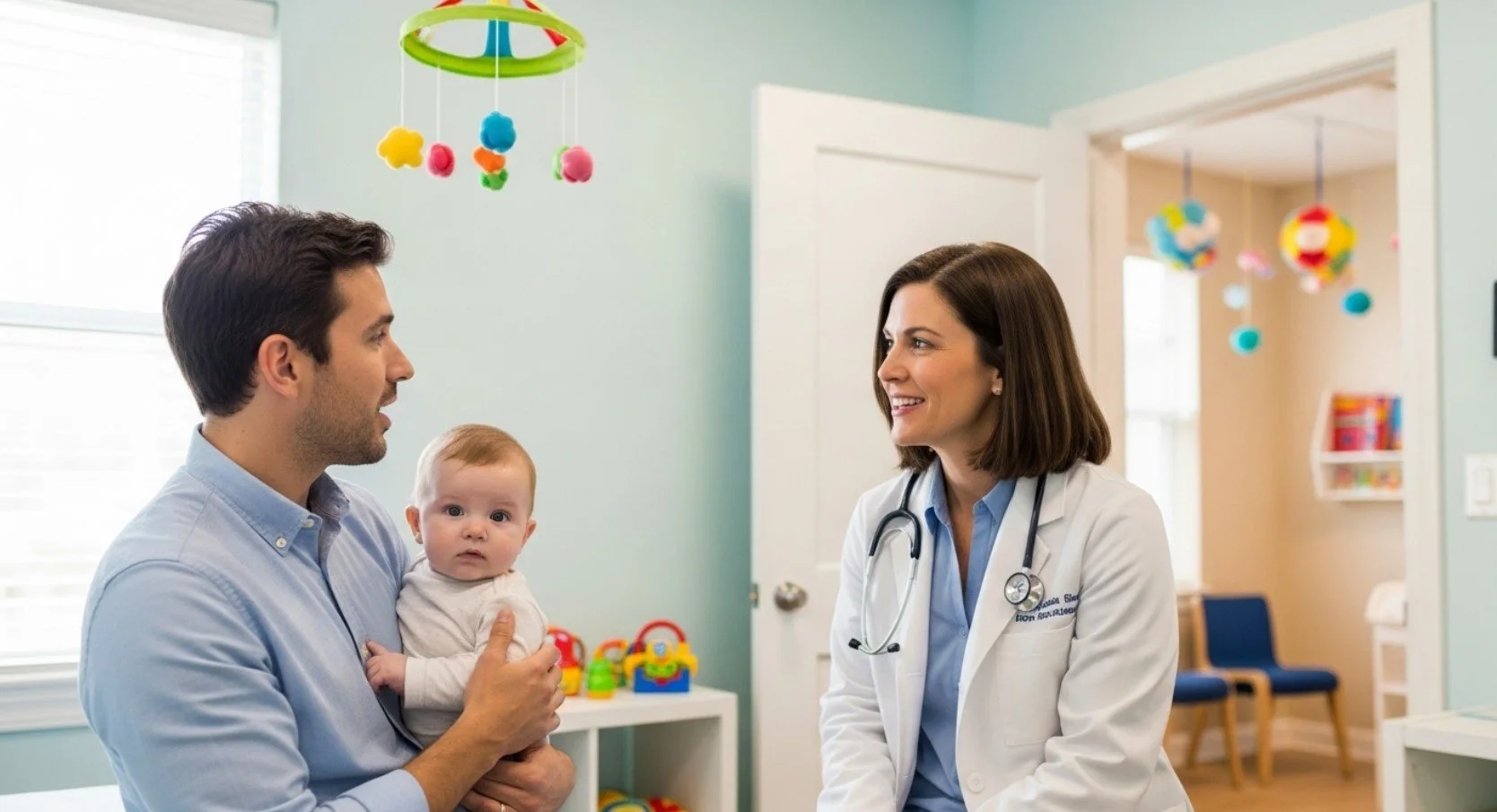
If babbling hasn’t started by around 9 months, or if you notice other concerns alongside it, it’s a good idea to bring it up at your baby’s next checkup.
You don’t need to wait for a big problem or feel embarrassed for asking.
Pediatricians hear these questions all the time, and early conversations can be really helpful.
A doctor may ask about how your baby responds to sound, how they interact socially, and what kinds of noises they make during the day. In some cases, a simple hearing screening is recommended.
Hearing checks are common, quick, and incredibly useful, especially since hearing issues aren’t always obvious at home.
If extra support is needed, early intervention services can make a huge difference. These programs focus on helping babies develop skills through play and everyday interaction, and starting early often leads to great outcomes.
Bottom Line
An 8-month-old not babbling can feel stressful, especially when you’re surrounded by milestone charts and comparison stories.
But in many cases, it’s just a variation of normal development. Babies grow at their own pace, and quiet babies often find their voice in their own time.
Pay attention to the whole picture, not just one milestone.
If your baby is engaged, responsive, and connecting with you, those are strong signs things are moving forward. Keep talking, singing, and interacting, trust your instincts, and don’t hesitate to check in with a pediatrician if you need reassurance.