Baby Exposed To Loud Music At Wedding (Should I Be Concerned?)
Weddings are meant to be fun, loud, and full of celebration.
Music pumping, guests cheering, and dance floors packed from edge to edge.
But if you brought your baby along and realized halfway through the night just how loud it was, that little knot of worry afterward makes complete sense.
Many parents don’t think twice about sound levels until they’re already in the moment, holding a baby with sensitive ears and wondering if it was all a bit too much.
The good news is that in most cases, a single event like this doesn’t cause lasting harm.
If your baby was exposed to loud music at a wedding, this post will help you understand what that exposure really means, what signs actually matter, and when you can relax knowing everything is likely just fine.
Is Loud Music Dangerous For Babies?
Babies have much more sensitive hearing than adults.
Their ears are still developing, and their nervous systems are new to processing strong sensory input. Sounds that feel manageable or even enjoyable to us can feel intense or overwhelming to them.
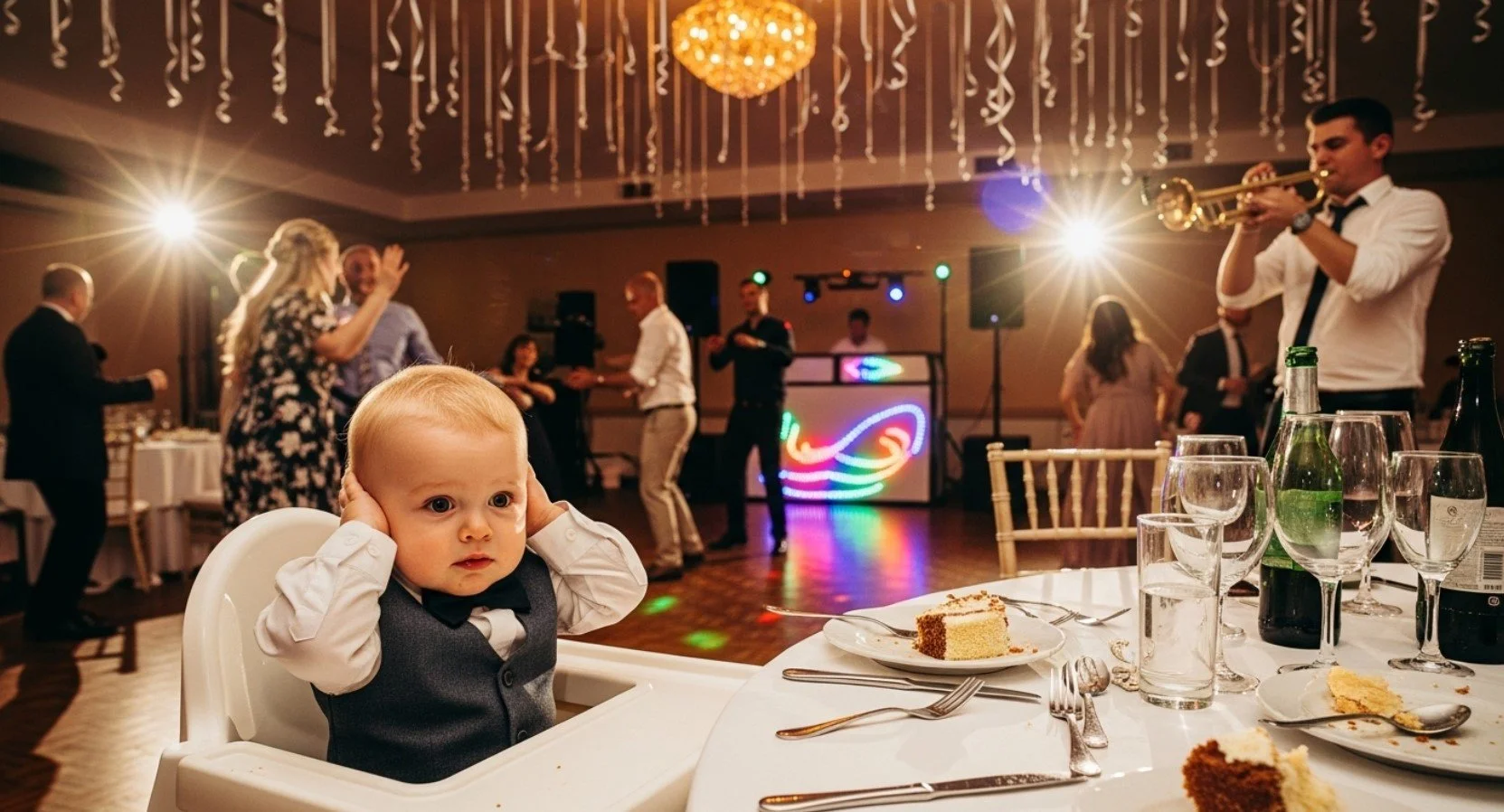
In general, consistent exposure to very loud noise can irritate or stress a baby’s ears.
Weddings often cross into that loud zone, especially when music is amplified and played for hours at a time.
Being close to speakers or live performers increases that risk.
That said, danger is also about how long the exposure lasts and how close your baby is to the sound source. A baby who spent a short time in a loud hall and then left is in a very different situation from a baby who stayed near speakers for several hours straight.
It’s also worth remembering that babies don’t have a way to block out noise. They can’t cover their ears or ask for a break.
They rely entirely on adults to manage their environment, which is why awareness matters more than perfection.
Also Read: Baby Shoulder Popping When Picked Up
What Happens If A Baby Is Exposed To Loud Music At A Wedding?
Most of the time, the effects of loud music on babies are temporary.
The most common response is overstimulation.
Babies take in everything around them, and when there’s too much noise, movement, and activity, their system can feel overloaded.
After the event, some babies may be extra fussy or clingy. Others might struggle with sleep, even if they usually rest well. This doesn’t mean damage occurred. It usually means their body and brain need time to calm down.
In rare cases, extremely loud and prolonged noise can temporarily affect how sound is processed. This might look like a reduced response to noise for a short period.
Permanent hearing damage from a single wedding exposure is uncommon, especially if the baby wasn’t positioned close to speakers.
Age plays a role too.
Newborns and younger infants tend to react more strongly to stimulation in general. Older babies may tolerate noise slightly better, but that doesn’t mean their ears don’t need protection.
So remember that one celebration doesn’t undo all the care you give your child every day.
Also Read: Toddler Suddenly Hates Grandma
Signs That Your Baby May Be Affected
After a loud event, it’s natural to watch your baby more closely.
Most changes are mild and short-lived. Still, there are some signs that parents commonly notice in the day or two following a noisy wedding:
Increased fussiness or irritability compared to normal
Trouble falling asleep or staying asleep
Being startled by everyday sounds more easily than usual
These signs usually point to overstimulation rather than hearing injury.
With rest and a calmer environment, they often resolve quickly.
More concerning signs are less common but important to notice. If your baby doesn’t react to familiar sounds, voices, or sudden noises that previously caught their attention, it’s worth monitoring closely.
One missed response doesn’t mean something is wrong, but a consistent pattern deserves attention.
What To Do After The Wedding
The best thing you can do after a loud event is create a calm, familiar environment.
Babies reset best in quiet, predictable spaces. There’s no need for special treatments or interventions in most cases.
Give your baby time to rest. Keep routines gentle. Soft lighting, normal feeding schedules, and familiar surroundings help their nervous system settle.
Try not to stack another busy or noisy activity right away if you can avoid it.
You don’t need to test your baby’s hearing by making loud noises. Just interact as you normally would. Talk to them. Sing softly. Watch how they respond over the next day or two.
Babies are surprisingly good at showing us when something feels off.
If your baby returns to their usual behavior within a short time, that’s a reassuring sign that their system handled the experience just fine.
Also Read: Can Babies Have Honey Graham Crackers?
When To Call A Pediatrician Or Audiologist
Most parents never need to take this step, but knowing when to reach out can bring peace of mind. You don’t need to wait for things to get severe to ask questions.
Do give them a call if:
Your baby consistently doesn’t respond to voices or sounds they previously noticed
Or is sensitive to normal household noise continues beyond a couple of days
A pediatrician can help assess the situation and decide if any follow-up is needed.
Sometimes they may suggest a hearing screening, especially if it provides reassurance. These screenings are gentle and commonly done for infants.
Reaching out doesn’t mean you did something wrong - you’re being attentive and proactive.
Tips To Protect Your Baby’s Hearing At Events
Planning ahead makes future events much easier. You don’t have to skip celebrations entirely to protect your baby - small adjustments like these can go a long way:
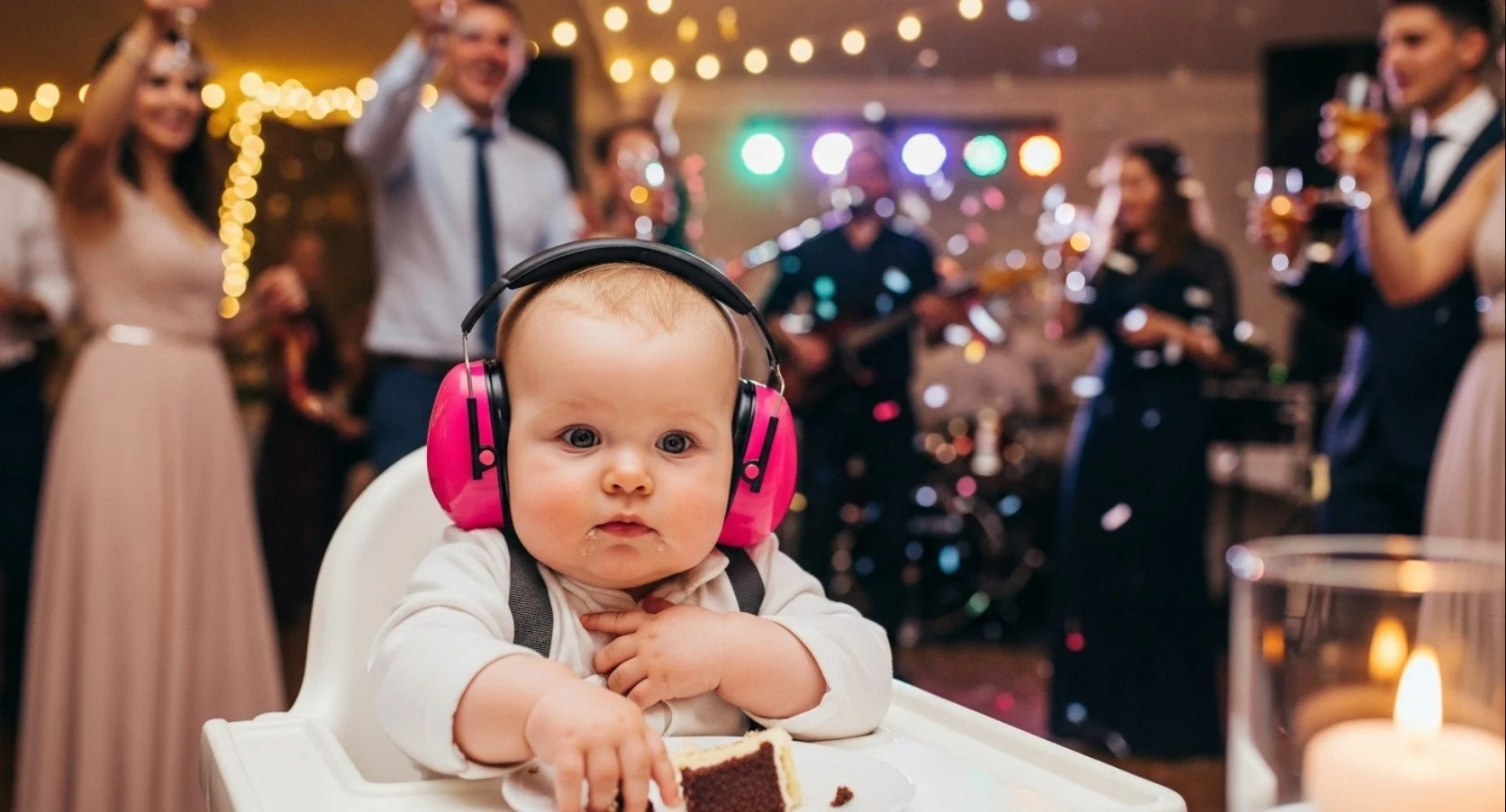
Use baby hearing protection earmuffs designed specifically for infants
Keep distance from speakers, DJs, and live bands whenever possible
Take regular breaks in quiet areas so your baby can decompress
Many parents keep earmuffs in their diaper bag just in case. They’re lightweight, easy to use, and helpful for unpredictable environments.
Leaving early or stepping outside for fresh air can also make a big difference.
Bottom Line
If your baby was exposed to loud music at a wedding, it’s understandable to worry afterward. In most cases, a single loud event leads to temporary overstimulation, not lasting harm.
Babies usually bounce back quickly when given rest and calm.
Pay attention to your baby’s behavior, trust your instincts, and reach out to a pediatrician if something feels off. At the same time, give yourself grace.
Parenting is about learning, adjusting, and caring deeply, which you’re already doing.
With a little awareness and preparation, future celebrations can be enjoyable and safe for everyone, including those tiny, sensitive ears.