Have A Flight With 4 Month Old? (Read This Guide!)
Flying with a 4-month-old sounds like one of those things people warn you about in hushed tones, like teething or assembling a crib without crying.
But honestly, it doesn’t have to be stressful.
Four months is actually a surprisingly chill age for travel. They’re still tiny, portable, not trying to crawl into the aisle, and usually pretty content with snuggles, milk, and motion.
Once you know what to expect, the whole experience feels way more manageable.
In this post, I’ll go over everything you need to know to make your flight with your 4 month old way less stressful.
Is It Safe To Fly With A 4-Month-Old?
Yes, for most babies, flying at this age is absolutely considered safe.
At four months, their immune system is stronger than it was in the newborn phase, and pediatricians are generally fine with air travel unless your baby has specific health concerns.
If your little one was born early or has any respiratory issues, definitely check in with your doctor beforehand.
But for a typical healthy 4-month-old? Thousands of parents fly every single day with babies this age. Airlines are used to it. Flight attendants are used to it.
You’ll be okay, I promise!
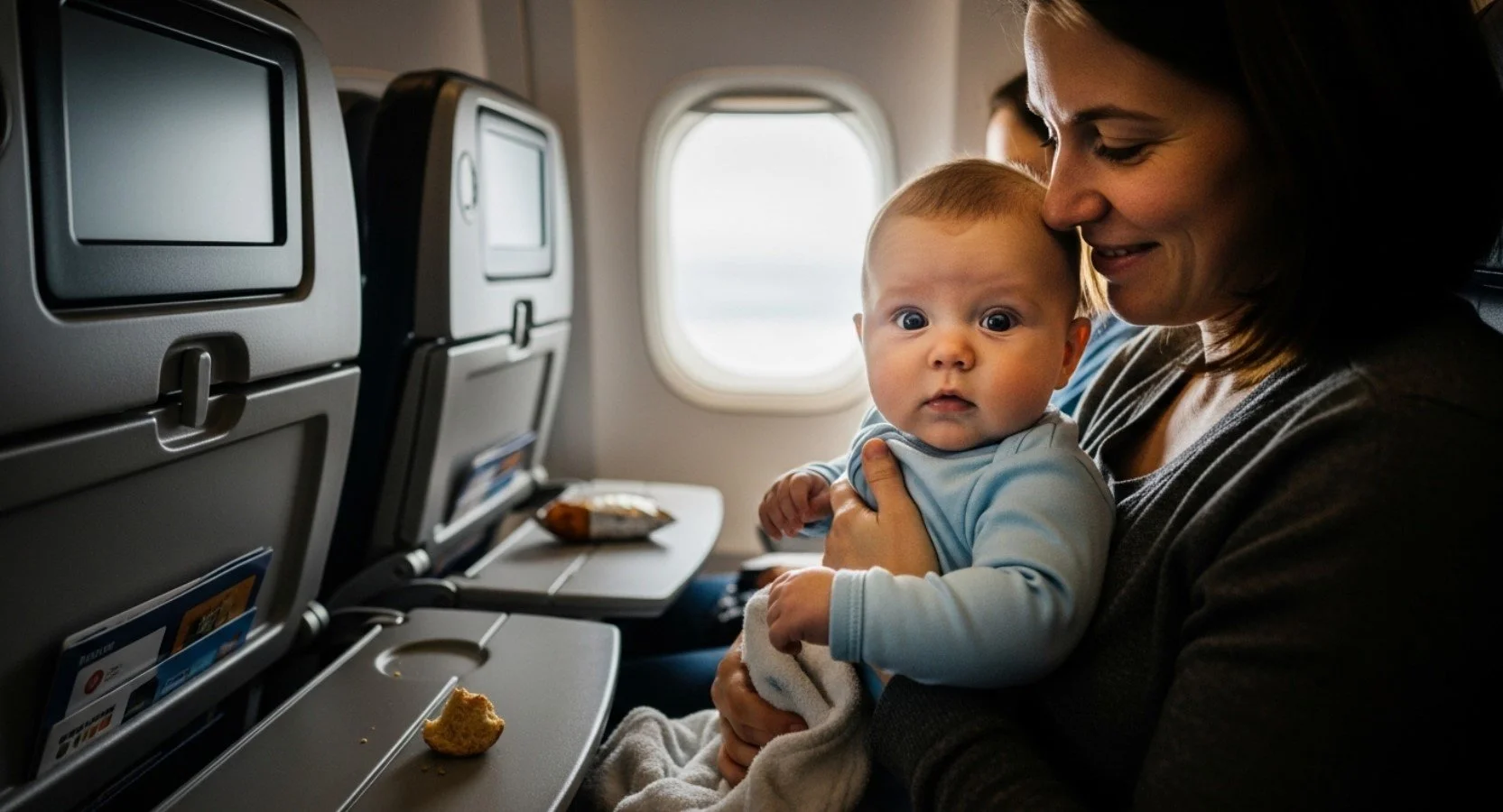
Also Read: Diaper Rash From Luvs
What To Expect When Flying With A 4-Month-Old
Here’s the nice part: babies at this age have pretty simple needs.
Milk, a clean diaper, a cozy place to snooze, and someone to hold them.
That's it. They’re not demanding snacks every 20 minutes, they’re not bored out of their minds, and they’re not ripping magazines out of the seat pocket.
But four months isn’t without quirks.
They might be getting more curious about the world around them, so you may get a few wide-eyed moments where they just stare at the ceiling vents like it’s the most interesting thing they've ever seen.
They also might hit a little fussy phase around this age, so expect occasional crankiness, especially if nap timing gets thrown off.
Still, this age is way easier than flying with a toddler.
What To Pack In Your Carry-On
This is where things can go sideways if you don’t bring the right stuff.
You don’t need your entire nursery, but you also don’t want to be caught at 35,000 feet without something essential.
Here’s a simple, realistic list:
Diapers, wipes, a changing pad, and two backup outfits for baby
A spare shirt for you (blowouts always choose peak travel moments)
Bottles, formula, or nursing supplies
Pacifiers, lightweight blankets, and a couple tiny toys
Burp cloths, sanitizing wipes, and zipper bags for messy things
You’ll be surprised how little you actually need once you’re on the plane.
Also Read: I Gave My 4 Year Old Nyquil
Babies don’t care about entertainment at this age, they just want comfort and closeness.
Tips For The Airport With Your 4 Month Old
Security can feel intimidating, but the good news is that formula, breast milk, and baby water are allowed through in reasonable quantities.

TSA or airport security will screen them separately, but you don’t have to toss anything.
Babywearing makes life easier, because you can typically keep the carrier on through screening (they’ll just swab your hands).
And honestly, it frees up your hands, which is the real win.
Try to do a diaper change right before boarding. It buys you the maximum amount of time before you deal with the airplane bathroom, which we all know is basically a closet with a toilet.
Here are a few more tips:
Managing Takeoff And Landing
Pressure changes can make babies uncomfortable, so this is usually the moment parents worry about most. But it’s super simple to help with.
Feeding helps regulate the pressure in their ears, so plan to nurse, bottle-feed, or offer a pacifier during takeoff and landing. The sucking motion works like magic.
And if your baby falls asleep? Don’t panic. Let them sleep.
They can handle the pressure changes just fine.
Some babies cry for a minute or two. Totally normal. They settle quickly once their ears adjust.
Also Read: Can You Have Two Middle Names?
Feeding On The Plane
Feeding in the air is honestly not that different from feeding at home, except you’re in much tighter quarters and your elbow might bump the armrest three times.
If you breastfeed, wear something that makes access easy.
A lightweight muslin blanket or a nursing cover can make things feel more private if that’s your style, but no one expects a fashion show on a plane.
If you bottle-feed, pre-measured formula makes life incredibly smooth. Some parents bring bottled water, but most airlines can give you warm water or help warm a bottle if needed.
Just ask nicely, they’re usually happy to help.
Try not to stress about feeding schedules. If your baby gets hungry earlier or later because of the travel chaos, that’s ok
Sleeping During The Flight
Four-month-olds tend to love the steady hum of a plane.
Many babies nap better in the air than you'd expect. A cozy blanket, a comfy position, and a gentle rock is often all it takes.
Baby carriers are really helpful here. You can walk the aisle a couple times or just let baby sleep snuggled against you. Don’t aim for perfect nap timing. Travel days are all about flexibility. If they fall asleep at a random time, take it as the gift that it is.
Also Read: 2 Month Old Baby Breath Smells
Diaper Changes In The Air
Airplane bathrooms are tiny, but surprisingly, most of them do have changing tables.
They fold down over the toilet and are just big enough to function if you’re quick.
The secret is having a mini change kit ready to grab - something small with exactly what you need so you’re not dragging your whole diaper bag inside.
You only need the basics: one diaper, a few wipes, a small bag for trash.
If you hit turbulence or someone’s using the bathroom for a year and a half, you might have to do a quick change at your seat.
Bottom Line
Flying with a 4-month-old is totally doable, and honestly, often easier than people make it sound.
They’re cuddly, portable, and usually happiest just being close to you.
The main things to keep in mind are simple: give yourself time, pack smart but not excessively, plan for feeding during takeoff and landing, and stay flexible with naps and moods.
It won’t be perfect, because travel rarely is, but you’ll get through it - and probably come out of it feeling way more confident than you expected.
And the best part? You’ll now be the parent who says, “Oh yeah, flying with a baby at that age isn’t bad at all.”