Sick Baby Won’t Sleep Unless Held (Here’s Why)
There’s nothing quite like the exhaustion of having a sick baby who will only sleep in your arms.
The second you try to set them down, they wake up crying, and suddenly you’re spending the entire night trapped in one spot, afraid to move. It’s draining, frustrating, and honestly a little confusing if your baby normally sleeps just fine on their own.
The good news is this is incredibly common when babies are under the weather.
Illness can make lying flat uncomfortable, increase clinginess, and turn even great sleepers into full-time contact nappers.
In this post, I’ll explain your sick baby won’t sleep unless held, and what you can do to help.
#1 They Feel Uncomfortable Lying Flat
One of the biggest reasons sick babies won’t sleep in the crib is because lying flat can make them feel worse.
Think about how uncomfortable it is for adults to lie down with a stuffed nose, sore throat, or pressure in the ears. Babies deal with the same thing, except they can’t grab tissues, prop up a pillow, or tell you what hurts.
When your baby is congested, lying flat can make mucus pool in the nose and throat, which may make breathing feel harder.
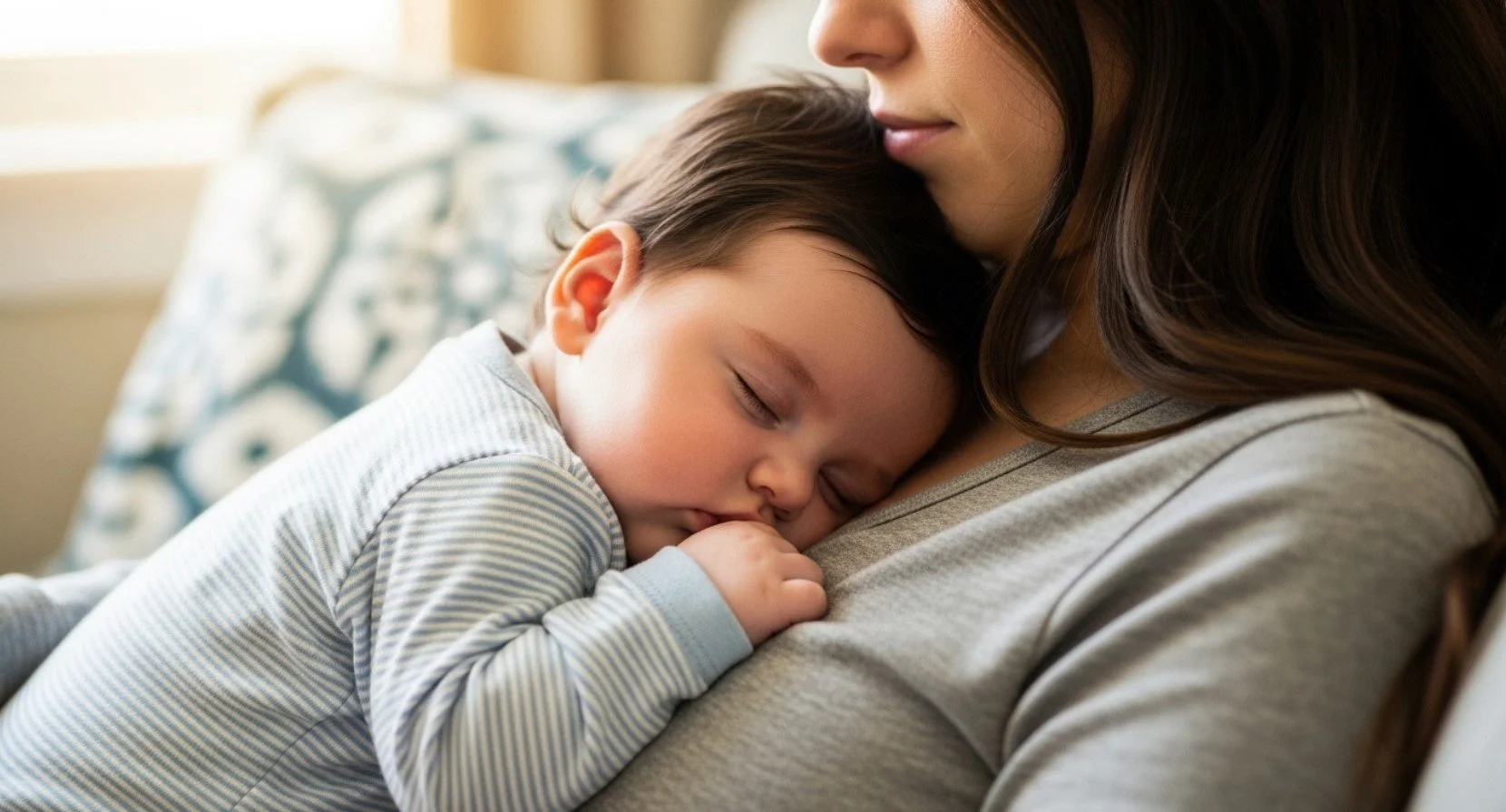
Even if their nose isn’t fully blocked, that extra pressure can be enough to wake them up over and over again.
Being held upright against your chest often helps them feel more comfortable, so naturally, that becomes the only place they want to sleep.
Also Read: Accidentally Gave My Baby Too Much Gas Drops
#2 They Want Reassurance And Warmth
Babies crave comfort when they don’t feel good. Honestly, adults do too - we just usually ask for blankets and soup instead of being carried around.
When your baby is sick, your arms provide warmth, closeness, and security. They can hear your heartbeat, feel your body heat, and settle into the familiar comfort of being near you.
It’s soothing in a way the crib simply can’t compete with right now.
This extra clinginess is not manipulation. Your baby is not trying to form bad habits.
They just want the person who makes them feel safest when everything else feels off.
#3 Pain Or Discomfort
Sometimes the issue goes beyond congestion and into actual pain.
Ear infections, sore throats, teething, body aches from fever, tummy troubles - lots of common childhood illnesses come with discomfort that makes sleep harder.
A baby in pain may fall asleep while being rocked or held because your movement and warmth distract them from what they’re feeling.
Then the moment they’re put down?
They fully notice the discomfort again and wake right back up.
If your baby is unusually fussy, pulling at their ears, drooling heavily, arching their back, or crying more than normal, pain may be the issue here.
Also Read: Do Cribs Need Box Springs?
#4 They Are Overtired
This one surprises a lot of parents.
Sick babies often sleep poorly during the day because they’re uncomfortable, feeding differently, or waking constantly.
That can quickly turn into overtiredness, and overtired babies are famously terrible at sleeping.
It seems backward, but babies who need sleep the most often fight it the hardest.
When your baby gets overtired, their body releases stress hormones that make it harder for them to settle down. The result?
They cry more, wake more, and become extra dependent on being held to finally drift off.
So sometimes your baby is not just sick, they’re sick and exhausted, which is a brutal combination.
#5 Their Reflux Gets Worse When Sick
If your baby has reflux, illness can make it flare up.
Congestion, coughing, swallowing extra mucus, and disrupted feeding patterns can all aggravate reflux symptoms.
That means lying flat may lead to more spit-up, burning, discomfort, or general fussiness after feeds.
Even babies with mild reflux who normally manage okay can struggle more when sick.
Being upright in your arms helps reduce that discomfort, so your baby may strongly prefer sleeping on you instead of in the crib.
#6 Separation Anxiety (Especially Older Babies)
If your baby is older (usually around 6 months and up) separation anxiety can pile onto everything else.
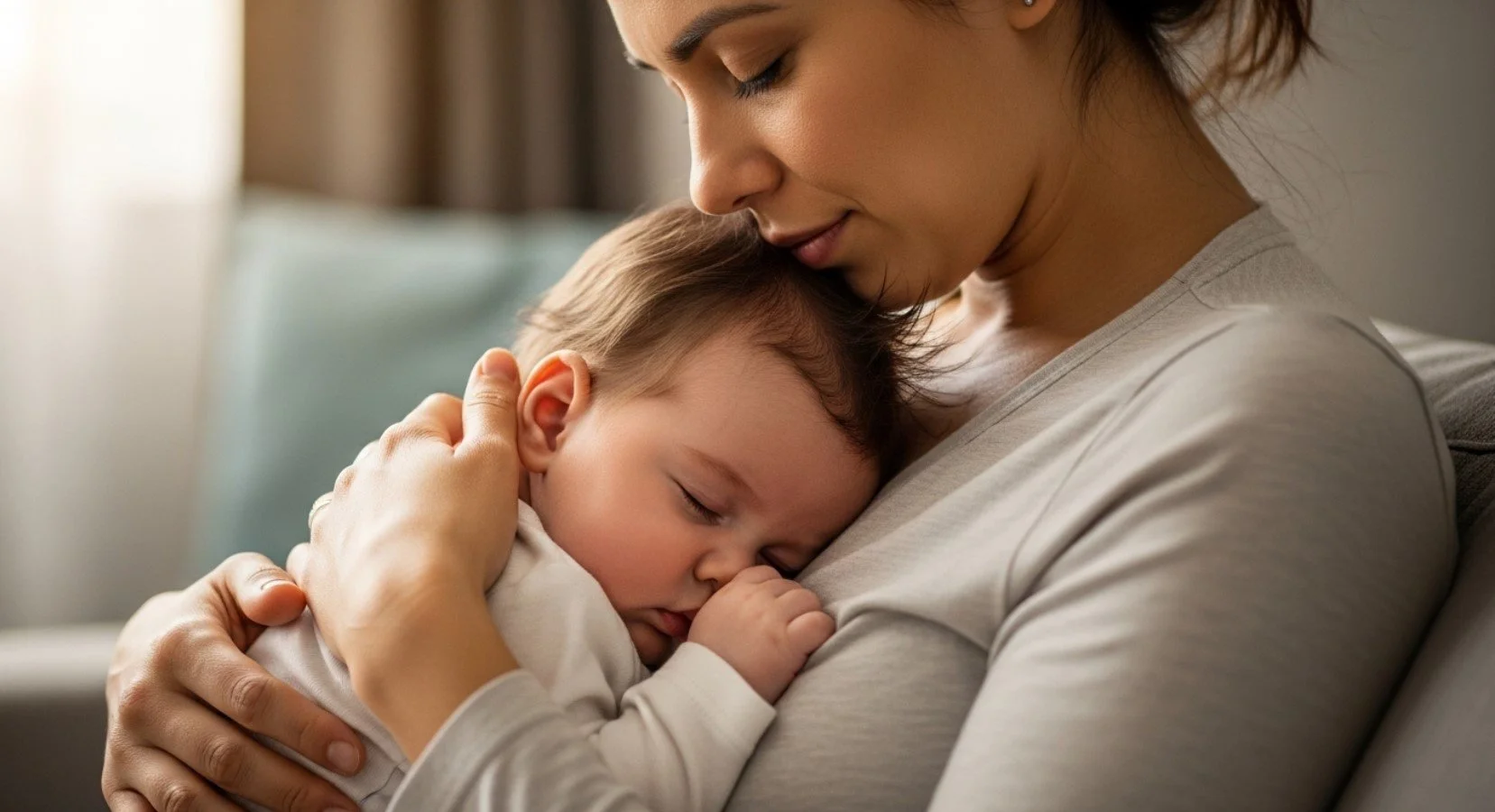
Sick babies often become extra attached to their caregivers. They may be more aware that you’re leaving when you try to put them down, and because they’re already feeling crummy, they have less patience for being alone.
That means your baby may wake the second they realize you’re gone and protest loudly until they’re back in your arms.
It’s not personal. It’s not dramatic.
It’s just your baby saying, “I feel terrible and I would prefer my favorite human remain nearby, thanks.”
Also Read: Is Frozen Colostrum Good For A Sick Baby?
Is It Okay To Hold Your Baby All Night?
Comforting your baby when they’re sick is completely okay. Sick babies often need more support than usual, and there is nothing wrong with giving them extra cuddles during a rough patch.
That said, there’s an important safety note here.
If you’re holding your baby while they sleep, you need to be careful not to fall asleep yourself in an unsafe position like on a couch, recliner, or soft bed.
Those situations can be dangerous for sleeping infants.
Plenty of parents end up doing contact naps or taking turns overnight during illness, and that’s understandable. Survival mode happens.
The key is doing your best to keep things as safe as possible while getting through the temporary chaos.
And no, a few nights of extra holding is not going to permanently ruin your baby’s sleep habits. Once they feel better, many babies go right back to their usual routine.
Tips To Help Your Sick Baby Sleep Without Being Held
If your baby only wants to sleep in your arms, there are a few gentle things you can try to make crib sleep a little more manageable while they’re sick.
Here’s what our nannies at Karen’s Nanny Agency recommends:
Wait until your baby is in a deeper sleep before putting them down
Use a humidifier in the room if congestion is making sleep harder
Warm the crib sheet briefly before transfer, then remove the heat source
Keep white noise playing to create a calming sleep environment
Place your hand on their chest for a minute after setting them down
Not every trick works for every baby, of course, but these can help make the transition from your arms to the crib a bit smoother.
When To Call A Doctor
Most sleep disruptions during illness are normal, but certain signs mean it’s time to check in with your pediatrician.
Keep an eye out for things like:
Trouble breathing or fast breathing
Fever in a very young infant
Refusing to eat or drink
Signs of dehydration like fewer wet diapers
Extreme fussiness that seems pain-related
Unusual sleepiness or difficulty waking
Trust your instincts here. If something feels off, it’s always okay to call and ask.
Bottom Line
Your sick baby won’t sleep unless held because they feel miserable and you make them feel better. Illness can make lying flat uncomfortable, increase pain, worsen reflux, trigger overtiredness, and ramp up clinginess all at once.
Put all of that together, and suddenly your arms become the only acceptable sleeping arrangement.
The silver lining is that this phase usually passes once your baby starts feeling better.
So for now, offer the comfort they need, use safe sleep practices as best you can, and remind yourself that extra snuggles during sickness are not bad habits.
You’re not spoiling your baby. You’re helping them through a hard moment.