Infant Chewing On Crib (Here’s What To Do)
You finally get your baby settled in the crib, step away for a second, and when you come back they’re happily chewing on the rail like it’s their new favorite toy.
It can feel a little strange (and maybe a bit worrying) the first time you see it.
The thing is, crib chewing is one of those totally normal baby behaviors that just doesn’t get talked about much.
It’s usually tied to teething, curiosity, or simple self-soothing.
Still, that doesn’t mean you should ignore it, because there are a few safety things worth paying attention to.
In this post, I’ll walk through why your infant is chewing on cribs, when it’s something to watch more closely, and most importantly, what you can do to handle it without stressing yourself out.
Why Is My Infant Chewing On The Crib?
Most of the time, this behavior comes down to simple baby instincts and development.
Teething is the biggest reason.
When those little teeth start pushing through the gums, it can feel uncomfortable, even painful. Babies naturally look for something firm to bite down on, and the crib rail is right there at the perfect height.
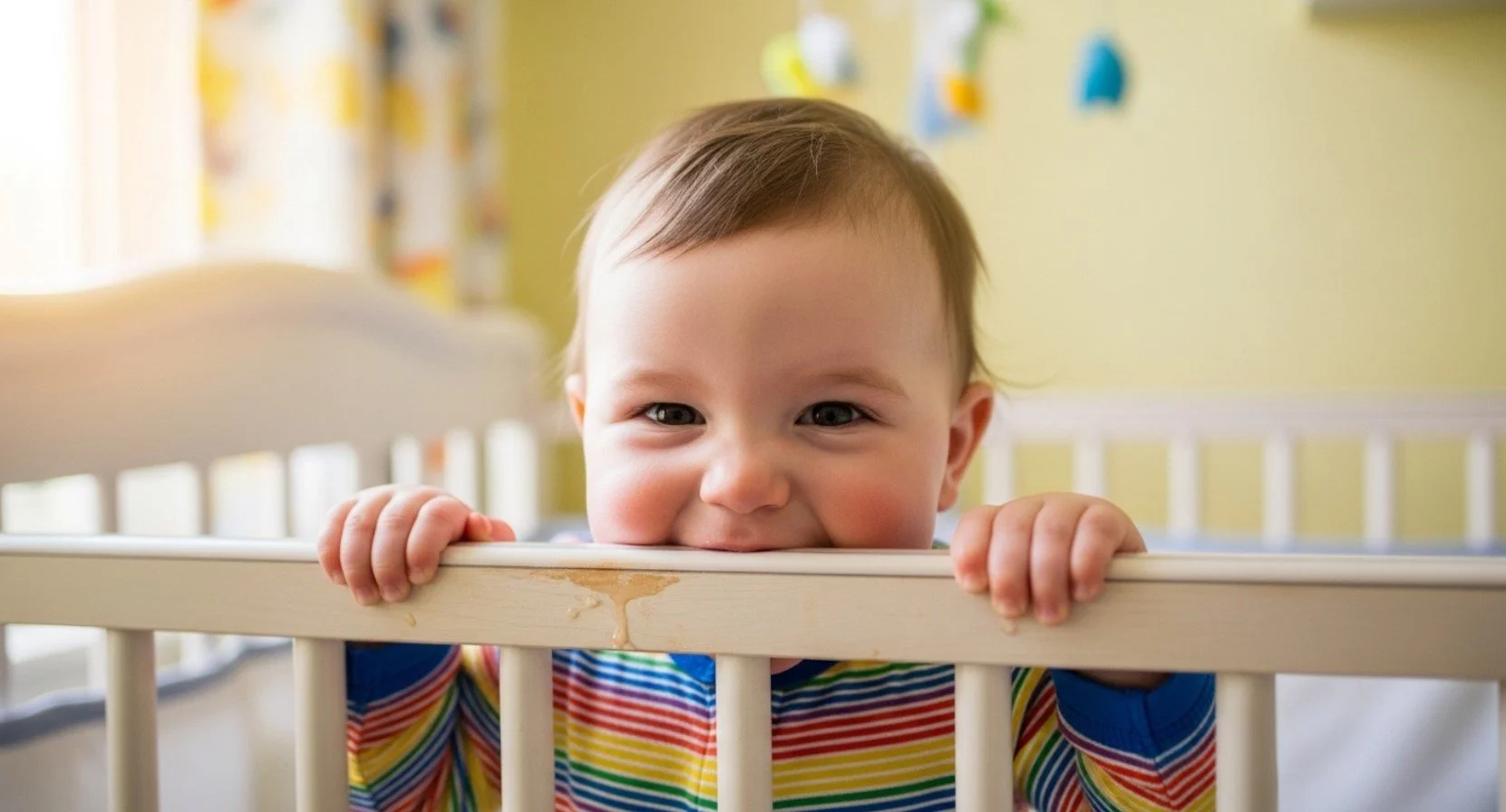
There’s also the curiosity factor. Babies explore the world with their mouths. They don’t just look at things or grab them and they taste them too.
The crib is part of their environment, so it ends up being part of their “research.”
And then there’s self-soothing.
Some babies find chewing calming, especially when they’re winding down for sleep or waking up and waiting for you. It’s kind of like their version of stress relief.
Also Read: How To Stop Acidic Poop In Babies
Is It Safe For Babies To Chew On Crib Rails?
In many cases, it’s harmless for a short period.
But that doesn’t mean it’s completely risk-free.
If the crib is in perfect condition, with a smooth, non-toxic finish, occasional chewing isn’t usually a big deal.
The concern starts when wear and tear enters the picture. Bite marks can damage the surface, which can lead to peeling paint or exposed wood.
Small flakes of paint or wood aren’t something you want your baby swallowing.
Rough edges can also irritate their gums or even cause tiny cuts. And let’s be honest, crib rails aren’t exactly the cleanest thing once they’ve been chewed on repeatedly.
So it’s not about panicking. It’s more about staying aware and making a few smart adjustments.
Signs It Might Be A Problem
A little nibbling here and there is one thing. But there are moments when it’s worth taking a closer look.
Here’s what to look out for:
You notice chipped paint or visible damage on the rail
Your baby seems to be biting aggressively or constantly
There are small splinters or rough patches forming
Your baby’s gums are bleeding or look irritated
It looks like they might be swallowing bits of material
If any of these show up, it’s a sign to step in and make some changes right away.
What To Do If Infant Chewing On Crib
Karen's Nanny agency doesn’t recommend trying to stop the behavior overnight.
That usually just leads to frustration for both of you. Instead, you want to redirect it in a safer way and make the crib less appealing as a chew toy.
Here are some ideas:
#1 Offer Safe Teething Options
Start by giving your baby better things to chew on, things designed for exactly this purpose.
Teething toys made from soft silicone or rubber can give your baby that same relief without the risks.
You can even chill them slightly in the fridge, which helps soothe sore gums even more.
The key is consistency. Offer these during the day so your baby gets used to reaching for them instead of the crib.
#2 Use Crib Rail Covers
This is one of the easiest fixes, and it works surprisingly well.
Crib rail covers wrap around the rail and create a soft barrier between your baby and the hard surface.
So even if they keep chewing, they’re biting into something safer and more hygienic.
Plus, it protects the crib itself from damage, which is a nice bonus.
#3 Make Sure Crib Finish Is Non-Toxic And Not Chipping
Take a minute to inspect your crib closely.
Run your hand along the rails and look for any signs of wear.
If you notice paint chipping or cracks in the finish, it’s worth addressing right away.
Many modern cribs are made with non-toxic materials, but older ones might not meet the same standards.
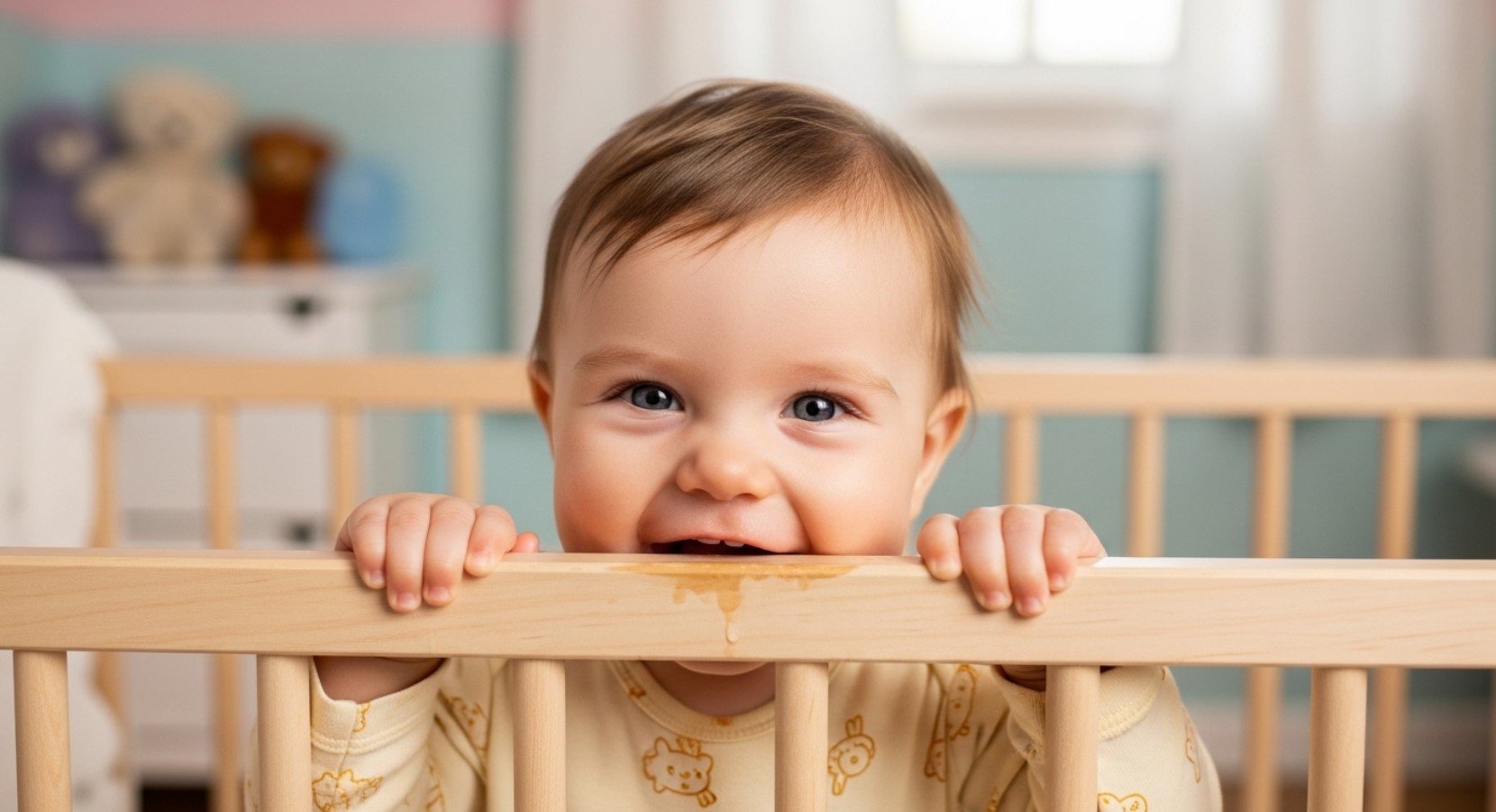
If the damage is significant, replacing the crib might honestly be the safer route. It sounds like a big step, but peace of mind goes a long way here.
Also Read: Can Babies Have Garlic Powder?
#4 Increase Engagement During Awake Time
Sometimes infants chew on the crib because they are bored.
If your baby spends time in the crib while awake, they might start chewing simply because there’s nothing else to do. Adding more interaction during awake periods can help reduce that habit.
Here are some ideas:
Rotate toys so they stay interesting
Spend more time on floor play and exploration
Use the crib mainly for sleep so it’s less of a “hangout” spot
A more engaged baby is less likely to turn the crib into a chew station.
#5 Keep An Eye On Timing
Pay attention to when the chewing happens.
Is it right before naps? Right after waking up? During quiet moments?
Once you spot a pattern, you can step in earlier like offering a teether or distraction before your baby goes straight for the rail.
It’s a small shift, but it can make a big difference over time.
Will My Baby Grow Out Of This?
Yes, almost always.
This phase is usually tied to teething and early development, which means it doesn’t last forever.
As your baby’s teeth come in and they find other ways to soothe themselves, the urge to chew on the crib fades.
You might not notice the exact moment it stops. One day you just realize, “Hey… they haven’t done that in a while.” And that’s it. Phase over.
Bottom Line
Infant chewing on the crib can look a little alarming at first, but in most cases, it’s completely normal.
It’s your baby’s way of dealing with teething, exploring their world, and sometimes just passing the time.
The trick isn’t to fight it head-on. It’s to guide it. Offer safer alternatives, protect the crib, and keep an eye on any signs of damage or irritation.
With a few simple tweaks, you can keep your baby safe and let this phase pass naturally, because it will.