8 Safe Alternatives To Cot Bumpers
When you’re setting up a baby’s cot, it’s completely normal to want it to feel soft, cozy, and protected.
Cot bumpers used to seem like the obvious choice.
They looked cute, matched nursery themes, and promised to stop babies from bumping their heads or getting tiny arms and legs stuck between the slats.
But over the years, sleep safety experts started warning parents about the risks linked to traditional padded bumpers. That’s why many parents are now looking for safer substitutes that still help babies sleep comfortably without adding unnecessary hazards to the cot.
The good news is, there are plenty of safe alternatives to cot bumpers that work really well and still give parents peace of mind.
In this post, I’ll show you 8 of the safest options.
#1. Sleep Sacks or Wearable Blankets
Sleep sacks are probably one of the easiest swaps you can make.
Instead of using loose blankets or padded bumpers to keep babies cozy, a wearable blanket keeps everything safely attached to your baby.

They’re especially helpful for babies who wiggle around a lot during sleep.
Since the blanket can’t ride up over the face, it creates a much safer sleep environment.
Another bonus is that sleep sacks can help stop little legs from slipping through cot slats, which is one reason many parents originally considered bumpers in the first place.
You’ll find lightweight versions for warmer weather and thicker ones for colder nights, so there’s a good option for almost every season.
Also Read: Baby Awake In Crib Not Crying
#2. Mesh-Sided Pack ’n Plays
Some parents move their baby into a mesh-sided pack ’n play for naps or nighttime sleep because the breathable sides feel safer and softer than traditional rails.
The mesh material allows airflow while still creating a gentle barrier around the baby.
It can also reduce the chance of babies bumping into hard wooden slats during restless sleep.
These are especially popular for families who travel often or want a secondary safe sleep space in another room. They’re practical, lightweight, and easy to move around the house.
So, they are also great alternatives to cot bumpers.
#3. Modern Cribs With Proper Slat Spacing
A lot of people don’t realize modern cribs are already designed with updated safety standards in mind.
The slats are spaced close enough together to stop a baby’s head from getting trapped, which is one reason cot bumpers are no longer considered necessary.
Older cots sometimes had wider gaps, and that’s partly why bumpers became common years ago.
Today’s cribs are much safer by design.
If you’re buying a new cot, it’s worth checking that it meets current safety guidelines and hasn’t been recalled. In many cases, simply using a properly made modern crib removes the need for extra padding altogether.
Also Read: 6 Month Old Not Sleeping Through The Night
#4. Breathable Mesh Crib Liners
Mesh crib liners are one of the more debated cot bumper alternatives.
Unlike thick padded bumpers, these are thin and breathable, allowing air to pass through more easily.
Some parents like them because they can help stop little arms and legs from slipping between slats. They also tend to look less bulky inside the cot.
That said, they still need to be used carefully.
Anything attached to crib rails can create risks if it becomes loose or poorly installed.
If parents choose to use mesh liners, they should always follow installation instructions closely and regularly check that everything stays secure.
They’re generally seen as a better option than thick padded bumpers, but many sleep experts still recommend keeping the cot as simple as possible.
#5. Vertical Crib Rail Covers
Vertical rail covers are another alternative that some parents prefer because they cover individual slats instead of wrapping around the entire cot.
This design allows much more airflow and avoids the pillow-like padding that made traditional bumpers risky.
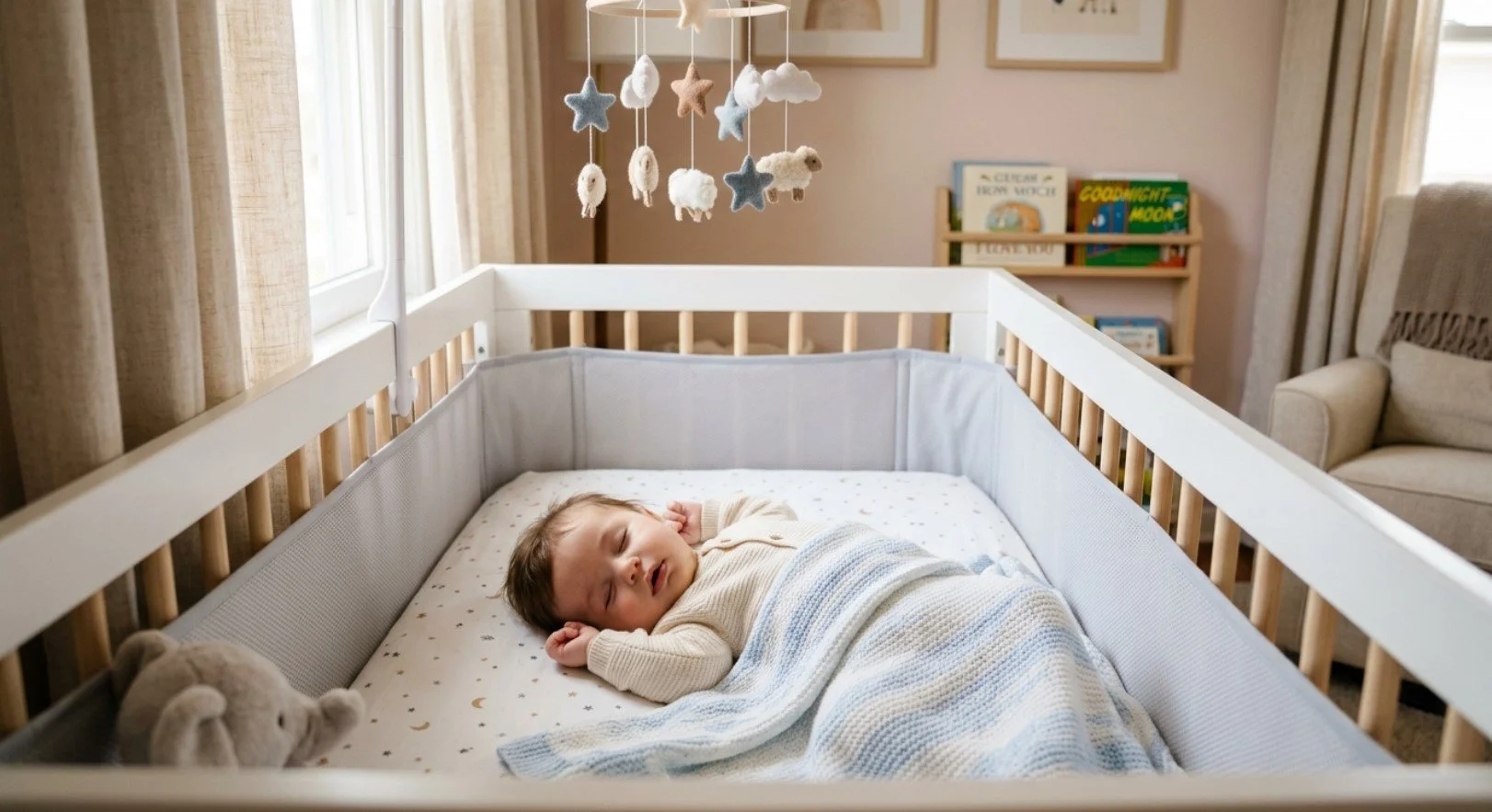
They can soften the hard rails slightly while still keeping the crib more open and breathable.
Many parents use these mainly during the stage where babies start standing and moving around more actively in the cot. Since they only cover parts of the rails, the sleep space feels less crowded overall.
#6. Crib Rail Guards For Teething Babies
Sometimes the issue isn’t bumping at all. It’s teething.
Once babies start chewing on everything within reach, cot rails quickly become a favorite target. Rail guards are designed specifically for this stage.
Instead of lining the entire cot, they only cover the top rail where babies tend to bite.
This helps protect both the baby’s gums and the crib itself from damage.
Since these guards are much smaller than full bumpers, they avoid filling the sleep space with extra fabric and padding.
Parents should still make sure the guards are tightly secured and designed specifically for cribs, since loose fabric inside a cot is never ideal.
Also Read: Huggies Snug And Dry Vs Huggies Little Movers
#7. Lowering The Cot Mattress
This one sounds simple because it is simple, but it makes a huge difference as babies grow.
Once babies begin sitting, pulling up, or attempting tiny escape missions over the crib rails, lowering the mattress becomes really important.
A lower mattress height helps reduce the risk of climbing and falling out of the cot.
Traditional bumpers can actually make climbing easier because they give babies a little extra boost. Removing bumpers and lowering the mattress keeps the crib safer during those super active stages.
A good rule is to adjust the mattress as soon as your baby starts showing signs of increased mobility.
Babies develop fast, and they usually surprise parents earlier than expected.
#8. Keeping The Cot Bare
This is the option most pediatric sleep experts recommend above everything else: a completely bare cot.
That means:
A firm mattress
A fitted sheet
No pillows
No stuffed toys
No loose blankets
No padded bumpers
At first, some parents worry the cot will look too plain or uncomfortable. But babies actually don’t need all the extra bedding adults associate with comfort.
In fact, a simpler sleep space is considered the safest setup for reducing sleep-related risks.
Many parents also notice they sleep better themselves once they stop stressing about loose bedding or bulky crib accessories inside the cot.
Cot Bumpers Are No Longer Recommended
The biggest concern with traditional cot bumpers is safety.
Thick padded bumpers can create suffocation and strangulation hazards, especially for younger babies who can’t move away easily if their face gets pressed against soft fabric.
As babies grow older and become more mobile, bumpers can also turn into climbing aids.
A determined toddler can use them almost like a tiny step, increasing the risk of falling out of the cot.
Overheating is another concern. Babies sleep safest in cool, breathable environments, and extra padding around the crib can trap heat more than parents realize.
That’s why many pediatric organizations and safe sleep experts now recommend avoiding padded bumpers completely.
Bottom Line
Trying to create a cozy sleep space for your baby comes from a good place. Every parent wants their little one to feel safe and comfortable at night.
But when it comes to cot safety, simpler usually ends up being better.
Thankfully, there are plenty of safer alternatives to cot bumpers, from sleep sacks and mesh-sided sleep spaces to simply keeping the cot bare and following modern sleep safety guidelines.