18 Month Old Can Count To 10 (Is This Normal?)
It can be pretty surprising to hear an 18-month-old confidently say “one, two, three… ten.”
Most parents expect toddlers at this age to still be learning simple words like “mama,” “ball,” or “milk,” so hearing a full sequence of numbers can feel like a big moment.
Naturally, it makes people wonder what it really means.
Is the child actually counting, or are they just repeating something they’ve heard many times before?
The truth is that toddlers often learn number sequences through repetition, songs, and everyday conversations long before they truly understand what those numbers represent.
An 18-month-old counting to ten is usually showing great memory and strong exposure to language, rather than early math skills.
In this post, I’ll explain why some 18 month olds can count to 10 so early on.
Is It Normal For An 18 Month Old To Count To 10?
Yes, some 18-month-olds can say numbers up to 10, but it’s not very common and not expected developmentally.
At that age, most toddlers are just beginning to say a few words and imitate sounds.
When a toddler “counts” this early, they’re usually just repeating numbers from memory, like a song. It doesn’t mean they understand what the numbers represent yet.
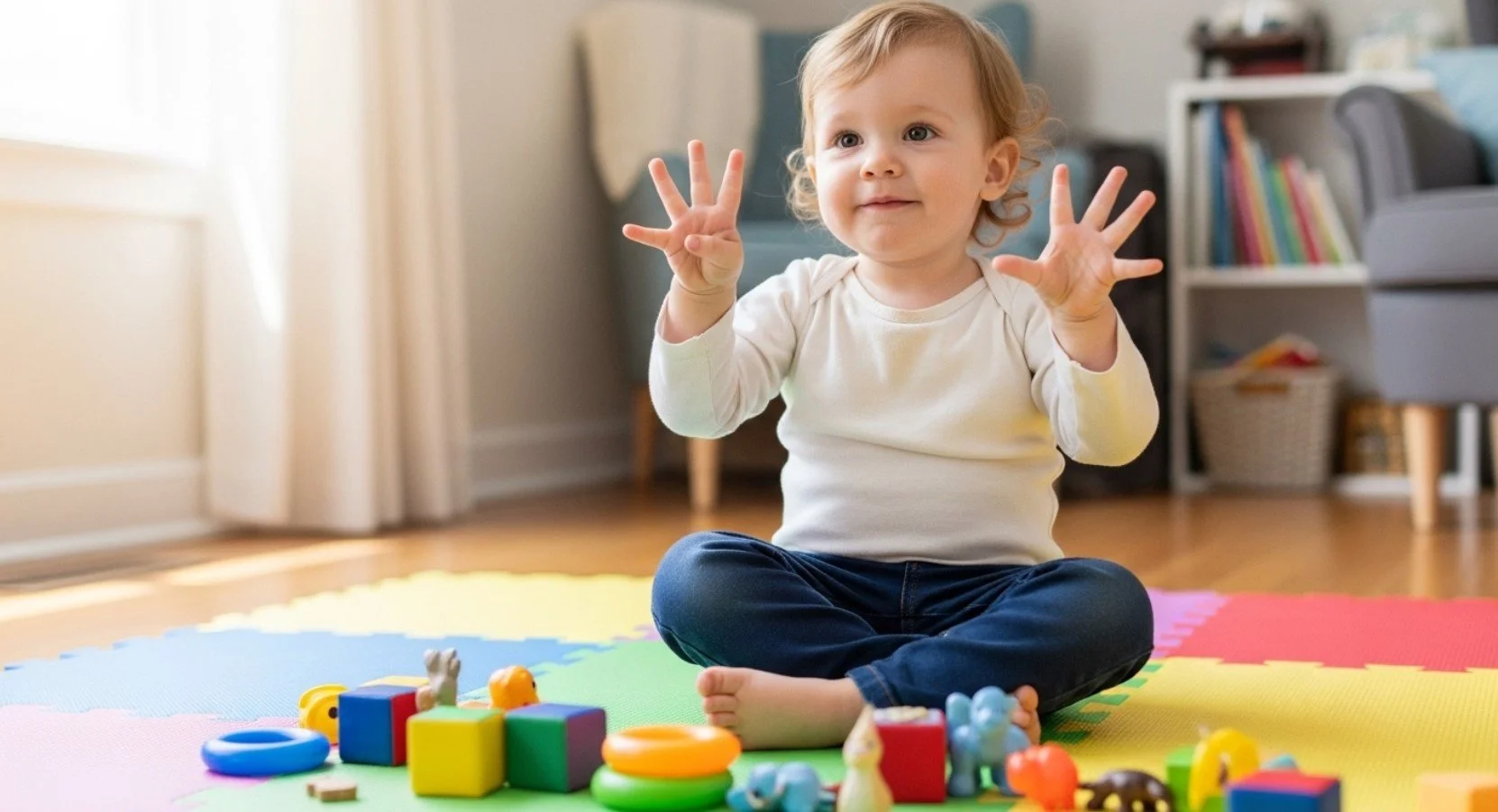
Most kids don’t start truly counting (matching numbers to objects) until around ages 3 to 4.
So this is more about memorization than math skills.
If your child can do it, it’s a nice sign they’re picking up language and patterns. If not, that’s completely normal too.
Also Read: 9 Month Old Not Crawling
Rote Counting Vs Understanding Numbers
When a toddler says “one, two, three, four…” they are usually doing something called rote counting.
Rote counting simply means repeating numbers in order from memory. Think of it like singing the alphabet song. Many children can sing A-B-C-D-E-F-G long before they recognize individual letters.
The same idea applies to numbers. A toddler might confidently say all the numbers from one to ten, but the words are just sounds linked together in a familiar pattern.
Understanding numbers is different.
True counting involves knowing that numbers represent quantity. For example:
Knowing that three apples means exactly three items
Pointing to each object while counting
Realizing that the last number said represents the total
These concepts usually develop later, often around ages three to four.
At that stage, children begin connecting numbers with real objects. They might count toys on the floor or cookies on a plate and understand what the numbers mean.
Why Some Toddlers Learn Numbers Early
Toddlers absorb information like tiny sponges. When they hear something repeatedly in a fun context, they tend to remember it quickly.
Numbers often appear in daily routines, which makes them easy to pick up.
A few things can lead to early number recitation.
Frequent repetition is a big one. Parents often count stairs, toys, or fingers without even realizing it. Over time, those numbers become familiar sounds.
Songs and rhymes also play a huge role. Many children’s songs include counting patterns, and music makes information easier to remember. Rhythm helps toddlers lock the sequence into memory.
Another factor is curiosity. Some toddlers simply enjoy repeating patterns and sounds. They may practice the same phrase again and again because it feels fun and satisfying.
Older siblings can also influence this. When a toddler hears a sibling practicing numbers, the younger child often tries to copy the same sequence. This can happen with our nannies at Karen’s Nanny Agency too.
Signs Your Toddler Is Starting To Understand Numbers
As toddlers grow, their relationship with numbers begins to change. Instead of simply repeating a sequence, they start connecting numbers with real objects around them.
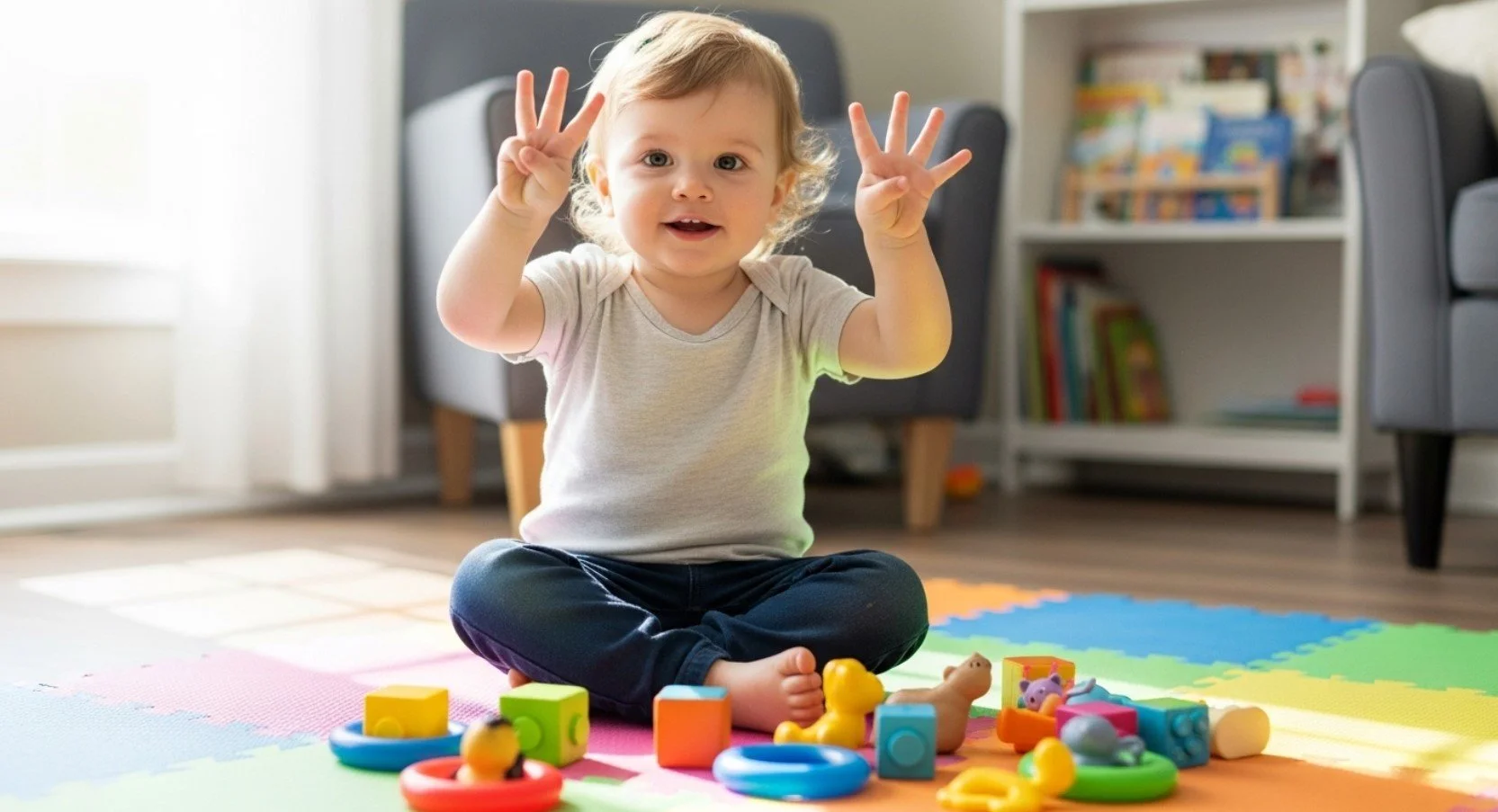
Here are some early signs that understanding may be developing:
Pointing to objects while saying numbers
Trying to count toys or snacks during play
Showing excitement when someone counts items out loud
Holding up fingers to match a number
Pausing between numbers while touching each object
These behaviors show the brain beginning to link numbers with quantities.
It doesn’t happen instantly. It’s a gradual process that develops through everyday experiences and playful learning.
Many toddlers start experimenting with this around age two or later, though the timeline varies.
When Parents Should (And Shouldn’t) Worry
Parents sometimes feel concerned when they compare milestones with other children.
One toddler may talk earlier, another may count earlier, and another may focus on physical skills like running or climbing.
Counting early is not a requirement for healthy development.
Many children don’t show interest in numbers until closer to preschool age.
What matters more is overall communication and interaction. Toddlers should show curiosity about their surroundings, respond to voices, and attempt to communicate through words, sounds, or gestures.
Also Read: Toddler Ate Crayon
A conversation with a pediatrician can help when a toddler shows very limited communication, rarely responds to their name, or struggles to interact with people.
Those situations deserve professional guidance.
Still, most differences in early milestones simply reflect natural variation in how children grow.
Fun Ways To Encourage Counting At Home
Toddlers learn best through simple everyday activities. You don’t need structured lessons or flashcards. Just weaving numbers into daily routines can make a huge difference.
Here are a few easy ways to introduce counting naturally.
Count toys during playtime
Use counting songs and rhymes
Count everyday things
The idea is keeping it relaxed and playful. Toddlers learn far more from fun interactions than from pressure.
Bottom Line
An 18-month-old counting to ten can definitely happen, and it’s always fun to hear. In most cases, though, the child is repeating a memorized number pattern rather than performing true counting.
That doesn’t reduce the excitement at all.
It actually shows the toddler has strong listening skills and a good memory for patterns.
Real number understanding develops slowly through play, repetition, and everyday experiences. Counting toys, singing songs, and talking about numbers during normal activities all help build that foundation.
So enjoy the moment when your little one proudly counts to ten.