Toddler Ate Crayon? (Here's What To Do)
If you’ve spent any time around toddlers, you already know they put everything in their mouths. Snacks, toys, random crumbs from the floor, and sometimes… crayons.
Before panic sets in, take a breath. This situation is actually pretty common.
Pediatricians and poison control centers get calls about this all the time, and most of the time it turns out to be harmless.
Still, it’s normal for parents to feel nervous when something like this happens.
The good news is that in most cases, eating a small piece of crayon doesn’t cause serious problems.
In this post, I’ll explain what happens if a toddler ate crayons and go over a few things to check and watch for afterward.
Are Crayons Toxic To Toddlers?
Most modern crayons are made with paraffin wax and non-toxic pigments. That means they’re designed to be relatively safe for kids, even if a curious toddler decides to take a bite.
Manufacturers know children use these products, so safety standards are pretty strict.
Because of this, a small nibble of crayon usually isn’t dangerous.
The body typically passes the wax without much trouble. In many cases, parents don’t notice any symptoms at all.
Problems are more likely if a toddler eats a large chunk or if the crayon is very old or from an unknown source. Older art supplies sometimes had different materials in them.
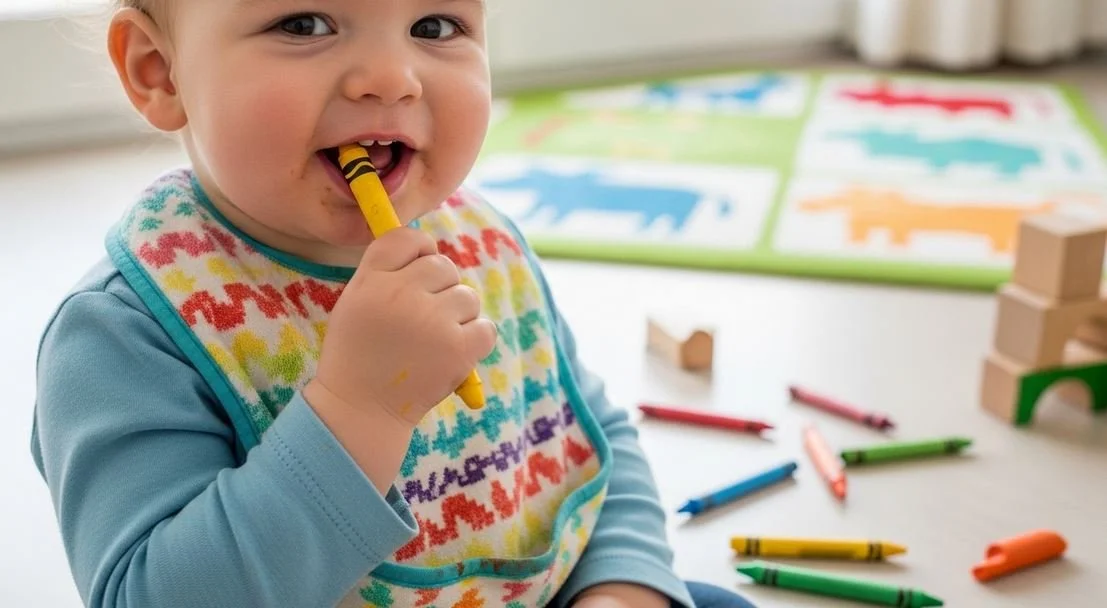
That’s not common with today’s products, but it’s still a good idea to check the packaging.
The main concern in most situations isn’t toxicity. It’s choking or swallowing a piece that’s too large.
What To Do If Toddler Ate Crayon
If you catch your toddler chewing on a crayon or realize they’ve swallowed a piece, stay calm. Here’s a few quick steps can help you make sure everything is ok:
#1 Check The Child’s Mouth
Start by taking a quick look inside your child’s mouth. Toddlers sometimes stash pieces of things in their cheeks or under their tongue.
If you see leftover crayon bits, gently remove them.
This step also helps you figure out how much may have been eaten. A tiny bite missing from the crayon is very different from half of it disappearing.
While you’re looking, check that your child seems comfortable.
If they’re breathing normally and acting like their usual self, that’s a good sign.
Also Read: Baby Ate Play-Doh
#2 Offer Some Water
Next, give your child a few sips of water.
This helps wash down any small wax pieces that might still be in the mouth or throat. It also encourages swallowing, which can clear out little fragments.
You don’t need to force them to drink a lot. A few sips is plenty.
Sometimes offering a normal snack can also help move things along.
A cracker or small bite of food can push any remaining bits down into the stomach where they can pass through the digestive system.
#3 Watch For Choking
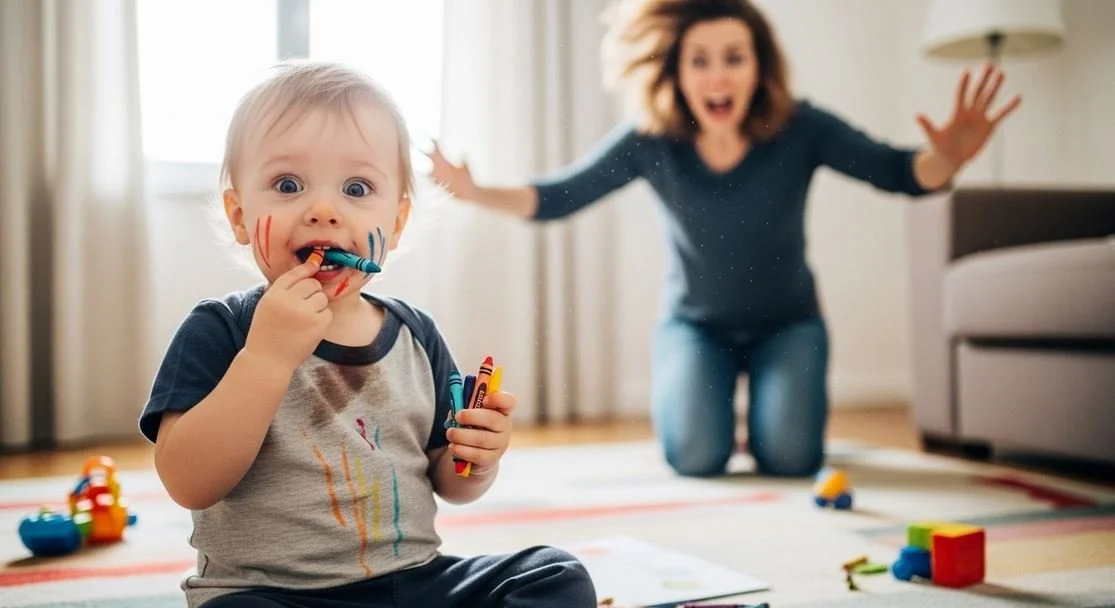
Choking is the biggest immediate concern with objects like crayons. If a child swallows a large piece, keep an eye on them for signs of trouble.
Watch for things like:
Persistent coughing
Gagging or difficulty swallowing
Trouble breathing or noisy breathing
If any of those signs appear, seek medical help right away.
Fortunately, most crayon pieces are soft enough that they don’t cause choking issues, but it’s still important to stay alert.
#4 Monitor The Child For A Few Hours
After the initial moment passes, simply keep an eye on your toddler for the rest of the day.
Most kids go right back to playing as if nothing happened.
Look for changes like stomach discomfort, vomiting, or unusual behavior. These symptoms are uncommon after eating a small amount of crayon, but it’s still smart to watch for them.
In many cases, the only “evidence” of the crayon incident appears later in the diaper or toilet.
If you hired Karen’s Nanny Agency, just tell her and she’ll keep an eye out.
What Happens If A Toddler Eats A Crayon?
For the majority of toddlers, eating a small piece of crayon doesn’t lead to any real health issues. The wax usually passes through the digestive system without being absorbed.
Sometimes kids experience mild effects like a brief stomach ache or slightly loose stool.
These symptoms typically fade quickly and don’t require treatment.
Another possibility is colored bowel movements.
Since crayons contain bright pigments, the color can show up again when it exits the body. It might look strange, but it’s generally harmless.
Think of crayon wax as something the body simply moves along and gets rid of. It doesn’t behave like food, and it doesn’t stay in the system.
Signs You Should Call A Doctor
Even though most crayon incidents are minor, there are times when reaching out to a medical professional makes sense.
Contact a doctor or poison control if you notice:
Your child ate a large amount of crayon
Repeated vomiting
Severe stomach pain
Difficulty breathing
Unusual sleepiness or behavior
You should also call if the crayon came from an unknown brand or very old art supplies and you’re unsure about the ingredients.
Doctors deal with these calls all the time, so don’t feel embarrassed about asking.
A quick conversation can give you peace of mind.
Also Read: Baby Hates Bassinet
Are Certain Crayons Safer Than Others?
Yes, some crayons are considered safer than others.
Many well-known brands label their products as non-toxic, which means they’ve been tested and meet safety standards for children’s materials.
Non-toxic doesn’t mean edible, of course.
It just means the ingredients are unlikely to cause serious harm if a small amount is swallowed.
When buying crayons for young kids, it’s a good idea to look for products designed specifically for toddlers. These often come in larger, chunkier shapes that are harder to break into small pieces.
Also try to avoid very old crayons that have been sitting in storage for years. Newer products usually follow updated safety guidelines.
Bottom Line
Finding out your toddler ate a crayon can definitely give you a mini heart attack, but in most situations it turns out to be no big deal.
Modern crayons are typically non-toxic, and a small bite usually passes through the body without causing problems.
As long as you checked their breathing, cleared their mouth, and confirmed the brand is non-toxic, you can breathe easy. Most kids go right back to coloring like nothing happened!