Baby Ate Styrofoam - Now What?
One of the fastest ways to spike a parent’s anxiety is realizing your baby just swallowed something that definitely wasn’t food.
Styrofoam has a special way of doing that.
It looks harmless, it’s everywhere, and it somehow ends up in tiny hands the second you look away. Suddenly your mind is racing, your phone is in your hand, and you’re wondering how serious this actually is.
The truth sits somewhere between “totally fine” and “let’s pay attention for a bit.”
In most cases, a baby eating a small piece of styrofoam doesn’t turn into an emergency, but it’s still not something you want to ignore.
In this post, we’ll explain what to do if your baby ate styrofoam.
Is Styrofoam Dangerous For Babies?
Styrofoam, also called polystyrene, isn’t poisonous. That’s usually the first thing parents worry about, and it’s totally understandable.
There aren’t toxic chemicals leaching into your baby’s system from a small piece.
The real concern is physical, not chemical.
Styrofoam doesn’t break down in the body, and it doesn’t dissolve like food does. That means the risks are more about choking or irritation as it moves through the digestive tract.
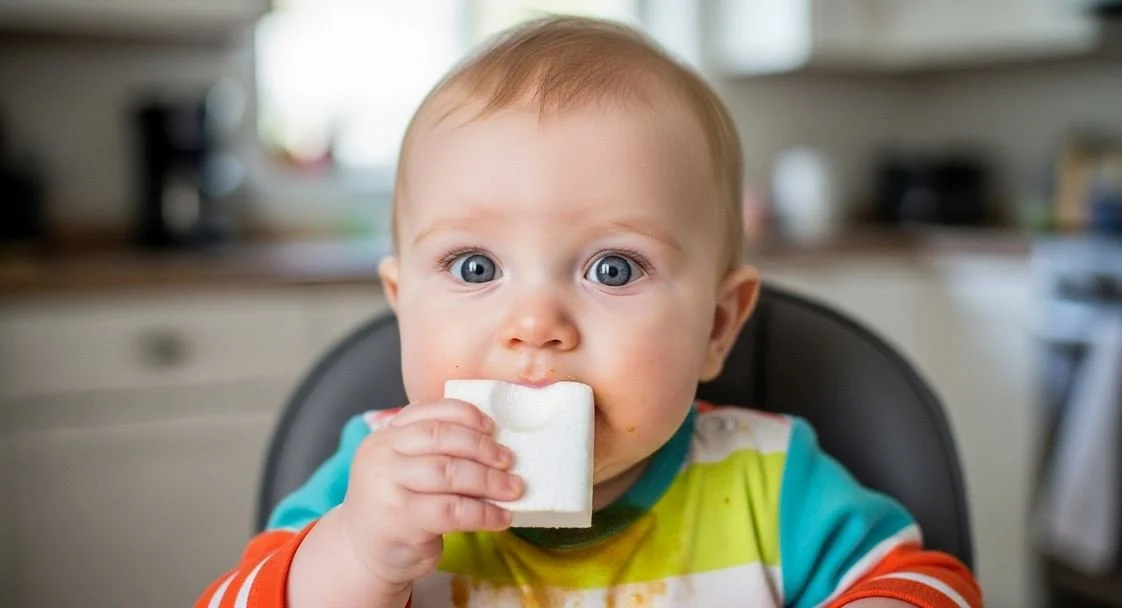
For most babies who get a tiny piece in their mouth and swallow it, nothing dramatic happens. Their bodies just treat it like any other non-food item and move it along.
Problems tend to show up when the piece is larger, sharp-edged, or if multiple pieces were swallowed.
Also Read: My Toddler Ate Tums
So no, it’s not dangerous in the scary poisoning sense.
What Happens If A Baby Eats Styrofoam?
Once styrofoam is swallowed, it heads down the esophagus into the stomach just like food would. From there, it travels through the intestines. The body can’t digest it, so it doesn’t get absorbed or broken down.
Small, soft pieces usually pass through without causing any trouble.
The digestive system is surprisingly good at handling odd things, especially in babies who already put everything in their mouths.
Larger or rigid pieces can sometimes irritate the lining of the stomach or intestines.
In rare cases, they can slow things down and cause a blockage. That’s not common, but it’s the reason doctors recommend monitoring instead of just forgetting about it.
Most of the time, the body does its thing quietly, without your baby ever noticing.
How Much Styrofoam Did Your Baby Eat?
This part really shapes what you should do next.
A crumb-sized flake from packaging is very different from a chunk bitten off a takeout container. Soft foam breaks more easily and tends to move along without resistance. Hard, compact styrofoam is more stubborn.
Also Read: Accidentally Put 2 Scoops Of Formula In 2 Oz
Ask yourself a few questions and be honest, even if you didn’t see the exact moment it happened:
Was it a tiny piece or something you’d clearly notice missing?
Did your baby gag, cough, or seem startled when it happened?
Did you see them swallow, or is it possible they spit it out?
If it was a very small piece and your baby is acting totally normal, chances are high that nothing more will come of it. Larger pieces deserve a little more caution and observation.
Immediate Steps To Take If Baby Ate Styrofoam
Right after you realize what happened, it’s easy to panic and want to do something. Slow down for a second. Here’s what actually helps in the moment:
Check your baby’s mouth to see if any styrofoam is still there. If you can easily remove it with a finger, do so gently.
Make sure your baby is breathing normally and not choking or gagging.
If your baby is old enough and swallowing well, offering milk or water can help move small pieces along.
Keep them upright for a bit instead of laying them flat right away.
What you don’t want to do is try to induce vomiting or stick fingers deep into their throat. That can create more risk than the styrofoam itself.
After that, observation becomes your main job.

Also Read: Baby Ate Apple Seeds
Symptoms To Watch For
Most babies will act completely normal after swallowing a small piece of styrofoam. Still, it’s important to know what’s not normal, so you can act quickly if needed.
Pay attention over the next day or two for things like:
Ongoing coughing, choking, or noisy breathing
Vomiting, especially if it keeps happening
A swollen or hard belly
Signs of pain like pulling legs up or crying more than usual
Refusing feeds or acting unusually sleepy or irritable
One symptom alone doesn’t automatically mean trouble, but a pattern or worsening signs should raise a flag. Trust your gut. Parents are often the first to notice when something feels off.
When To Call The Doctor Or Go To The ER?
There’s a big difference between “call the pediatrician” and “go now.” Knowing that difference can save you stress and unnecessary waiting rooms.
Call your doctor if your baby swallowed a larger piece and you’re unsure what to do next, or if mild symptoms show up and don’t improve.
Pediatricians handle these questions all the time and can guide you based on age, size of the piece, and symptoms.
Head to urgent care or the ER right away if you see trouble breathing, repeated vomiting, severe belly pain, or signs of blockage like no bowel movements paired with discomfort.
These situations are rare, but they’re the ones doctors want to see quickly.
You’re never overreacting by seeking help if your instincts say something isn’t right.
Will Styrofoam Pass In A Diaper?
In many cases, yes. Small pieces often pass through the digestive system within a few days. Sometimes parents notice it in a diaper, sometimes they don’t.
Both outcomes can be normal.
Babies don’t always poop on a predictable schedule, so timing can vary. A day or two without seeing anything unusual isn’t automatically a problem.
If your baby is pooping normally, eating well, and acting like themselves, that’s reassuring. Lack of bowel movements combined with discomfort is a different story and worth checking out.
How Doctors Handle Styrofoam Ingestion
When a baby is brought in for swallowing styrofoam, doctors will ask about timing, size of the piece, and symptoms.
Most of the time, a physical exam is enough.
Imaging like X-rays isn’t always helpful because styrofoam doesn’t show up well. That’s why doctors focus so much on symptoms and behavior instead of just test results.
In mild cases, the plan is simple observation at home. In more serious cases, doctors may monitor your baby in the hospital or consult a specialist.
Surgery is extremely rare and usually only considered if there’s a confirmed blockage or severe symptoms.
Bottom Line
Finding out your baby ate styrofoam is scary, but it’s usually not dangerous. Most small pieces pass through without causing harm, and many babies never show any symptoms at all.
Your role is to stay observant, keep things calm, and reach out for help if something doesn’t feel right. You don’t need to panic, and you don’t need to ignore it either.
Somewhere in the middle is exactly where good parenting lives.
And if this moment shook you a bit, that’s okay too. Parenting is full of surprises, and not all of them come with instructions.