My Toddler Ate Tums - Now What?
So, you’re standing in the kitchen, and you see it.
The bright, colorful bottle is on the floor, the cap is nowhere to be found, and your toddler is looking at you with a very suspicious, very chalky, very berry-scented smile.
Your stomach drops into your shoes, and your brain starts screaming in all caps.
You aren’t alone, and honestly, you’re basically a member of a very large, very stressed-out club of parents who have been exactly where you are right now.
The good news is that Tums are not usually dangerous in small amounts.
In this post, we’ll show you what to do if your toddler ate tums.
What To Do If Your Toddler Ate Tums?
The very first thing you should do is gently clear their mouth. Don't go poking around aggressively because you don't want them to choke or get scared, but try to get any remaining chalky bits out so they don't swallow more.
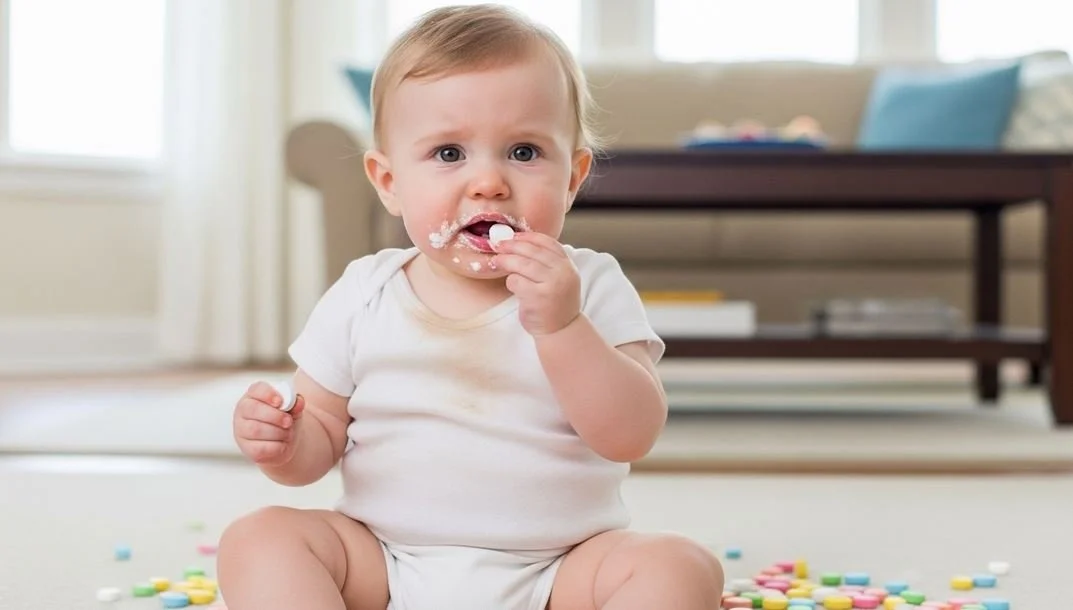
Here’s what to do after that:
Check the bottle and estimate how many tablets are missing
Look at the label for the strength (usually 500–750 mg of calcium carbonate per tablet)
See how your child is acting - alert, playful, breathing normally?
Offer a small amount of water
Call Poison Control at 1-800-222-1222 if you’re unsure about the amount
Poison Control in the U.S. is free and available 24/7.
You’ll talk to a real person who deals with this stuff all day long. They’ll ask your child’s age, weight, how many tablets might be missing, and what time it happened. Then they’ll tell you exactly what to do.
Do not try to make your child throw up. That old-school advice is outdated and can actually cause more harm.
Also Read: Toddler Ate Apple Seeds
If your toddler is having trouble breathing, is extremely drowsy, or seems confused, that’s when you call 911 immediately.
Those reactions are rare with Tums, but it’s important to know the red flags.
Why Tums Aren't Usually Dangerous
Here is the good news that should help your heart rate return to normal: Tums are essentially just calcium carbonate.
That’s basically a form of calcium - the same mineral that’s in milk and many calcium supplements. It’s not a toxic chemical, and it’s something the body already uses.
So if your toddler ate one or two tablets, the most likely outcome is… nothing dramatic.
Maybe a mild tummy ache. Maybe a little constipation tomorrow. Often, not even that.
The body is pretty good at handling small extra amounts of calcium. It absorbs what it needs and gets rid of the rest. That’s why in most accidental cases involving just a couple of tablets, kids do just fine with simple monitoring at home.
Of course, toddlers are tiny humans. What feels small to us isn’t always small to them. That’s why the amount matters so much.
Tums Can Be A Problem In Large Amounts
Now let’s talk about the situation that does need attention.
Large amounts of calcium carbonate can lead to something called hypercalcemia, which simply means too much calcium in the bloodstream.
This doesn’t usually happen from one or two tablets. It happens when a child eats a lot, like a handful, several tablets, or an unknown amount from a mostly full bottle.
Too much calcium can affect different parts of the body. It can:
Irritate the stomach and cause repeated vomiting
Lead to dehydration
Strain the kidneys
Affect heart rhythm in severe cases
Again, this is more common with significant amounts, not a stray tablet or two.
But if you open the bottle and realize half of it is gone, that’s not a “wait and see” moment. That’s when you pick up the phone and call Poison Control right away.
The good news is that even in larger ingestions, doctors know exactly how to treat it.
Most cases are managed smoothly, especially when caught early.

Also Read: Baby Ate Paper
What Symptoms Should You Watch For?
After the initial “oh no” moment, the next step is simple observation.
Keep an eye on your toddler for the next several hours. Mild symptoms can include an upset stomach, nausea, constipation and mild vomiting.
These are usually manageable at home, especially if your child is otherwise acting normal.
More concerning symptoms (which are uncommon but important) include unusual sleepiness, confusion, muscle weakness, or irregular heartbeat. If your child seems “off” in a way that makes your gut uneasy, trust that instinct and seek medical advice.
One thing to remember: toddlers can look dramatic over minor things. A single episode of spit-up doesn’t automatically mean something serious is happening. Look at the overall picture.
Are they playing? Making eye contact? Asking for snacks five minutes later?
That’s reassuring.
When You Can Likely Just Monitor At Home
If your toddler ate one or two regular-strength tablets and is acting completely normal, you’ll probably just need to keep an eye on them for the rest of the day.
Make sure they drink fluids and offer water throughout the day. Watch for constipation over the next 24 to 48 hours.
A little extra fiber in meals can help if needed.
Also Read: How Many Scoops Of Formula For 5 Oz?
Why Tums Can Be Tempting To Toddlers
Here’s the thing: Tums don’t look like medicine to a toddler. They look like candy. They’re colorful, sweet and chewable. Some even smell fruity.
To a curious little person, that’s basically a snack invitation.
Toddlers explore the world with their hands and mouths. They don’t understand labels, and they just see something fun and go for it.
That’s why it helps to:
Keep all medications locked up or stored high out of reach
Never refer to medicine as candy
Use childproof containers every single time
Even the best parents have close calls.
Accidents happen quickly, especially during those chaotic moments when you’re cooking dinner or answering a phone call.
Bottom Line
If your toddler ate a small amount of Tums, chances are they’ll be perfectly fine. One or two tablets usually don’t cause serious problems. You’ll just monitor for mild stomach upset or constipation.
If they ate a large amount or you’re unsure how many are missing, call Poison Control at 1-800-222-1222 right away.
It’s free, confidential, and available around the clock in the U.S.
They’ll walk you through everything calmly and clearly.
And if your child has severe symptoms like trouble breathing, extreme drowsiness, or confusion, call 911 immediately.
Most of the time, this story ends with you feeling shaken for a few hours and your toddler bouncing off the couch like nothing happened. Kids are resilient. And you’re doing exactly what a good parent does - you’re paying attention and asking questions.