Baby Doing Downward Dog (It’s Normal!)
If you’ve ever walked into the room and seen your baby with their little bottom in the air, feet and hands planted on the floor like they’re in a mini yoga class, you probably paused for a second.
Maybe you even thought, “Wait… is that normal?”
Take a breath. It is.
That pose is often called “baby downward dog” because it looks just like the yoga position adults do in class.
It might look a little dramatic at first. But most of the time, it’s just a healthy, playful stage of development. And honestly, it’s pretty adorable.
In this post, I’ll explain why your baby is doing downward dog and why it’s actually a great sign.
Why Do Babies Do Downward Dog?
Here’s why your baby is doing downward dog:
#1 It’s Part Of Normal Motor Development
During the first year of life, babies move through several motor milestones.
Tummy time turns into pushing up on arms. Pushing up turns into rocking. Rocking turns into crawling. It’s like a little chain reaction.
Downward dog fits right into that sequence.
It often shows up when babies are getting ready to crawl. They push up high because their bodies are figuring out how to shift weight between arms and legs.
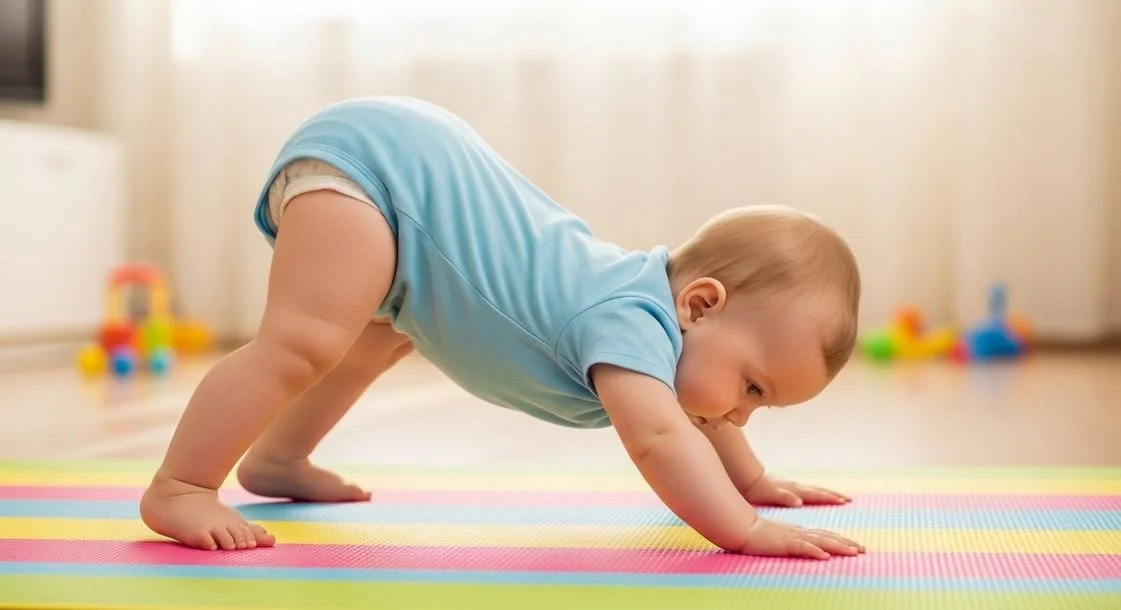
This stage can include:
Pushing up on straight arms
Lifting hips high in the air
Rocking back and forth
Scooting slightly backward
All of that movement is practice. It might look random, but it’s actually very purposeful, and your baby’s nervous system is connecting the dots behind the scenes.
Also Read: Baby Ate Cat Food
Sometimes babies even get “stuck” in that position for a moment, then gently lower themselves down. That’s completely fine.
#2 Helps Strengthen Arms, Shoulders, And Core
If you’ve ever tried doing downward dog yourself, you know it works your whole upper body. Babies are doing their own version of strength training.
When they lift into that pose, they’re strengthening arm muscles, shoulder stability, core muscles and hip flexibility.
And they’re doing it in short bursts throughout the day.
This strength is important because crawling, pulling to stand, and eventually walking all require solid upper-body support. The arms and shoulders don’t just disappear once babies start walking. They’re part of balance and coordination long-term.
#3 Prepares Them For Crawling Or Standing
One of the coolest things about baby downward dog is that it often shows up right before a big milestone.
Many babies lift into this position just before they start crawling.
They’re figuring out how to push through their legs while supporting themselves with their arms. It’s like they’re testing the engine before taking off.
Sometimes they’ll:
Rock forward and backward
Try to step one foot forward
Drop back down and try again
It can look like a mini workout session, but it’s really preparation. Their bodies are practicing weight shifting, balance, and coordination.
In some cases, babies even move from downward dog straight into standing if they’re near a couch or sturdy surface. That’s because the position naturally encourages them to push through their legs.
Also Read: Is It Safe To Put Snuggle Me In Bassinet?
It’s all connected.
#4 They’re Just Experimenting With Movement
Not every downward dog moment is about a milestone. Sometimes babies just enjoy exploring how their bodies move.
Babies are natural scientists. They lift their hips and think, “Oh, this feels different.” They look at the world upside down. They test balance. They rock because it feels fun.
There’s a playful side to it, too.
Some babies even giggle while doing it. It can become part of their little routine during floor play.
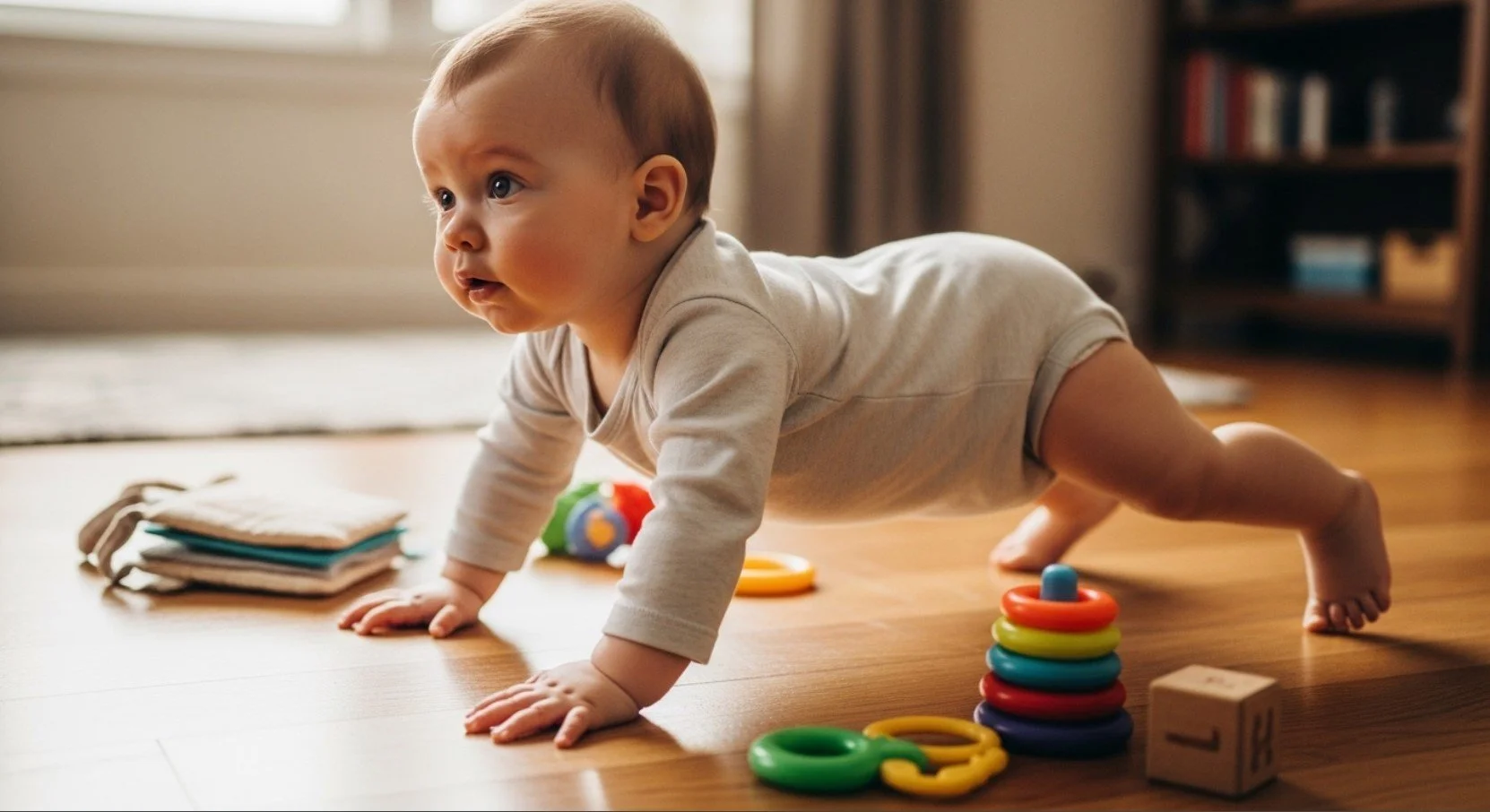
And here’s something comforting: babies tend to repeat movements that feel safe and interesting. If they’re popping into downward dog often, it usually means they feel comfortable and strong in that position.
At What Age Do Babies Start Doing This?
Most babies start doing downward dog somewhere between 6 and 10 months old.
That’s the general window when crawling skills are developing.
That said, babies don’t follow strict calendars. Some start earlier. Some skip crawling altogether and go straight to pulling up and cruising along furniture.
If your baby is doing this around that mid-first-year stage, it lines up perfectly with normal development. If they’re slightly earlier or later, that can still be totally fine.
Every baby has their own rhythm.
You’ll often notice downward dog appear after your baby has mastered pushing up on their arms during tummy time.
Is Baby Downward Dog A Good Sign?
Yes, baby doing downward dog is a very good sign. It shows good upper-body strength, active exploration and coordination in progress.
When babies voluntarily move into this position and back out of it smoothly, it usually means they have solid muscle control.
It also shows curiosity. And curiosity is a big part of healthy development. Babies who explore movement tend to keep building new skills naturally.
Of course, development is never about one single pose. It’s about the overall pattern of growth.
But downward dog by itself is generally positive.
Also Read: Why Is My Toddler Crossing Fingers?
Is It Safe For Babies To Do Downward Dog?
Yes, it's safe to do downward dog as long as a few simple conditions are met.
Make sure your baby is on a soft, safe surface like a mat or carpet, and they should be supervised. They should also be moving into the position on their own
You don’t need to place your baby into downward dog or encourage them to hold it.
Let them discover it naturally. Babies are very good at sensing their own limits.
If they wobble and gently plop down, that’s part of learning balance. As long as the surface is safe, there’s usually no reason to worry.
You also don’t need to correct them. There’s no “perfect form” requirement. They’re not in a yoga class - they’re building strength through play.
When Should Parents Be Concerned?
Most of the time, there’s no reason for concern. But there are a few situations where it’s worth checking in with a pediatrician.
You might want to ask about it if:
Your baby seems stiff or uncomfortable in the position
They only use one side of their body consistently
They can’t lower themselves down gently
You notice significant delays in other movement milestones
It’s not about one pose. It’s about the overall picture.
If your baby is active, curious, and progressing in their own way, that’s reassuring.
If something feels off in your gut, there’s nothing wrong with asking a professional for peace of mind. Sometimes just hearing “Everything looks great” can be incredibly comforting.
Bottom Line
Baby downward dog is usually a completely normal and healthy part of development. It’s strength building. It’s practice. It’s curiosity in motion.
What looks like a tiny yoga pose is actually your baby preparing for bigger skills like crawling and standing. And sometimes, it’s just them having fun exploring their world from a new angle.
So next time you see that little bottom in the air, try not to panic. Maybe even smile. You’re watching growth happen right in front of you.
And honestly, they’re probably doing a better downward dog than most of us.