Baby Ate Cat Food (Here's What To Do)
So you turn around for two seconds, and suddenly your baby is sitting next to the cat bowl like it’s a snack buffet.
If that just happened to you, first of all - breathe. This is one of those surprisingly common parenting moments nobody warns you about.
Babies explore with their hands, their mouths, and absolutely zero hesitation. If your little one grabbed a piece of cat food and popped it in, it feels dramatic in the moment.
But most of the time, especially if it was a small amount, it’s not a medical emergency.
In this post, we’ll go over what to do if your baby ate cat food.
Is Cat Food Dangerous For Babies?
No, cat food is not toxic and isn’t dangerous for babies if they ate it once.
That said, cat food is not made for babies and it has a very different nutritional balance than baby food. Cat food usually contains high levels of protein and certain minerals that are perfect for feline bodies but not ideal for infants.
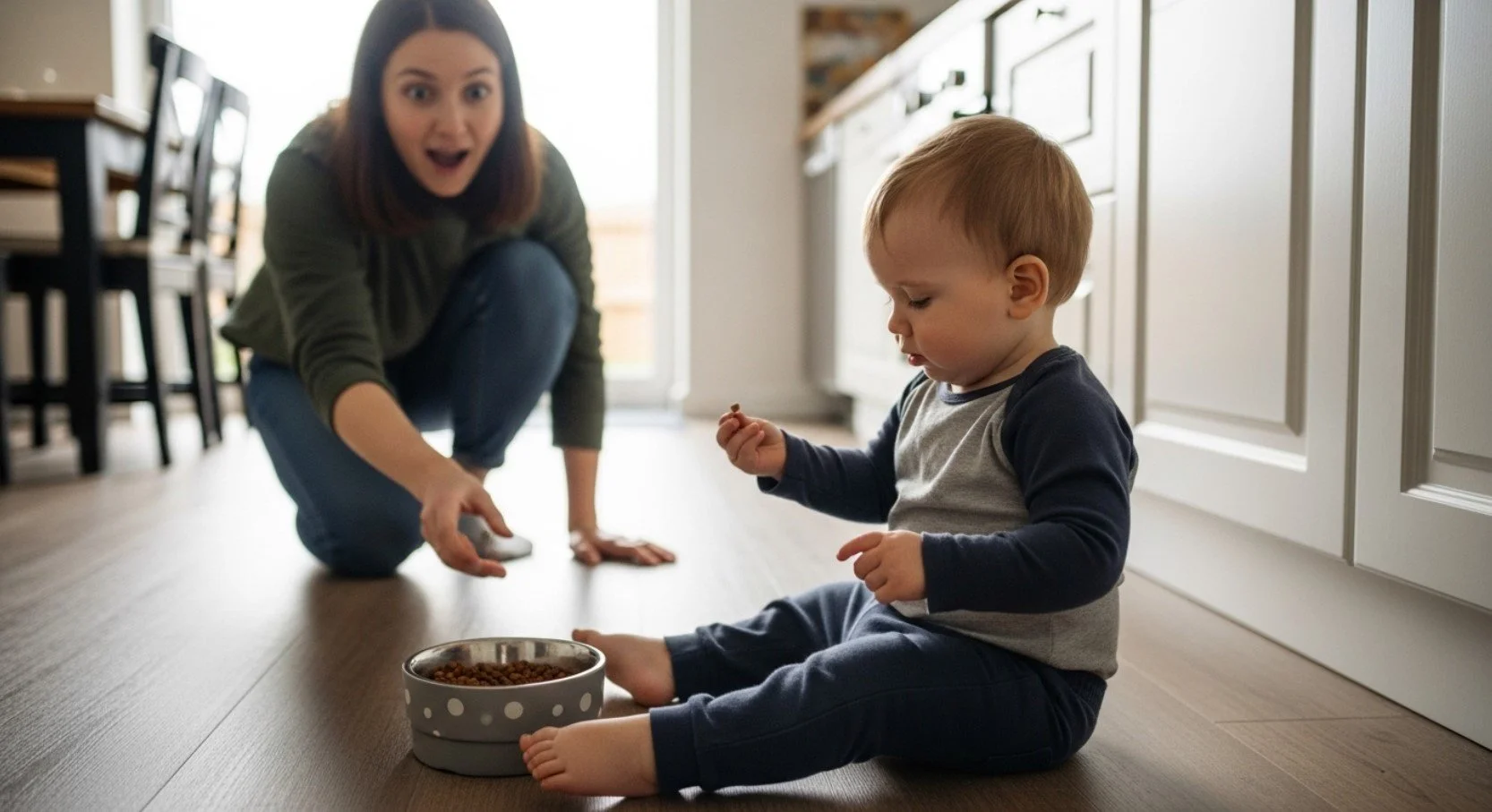
A small bite, though, typically won’t cause serious harm.
The bigger concerns tend to be choking or mild stomach upset.
Dry cat food (kibble) can be hard and small, which makes it a choking risk, especially for younger babies. Wet cat food is softer but can carry bacteria if it’s been sitting out for a while.
So while it’s not something you want your child eating, one accidental nibble usually falls into the “monitor and stay calm” category rather than “rush to the hospital.”
Also Read: Baby Ate Styrofoam
What To Do If Baby Ate Cat Food
Here’s what you do right away if your baby ate cat food:
Gently check their mouth and remove any remaining pieces.
Offer a few sips of water (if age-appropriate) or their usual milk.
Stay nearby and observe them for the next 24 hours.
If your baby seems completely fine (breathing normally, playing, acting like themselves) that’s a reassuring sign. There’s no need to induce vomiting or give special medication unless advised by a doctor.
What you’re mainly doing now is watching. Most reactions, if they happen, show up fairly quickly.
If nothing unusual occurs within the day, you can usually relax.
What Happens If A Child Eats Cat Food
In most cases, not much happens.
A small amount of cat food may pass through the digestive system without causing any noticeable issues.
Some babies might experience mild stomach upset. That could mean a slightly loose diaper later or a little extra fussiness. Think of it like their tummy reacting to something unfamiliar.
Rarely, if the food was contaminated with bacteria or has been sitting out too long, a child could develop symptoms similar to mild food poisoning.
Again, this isn’t common, but it’s possible.
The most immediate concern tends to be choking, especially with dry kibble. That’s why it’s important to quickly check their mouth if you catch them mid-snack.
If they’re coughing and then stop, and they return to normal breathing, that usually means they cleared it on their own.
Also Read: Baby Sleeping In Bouncer
Possible Symptoms To Watch For
You don’t need to stare at your baby all night, but do keep an eye out for changes.
Here are some signs that might appear:
Vomiting more than once
Diarrhea
Fever
Excessive drooling or difficulty swallowing
Unusual sleepiness or irritability
A single small spit-up isn’t necessarily a big deal. Babies spit up for all kinds of reasons. What you’re looking for is repeated symptoms or something that just doesn’t feel right to you.
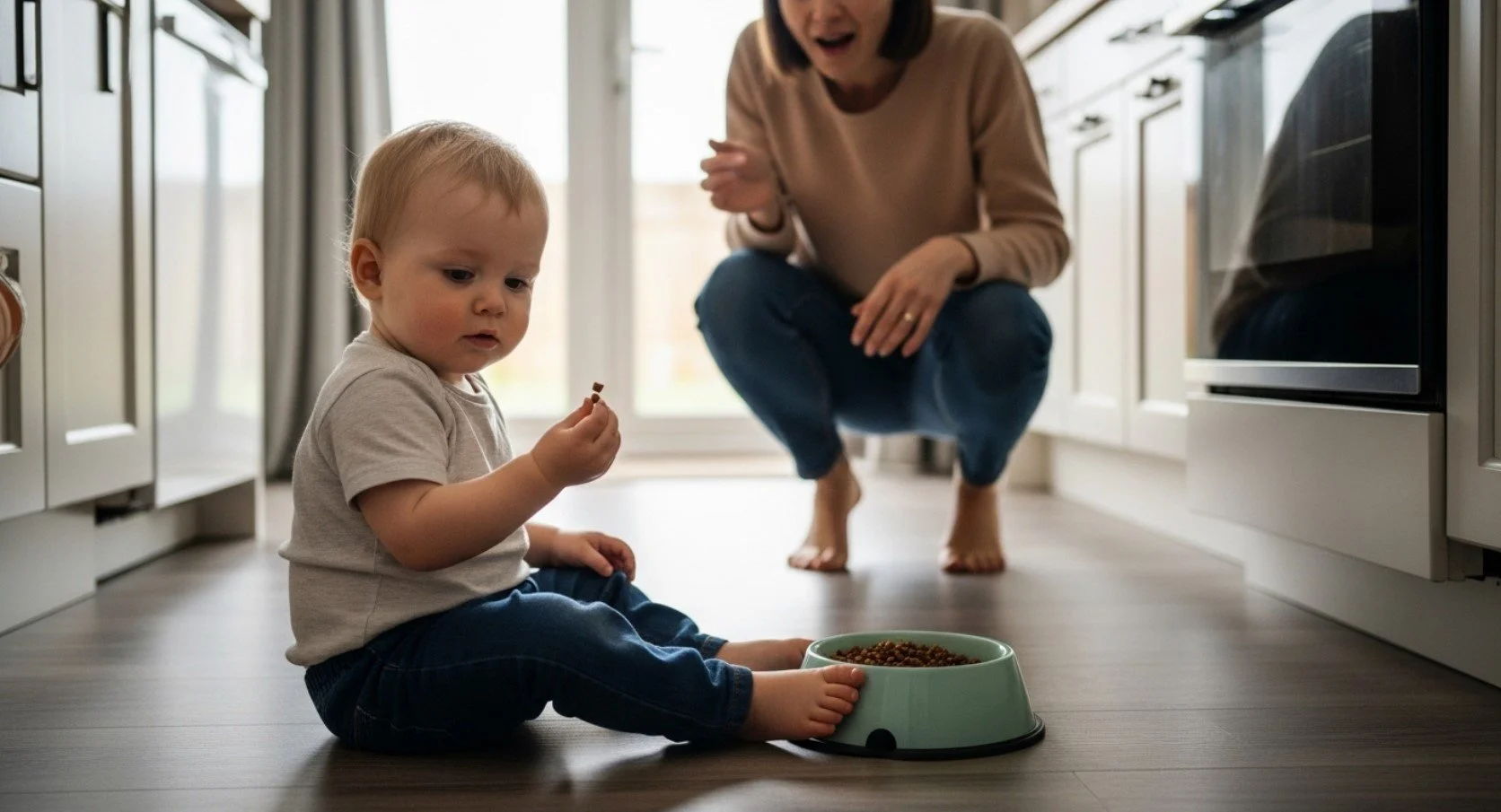
Trust your instincts. Parents often sense when something is off.
When To Call A Doctor Or Seek Emergency Care
Most situations won’t require a call, but here’s when you absolutely should reach out for help:
Trouble breathing or persistent choking
Severe or repeated vomiting
High fever
Signs of dehydration (dry mouth, fewer wet diapers)
Rash or swelling
If your baby is struggling to breathe, turning blue, or unable to cry or cough, call emergency services immediately.
Those are urgent signs unrelated to the cat food itself and more about airway blockage.
For anything less dramatic but still concerning, a quick call to your pediatrician can give you peace of mind. They’ll likely ask how much was eaten, what type of cat food it was, and how your child is acting now.
Why Are Babies Drawn to Cat Food?
Cat food is weirdly fascinating to toddlers.
Babies and toddlers live close to the ground. The cat bowl is right at eye level. It’s colorful, crunchy, and smells interesting.
To a curious little human who is learning about textures and tastes, it’s basically an irresistible science experiment.
There’s also the imitation factor. If the family cat eats it confidently every day, your child may assume it must be delicious. Kids are tiny observers and they copy everything.
And of course, the forbidden factor makes it even more appealing. If they’ve been told “no” before, that bowl becomes even more exciting.
Also Read: 8 Month Old Not Babbling
How To Stop Toddlers Eating Cat Food Again
Once it happens, you’ll probably want to make sure it doesn’t happen twice. These few simple adjustments can make a big difference.
Move the cat’s food bowl to a higher surface or gated area.
Feed the cat at scheduled times instead of free-feeding all day.
Supervise closely during crawling and walking stages.
You can also create a designated pet-feeding zone that’s physically separated from play areas.
Baby gates work wonders, so does consistency. If your toddler approaches the bowl, calmly redirect every single time. It may take repetition, but it works.
Remember, this phase doesn’t last forever.
As kids grow, they lose interest in random floor snacks. Eventually.
Bottom Line
If your baby ate cat food, you’re not alone. This is one of those parenting stories many families quietly share later and laugh about.
Most of the time, it’s not dangerous. The biggest risks are choking and mild stomach upset.
Check their mouth, offer a drink, and monitor for unusual symptoms over the next day. If anything concerning shows up, call your pediatrician. If breathing becomes an issue, seek emergency care immediately.
And maybe move that cat bowl tonight.
You’re doing just fine. Parenting is messy, unpredictable, and full of these strange little surprises.
The fact that you’re reading this and looking for guidance already says a lot about the kind of parent you are.