Why Is My Toddler Crossing Fingers?
You’re sitting there watching your toddler play, half-distracted, half-amused, and then you notice it. Their little fingers are crossed. On purpose. Not once, but a few times.
And suddenly you’re wondering if it's a thing.
Did they learn it somewhere? Is it a habit? Or am I about to fall down another late-night parenting rabbit hole?
If that sounds familiar, you’re in good company. Toddlers have a talent for doing tiny, unexpected things that feel way more significant than they usually are.
Finger crossing is one of those behaviors that looks intentional and loaded with meaning, even though it’s often just part of normal development.
In this post, we’ll talk through why toddlers cross their fingers, what’s usually behind it, and when it’s actually worth paying closer attention.
Reasons Toddlers Cross Their Fingers
There isn’t one single explanation that fits every child. Like most toddler behaviors, finger crossing can pop up for a few different reasons, and all of them are pretty ordinary.
Here are the main reasons:
#1 Imitating Adults Or Siblings
Toddlers are basically tiny mirrors. They copy everything including:
The way you talk
The way you sigh
The way you hold your phone
Even the random stuff you don’t remember doing
If someone in your home crosses their fingers while talking, hoping for good luck, joking around, or just fidgeting, your toddler might latch onto that movement.
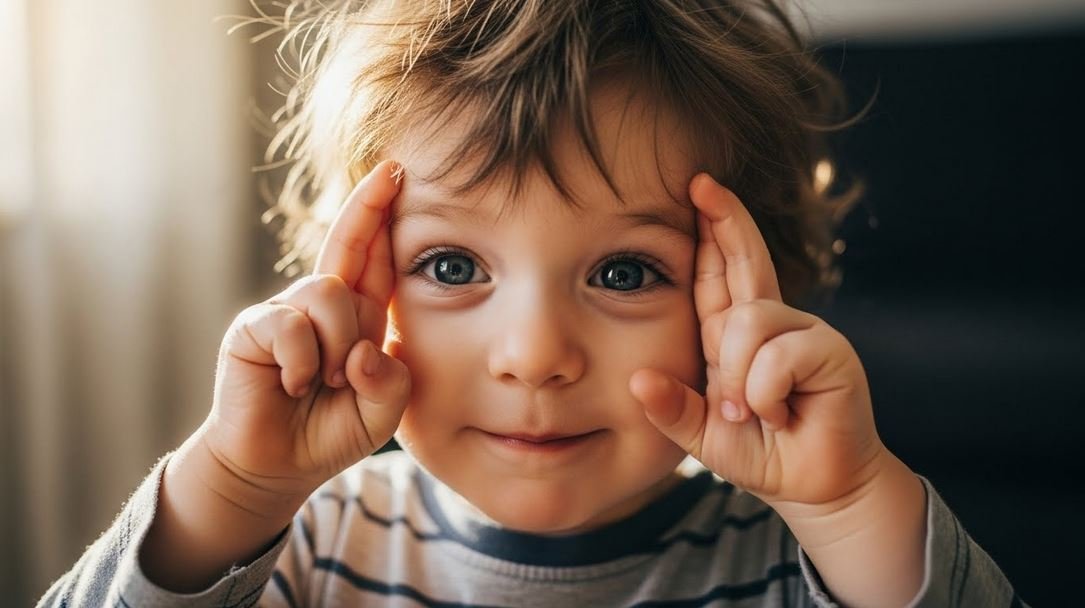
The same goes for older siblings. Toddlers love copying big kids because it makes them feel capable and included.
The funny part is that they don’t need to understand the meaning behind the gesture. They just see it, try it, and add it to their growing collection of “things humans do with their hands.”
Also Read: Baby Ate Paper
#2 Exploring Fine Motor Skills
This is a big one.
Between ages two and four, kids go through a huge phase of hand discovery.
They start realizing their fingers can move independently. They experiment with pinching tiny crumbs, turning pages one at a time, stacking small objects, and manipulating toys in more precise ways.
Crossing fingers is actually a pretty complex movement. It requires coordination, control, and awareness of finger placement.
When toddlers figure it out, it can feel like a little victory. So they do it again. And again. Sometimes while staring at their hand like it’s a science experiment.
This isn’t strange at all.
It’s part of how fine motor skills develop, even if it looks a bit random from the outside.
#3 Copying Characters From TV, Books, Or Videos
You might not remember seeing it, but kids notice everything.
A cartoon character crossing fingers for luck. A picture in a book. A YouTube video where someone does it casually while talking.
Toddlers soak up these small gestures and try them out later, often without any clear connection to where they learned it.
And because toddlers don’t explain their thought process, it can feel mysterious. In reality, it’s just another example of them practicing what they’ve observed in the world.
Also Read: Can Babies Have Whipped Cream?
#4 Self-Soothing Or Concentration Habit
Sometimes finger crossing shows up when a toddler is focused, tired, or calming themselves down. Similar to twirling hair, sucking a thumb, or clutching a favorite toy, it can become a small, comforting motion.
You might notice it during quiet play, while watching TV, or when they’re listening closely to something.
In these moments, the movement isn’t about copying or learning. It’s just their body finding a rhythm that feels grounding.
This kind of habit often fades on its own once the phase passes or another soothing behavior takes its place.
When Is Toddler Finger Crossing A Cause For Concern?
In most cases, it’s not. Truly.
That said, parents are wired to notice patterns, and that’s not a bad thing. It’s okay to pause and observe, especially if something feels off in combination with other behaviors.
It may be worth bringing up with a pediatrician if finger crossing comes with things like:
Very rigid, repetitive hand movements that don’t change with play or mood
Limited use of gestures overall, like pointing or waving
Delays in speech, motor skills, or social interaction happening at the same time
Even in these situations, finger crossing alone is rarely the issue. It’s just one small detail in a much bigger picture.
Pediatricians look at development as a whole, not one isolated habit.
If your toddler is active, curious, communicative in their own way, and engaged with their surroundings, this behavior is almost always harmless.
What Parents Should Do (And Not Do)
This is one of those moments where your response matters more than the behavior itself.
The best thing you can do is… not much.
Observe calmly. Let it be.
Toddlers often drop these habits naturally when they stop getting attention or when something more exciting comes along.
What helps is offering lots of opportunities for hand-based play. Things like drawing, playdough, stacking toys, puzzles, and simple crafts give their fingers plenty of practice and variety.
Also Read: Toddler Ate Apple Seeds
What doesn’t help is correcting, calling it out repeatedly, or asking them to stop. That can turn a passing habit into a longer phase simply because toddlers love reactions.
Even gentle concern can make a behavior stick around longer.
How Long Does This Phase Last?
Usually, not very long.
Some toddlers do it for a few days. Others for a few weeks. Occasionally it pops up on and off for a couple of months, especially during periods of growth, stress, or big changes like starting daycare or dropping a nap.
Then one day you realize you haven’t seen it in a while.
It just quietly disappears, replaced by a new skill, a new word, or a new obsession that takes center stage.
That’s toddlerhood in a nutshell. Constant change, often in unexpected ways.
Bottom Line
A toddler crossing their fingers is almost always a normal, harmless behavior tied to imitation, motor development, or simple self-soothing.
It looks meaningful to us because adult brains love symbols and explanations.
Toddler brains love movement and discovery.
Unless it shows up alongside broader developmental concerns, it doesn’t need fixing, correcting, or worrying over. Just another quirky reminder that toddlers are busy learning how their bodies work, one finger at a time.