Can Babies Drink Spring Water?
If you’re a new parent, you’ve probably spent an embarrassing amount of time staring at water bottles in the grocery store wondering which one is actually safe for your baby.
Spring water sounds healthy and natural, so it seems like an easy choice.
But when babies are involved, things get a little more complicated.
The short answer is yes, babies can drink spring water at certain ages and in certain situations.
Still, not all spring water is ideal for infants, and younger babies have very different hydration needs compared to older kids and adults.
In this post, I’ll explain if babies can drink spring water, when it’s safe, what to look for on labels, and a few things parents should know before using it for formula.
Can Babies Drink Spring Water?
Babies older than 6 months can usually drink small amounts of spring water safely, as long as the water is clean and low in minerals.
For younger infants, especially newborns, plain water is generally not recommended unless advised by a doctor.
A lot of parents assume all bottled water is automatically safer than tap water, but that’s not always true. Some spring waters contain higher levels of minerals like sodium or fluoride, which may not be the best fit for babies.
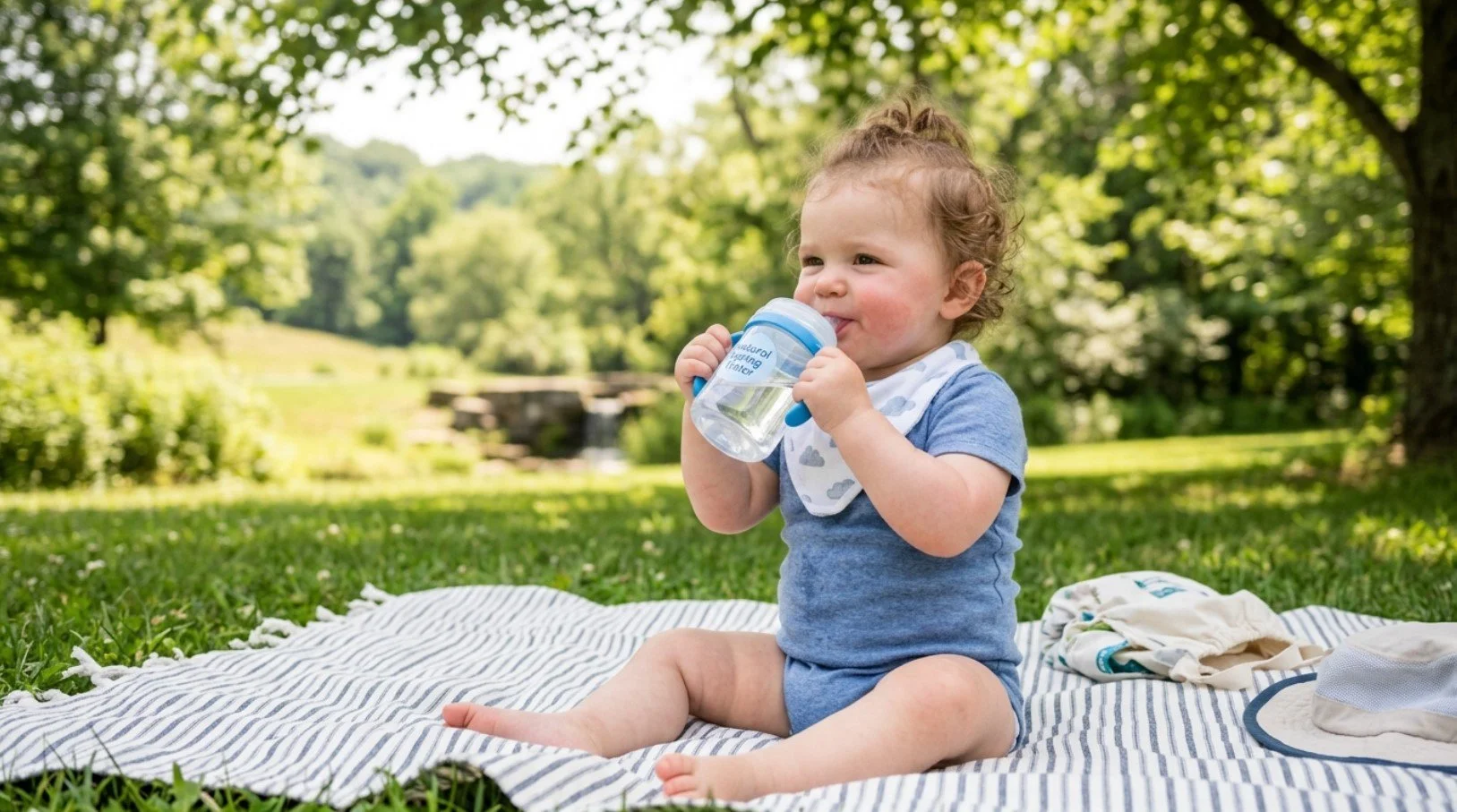
That doesn’t mean spring water is dangerous across the board, just that labels matter more than most people realize.
Also Read: Why Is My Two Month Old Drooling So Much?
Babies Under 6 Months Shouldn’t Drink Spring Water
Babies younger than 6 months generally shouldn’t drink plain water at all, including spring water.
At this age, breast milk or formula already provides all the hydration they need.
Giving too much water to a very young baby can actually be risky. Their kidneys are still developing, so they can’t process large amounts of water the same way adults can.
In serious cases, too much water may dilute sodium levels in the body and lead to something called water intoxication.
It’s rare, but it’s one reason pediatricians are careful about recommending plain water for tiny babies.
There’s also the issue of tummy space. Babies have incredibly small stomachs, and filling them with water can leave less room for the nutrients they actually need from milk or formula. Even a few ounces can make a difference at that age.
Breast milk or formula is usually enough to keep them hydrated, even during warmer months.
Is Spring Water Safe For Mixing Formula?
Spring water can sometimes be used to prepare formula, but it’s important to check the label first. Some brands contain higher mineral levels that aren’t ideal for infants.
Low sodium content is usually recommended, and many parents look for bottled water labeled specifically for babies or infant use.
Some pediatricians also recommend boiling water before mixing formula, especially for newborns or premature babies.
Boiling helps reduce bacteria risks, though it doesn’t remove minerals already present in the water.
If your local tap water is safe, many doctors actually say cooled boiled tap water works perfectly fine for formula.
It often surprises parents because bottled water feels more “pure,” but municipal water in many areas is heavily monitored and tested.
Also Read: Why Do Babies Stare At The Ceiling?
What To Look For In Spring Water For Babies
Walking down the bottled water aisle can feel oddly overwhelming because every label claims the water is crisp, pure, fresh, mountain-sourced, or naturally filtered through magical rocks somewhere.
None of that marketing really tells you what you need to know for your baby.
Instead, focus on the actual mineral information.
Low sodium is one of the biggest things to look for. Babies don’t need extra sodium, and some spring waters naturally contain more than others.
Lower mineral content overall is usually preferred too.
You’ll also want to pay attention to fluoride levels. Some fluoride is fine, but excessive amounts over time may contribute to dental fluorosis once teeth begin developing.
A few simple checks can help:
Read the nutrition or mineral label carefully
Choose trusted brands with clear testing information
Skip sparkling or flavored waters completely
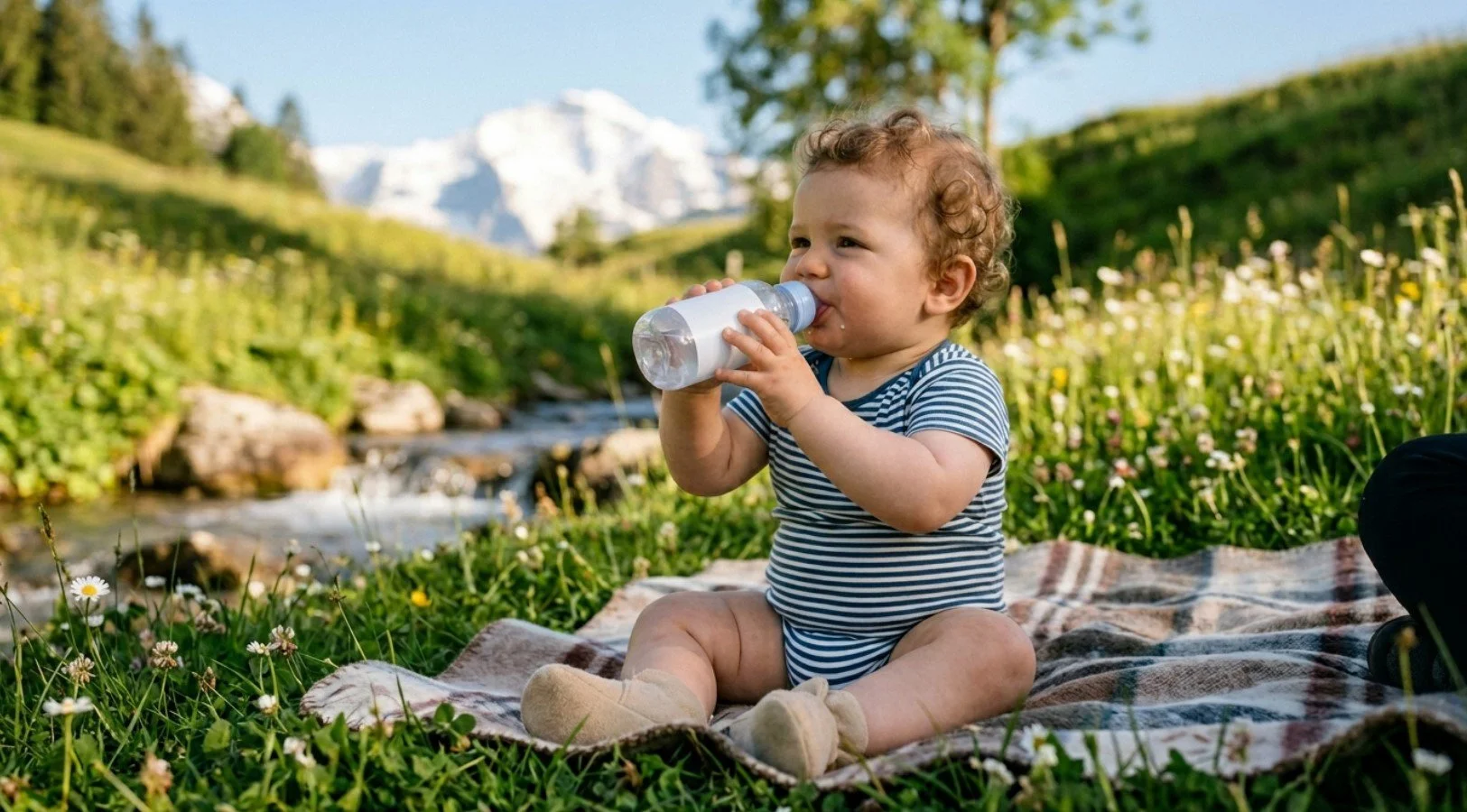
If the label seems vague or confusing, it’s probably not the best choice for a baby.
Spring Water Vs Purified Water Vs Distilled Water
Spring water comes from a natural underground source and usually contains naturally occurring minerals.
Some people like the taste because of those minerals, but for babies, too many minerals can sometimes be less ideal.
Purified water has gone through filtration or processing to remove impurities. This category can include tap water that has been heavily filtered. It often has fewer minerals.
Distilled water is boiled into steam and condensed back into liquid, which removes nearly all minerals and contaminants. Because it’s so purified, many parents use distilled water for formula, especially during the newborn stage.
Also Read: 6 Month Old Not Sleeping Through The Night
Signs A Water Source May Not Be Ideal For Babies
Some water sources simply aren’t great for infant use, even if adults drink them all the time without any issues.
Private well water, for example, may contain bacteria, nitrates, or contaminants if it hasn’t been properly tested. Water with extremely high mineral content can also be harder on a baby’s developing system.
One thing many parents miss is flavored or enhanced water.
Even tiny amounts of added ingredients can make those products inappropriate for babies.
A few red flags include:
Unclear labeling
Very high sodium levels
Water marketed with “added electrolytes”
Babies do not need sports-style hydration drinks or mineral-boosted waters.
If you’re ever unsure about a particular brand or source, bringing the label to your pediatrician is completely reasonable. Parents ask these questions all the time.
When Babies Can Start Drinking Water
Most babies can start having small amounts of water around 6 months old, usually when solid foods are introduced.
At first, it’s only a few sips here and there, not full bottles of water.
Milk or formula still does most of the hydration work during the first year. Water simply becomes an extra addition as babies begin eating solids and practicing drinking from cups.
As babies grow into toddlers, their water intake naturally increases.
By then, spring water is generally fine as long as it’s clean and safe.
One funny thing about older babies is that they often love trying to steal sips from their parents’ cups. That’s usually the stage where water suddenly becomes very exciting.
Bottom Line
Spring water can be safe for babies in many situations, but age matters a lot. Babies under 6 months generally shouldn’t drink plain water, while older babies can usually have small amounts once solids are introduced.
If you’re using spring water for formula, pay close attention to mineral and sodium levels and stick with clean, properly tested products.
And despite all the fancy marketing on bottled water labels, simple safe water is really the goal here, not the most expensive bottle on the shelf.
At Karen’s Nanny Agency, our nannies stay on top of these safety standards so you can rest easy knowing your baby is in good hands.