Why Do Babies Stare At The Ceiling?
If you’ve ever held a baby who suddenly became deeply fascinated with the ceiling, you’re definitely not alone.
Babies can stare at ceilings for surprisingly long stretches, sometimes smiling, sometimes looking serious like they’re solving complicated math problems.
Most of the time, it’s actually a very normal part of how babies explore the world around them.
The truth is, ceilings are way more interesting to babies than they are to adults. Their eyes and brains are still developing, so even tiny details can grab their attention in a huge way.
In this post, I’ll explain why babies stare at the ceiling.
#1 They're Focusing On Light And Shadows
Babies are naturally attracted to light. A ceiling may look plain and boring to you, but to a baby, it can be full of bright spots, shadows, and changing shapes.
Sunlight coming through a window creates movement throughout the day. Lamps cast soft glows and dark corners. Even the tiniest change in brightness can catch a baby’s attention because their visual system is still brand new.
Newborns especially love contrast.
That’s one reason babies enjoy black-and-white toys so much.
A ceiling with shadows, corners, or light patterns can actually be pretty stimulating for them.
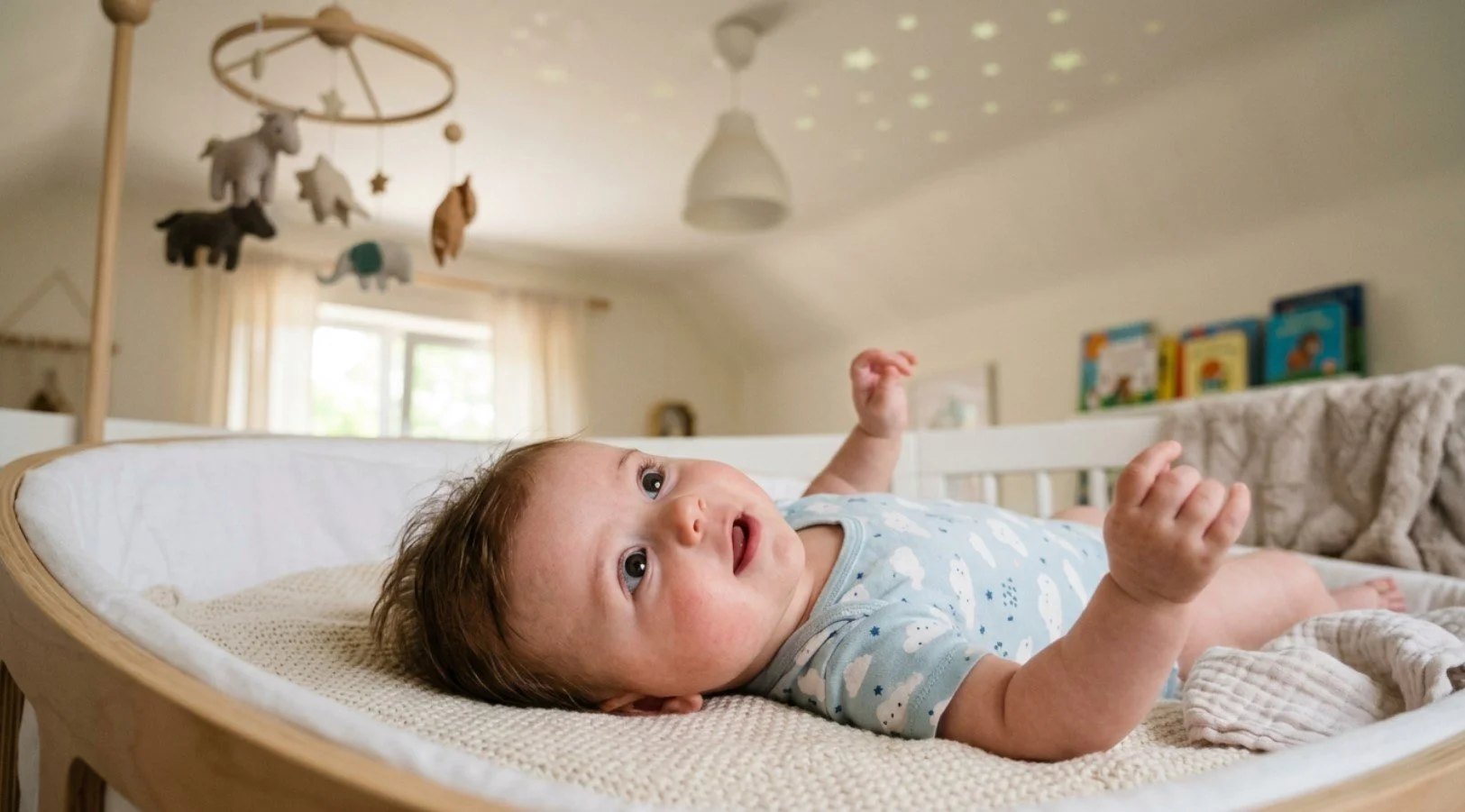
Sometimes parents think their baby is staring at one exact spot for no reason, but there’s often a reflection, a tiny shadow, or shifting light that adults barely notice anymore.
Also Read: Why Is My Two Month Old Drooling So Much?
#2 They're Practicing How To Use Their Eyes
This is another reason why babies stare at the ceiling.
Babies aren’t born with perfect vision. In the early months, they’re basically learning how to see.
Their eyes are working hard to figure out focus, tracking, depth, and movement.
Looking up at the ceiling gives them a simple, uncluttered space to practice all of that. Compared to a busy room full of colors and objects, the ceiling is easier to process.
They may:
Practice focusing on objects
Follow moving shadows or fans
Learn to coordinate both eyes together
This kind of visual exploration helps strengthen their developing vision over time. It’s one of those little things babies do naturally as their brains build important connections.
#3 Zoning Out / Processing
Babies spend a huge amount of time taking in new information. Literally everything is new to them. Sounds, faces, textures, lights, voices - their brains are constantly working overtime.
Sometimes ceiling staring is simply their version of zoning out.
Adults do this too. We stare out windows, watch rain fall, or drift off while thinking.
Babies can have similar quiet moments where they’re just processing everything they’ve experienced.
And honestly, babies get overstimulated pretty easily. The world is loud and bright. Taking a calm pause while staring upward may actually help them settle themselves.
You’ll often notice this after feeding, playing, being around lots of people or busy or noisy environments.
A calm ceiling can feel relaxing compared to all the excitement happening around them.
Also Read: Safe Alternatives To Cot Bumpers
#4 Your Baby Is Watching Movement Like Fans Or Dust
Ceiling fans are basically baby television.
A spinning fan combines movement, contrast, repetition, and changing light all in one place. For an infant, that’s premium entertainment.
Some babies become absolutely obsessed with them.
And it’s not just fans. Tiny floating dust particles, moving curtains, reflections, or even air vents can hold a baby’s attention for ages.
They might even be looking at that costly air conditioner you have.
Babies are incredibly sensitive to motion. Their brains are wired to notice movement because it helps them learn about the world around them. What seems invisible or unimportant to adults can feel fascinating to a baby seeing it for the first time.
This is why babies sometimes suddenly smile at the ceiling or follow something with their eyes that you can’t even spot yourself.
Usually, they’ve locked onto some tiny movement in the room.
#5 Taking A Break From Too Much Noise And Color
Babies also stare at the ceiling when they have too much.
Modern homes can actually be pretty overwhelming for babies. TVs are on, phones light up, people talk constantly, music plays, toys make noise - it’s a lot.
Ceilings are simple.
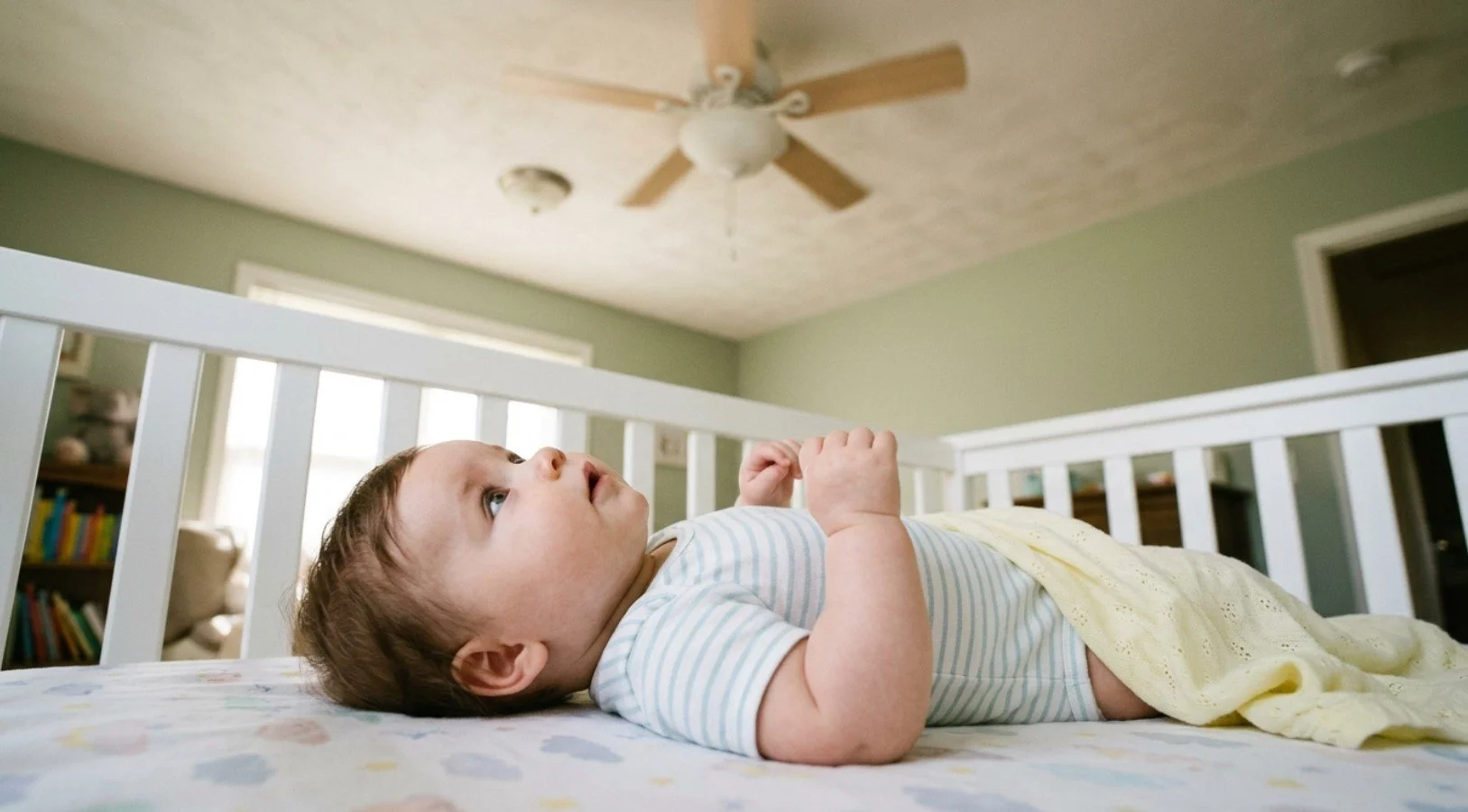
That simplicity can feel calming for babies who need a little sensory break.
Looking at a quiet, neutral space gives their brain time to slow down and reset. Some babies naturally do this when they’re tired but not fully ready to sleep yet.
Also Read: Nicknames For Michelle
It’s kind of like when adults sit quietly for a moment after a long busy day. Babies may not understand the world yet, but they still need downtime.
That’s why you’ll sometimes see a baby peacefully staring upward in total silence without crying or fussing at all.
Is Babies Staring At Ceilings Normal?
In most cases, yes it’s completely normal.
Babies stare at ceilings for all sorts of harmless reasons, especially during the newborn and infant stages. It’s usually connected to visual development, curiosity, or simple relaxation.
As long as your baby is otherwise behaving normally, interacting with you, and developing as expected, ceiling staring is generally nothing to worry about.
There are a few situations where it’s worth bringing up with a pediatrician, though.
For example:
No eye contact at all
Not reacting to sounds
Very unusual repetitive movements
Delayed developmental milestones
But occasional ceiling fascination by itself? Extremely common.
Funny Theories Parents Joke About
Of course, parents love creating dramatic explanations for ceiling staring.
You’ve probably heard at least one of these:
“The baby sees ghosts.”
“They’re talking to invisible friends.”
“They remember their past life.”
“There’s an old Victorian child living in the ceiling.”
And honestly, sleep-deprived parents at 3 a.m. can start convincing themselves of almost anything when a baby suddenly smiles at an empty corner of the room.
The internet has definitely made these jokes even more popular. Videos of babies laughing at ceilings or staring intensely into space always bring out hilarious comments from other parents.
Thankfully, the real explanation is usually far less spooky and much more adorable.
How Parents Can Encourage Healthy Visual Development
You don’t need to do anything complicated to support your baby’s eyesight and brain development. Simple daily interaction goes a long way.
Here’s what Karen’s Nanny Agency recommends:
Give your baby tummy time during awake periods
Use high-contrast toys and books
Move toys slowly so they can practice tracking
Talk, smile, and make eye contact often
Change their scenery occasionally
Even regular everyday moments help babies learn. Looking around during walks, watching faces, and noticing light changes all support healthy visual growth.
And yes, staring at ceilings counts as part of that learning process too.
Bottom Line
Babies stare at ceilings because they’re curious little humans trying to understand the world one tiny detail at a time. Light, shadows, movement, and quiet spaces can all feel incredibly interesting to a developing brain.
Most of the time, it’s completely normal and honestly pretty cute.
While adults see a boring white ceiling, babies may see changing patterns, floating dust, moving light, and endless new things to study.
So the next time your baby locks eyes with the ceiling like they’re having a deep conversation with it, there’s probably no mystery involved.