Can Babies Have Agave? (Solved)
When you start introducing solid foods to a baby, a lot of small questions suddenly pop up.
One of them might be about sweeteners. Maybe you’re preparing oatmeal, yogurt, or a homemade puree and you notice agave syrup sitting in the kitchen.
Since it’s often labeled as a “natural” sweetener, it’s easy to assume it might be a safe option for babies.
But baby nutrition works a little differently than adult diets.
In this guide, I'll explain why agave isn’t recommended for babies under one year old, when it may be introduced safely, and some healthier ways to naturally sweeten baby food.
Can Babies Have Agave Syrup?
You should not give babies agave because babies don’t need added sweeteners at all.
Breast milk or formula already provides the right balance of nutrients, and when solid foods are introduced, fruits and vegetables naturally contain enough sweetness.
Adding sweeteners like agave doesn’t provide meaningful nutritional benefits. Instead, it simply introduces extra sugar into a baby’s diet.
That said, agave syrup isn’t toxic for babies. Unlike honey, it doesn’t carry the same risk of infant botulism. So from a strict safety perspective, agave doesn’t fall into the “absolutely forbidden” category.

Also Read: Baby Ate Play-Doh
Why Agave Is NOT Recommended For Babies
There are several reasons why pediatricians suggest skipping agave for infants. Most of them come down to nutrition and healthy development rather than immediate safety concerns.
Let me explain:
#1 Babies Don’t Need Added Sugar
Babies grow incredibly fast during their first year. Because of that, every bite of food should ideally provide useful nutrients like vitamins, minerals, healthy fats, and protein.
Agave syrup is mostly sugar. It doesn’t deliver the nutrients babies need for brain development, bone growth, and immune support.
Adding sweeteners simply replaces space that could be filled with more nutritious foods.
For example, mashed avocado, yogurt, or fruit puree offers far more nutritional value than something sweetened with syrup.
#2 Very High Fructose Content
One unique thing about agave syrup is its extremely high fructose content.
In fact, it can contain even more fructose than regular table sugar.
Fructose is processed differently in the body compared to other sugars. Adults can handle moderate amounts, but babies have immature digestive systems that are still learning to process different nutrients.
Too much fructose may lead to digestive discomfort, bloating, or loose stools in some infants.
Because of that, experts recommend limiting foods that contain concentrated fructose during early childhood.
Also Read: Can Babies Have Honey Graham Crackers?
#3 Can Create A Preference For Sweet Foods
Babies are naturally drawn to sweet flavors. That’s why breast milk already tastes slightly sweet.
If very sweet foods are introduced early, babies may start expecting that level of sweetness in everything they eat. Over time, this can make them less interested in vegetables or mild foods that are important for balanced nutrition.
Introducing natural flavors early helps babies develop a broader palate.
In the long run, this can make healthy eating easier for the whole family.
#4 Potential Digestive Issues
Another reason to avoid agave for infants is the possibility of mild digestive problems.
Babies’ stomachs are still developing. Certain sugars, especially in concentrated form, can be difficult for them to process.
This can lead to:
Gas and bloating
Mild stomach discomfort
Changes in stool consistency
These symptoms aren’t usually serious, but they can make babies fussy and uncomfortable.
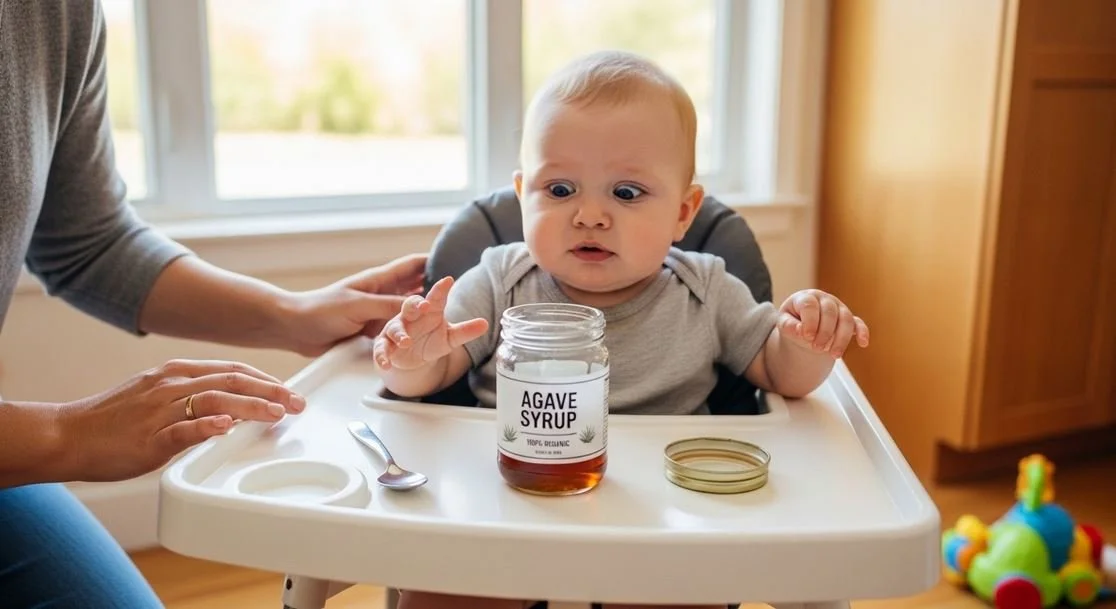
Since agave doesn’t offer nutritional benefits for infants anyway, it’s simpler to skip it.
When Can Babies Safely Have Agave?
Once a child reaches about one year old, their digestive system becomes much more mature.
At that stage, small amounts of sweeteners like agave are generally considered safe.
Even then, moderation is super important. Toddlers still benefit most from whole foods rather than added sugars. A small drizzle here and there isn’t a problem, but it shouldn’t become a regular part of every meal.
For example, parents sometimes add a tiny bit of agave to oatmeal or plain yogurt to make it more appealing.
Also Read: Black Specks In Formula
That kind of occasional use is usually fine for older babies and toddlers.
Still, it’s good to remember that natural sweetness from fruits often works just as well.
A mashed banana or blended pear can sweeten food naturally while adding vitamins and fiber at the same time.
How Much Agave Syrup Is Safe For Toddlers?
After the one-year mark, toddlers can handle a wider range of foods. Agave can be included occasionally, but it should stay a minor ingredient rather than a daily habit.
A small drizzle is usually enough to sweeten a dish without overloading it with sugar.
Toddlers quickly adapt to the flavors they experience regularly. If foods are always very sweet, they may start rejecting more balanced meals later on.
Health organizations also recommend limiting added sugars for young children overall.
Keeping sweeteners as an occasional treat rather than a daily ingredient helps support healthier eating habits as kids grow.
Healthier Ways To Sweeten Baby Food
Instead of using agave or other syrups, many parents rely on natural whole foods to add sweetness. These options provide nutrients along with flavor, which makes them far more suitable for babies.
Here are some popular choices that work beautifully in baby meals:
Mashed banana
Unsweetened applesauce
Pureed pear
Cooked sweet potato
Blended mango
These ingredients naturally enhance the taste of foods like oatmeal, yogurt, or baby cereal.
They also introduce babies to the flavors of real fruits and vegetables, which is exactly what their developing taste buds need.
Another bonus is texture. Many fruits add creaminess and moisture, making baby food smoother and easier to eat.
Signs Your Baby Is Getting Too Much Sugar
Even with natural sweeteners, balance still matters.
Babies and toddlers who consume too much sugar may show a few noticeable patterns. Parents sometimes observe signs like:
Refusing foods that aren’t sweet
Becoming overly picky at meals
Frequent cravings for sweet snacks
If these patterns appear, it can help to gradually reduce sweet foods and focus more on balanced meals with fruits, vegetables, proteins, and healthy fats.
Babies are incredibly adaptable. After a short adjustment period, most of them happily accept foods that aren’t heavily sweetened.
Bottom Line.
Agave syrup isn’t poisonous or dangerous in the way some foods are for infants. However, babies under one year old don’t need added sweeteners, and agave doesn’t offer meaningful nutritional benefits.
Because of its high fructose content and potential to shape sweet taste preferences, most experts recommend avoiding it during the first year.
After a baby turns one, small amounts of agave can be used occasionally.
Even then, it’s best to keep sweeteners minimal and focus on whole foods.