8 Awesome Play Doh Alternatives
Play-Doh has been around forever, and honestly, most kids still love it.
But sometimes you want something different.
Maybe you’re tired of dried-up little chunks stuck in the carpet. Maybe your kid wants a new sensory experience. Or maybe you just want an activity that keeps tiny hands busy for more than ten minutes.
The good news is there are plenty of fun play doh alternatives out there.
A lot of them also last longer than traditional Play-Doh, which parents definitely appreciate.
This list will go over my 8 favorites!
#1 Crayola Model Magic
Crayola Model Magic is one of the easiest swaps if your child already enjoys regular modeling dough. It has a super soft, lightweight texture that feels almost fluffy in your hands.
It’s less crumbly too, so cleanup tends to be way easier.
One thing kids really enjoy is that it air dries. Instead of smashing creations back into a container at the end of the day, they can actually keep them.
It’s also less sticky than traditional dough, and the colors mix together nicely too, so kids can experiment and create their own shades without making a giant muddy mess.
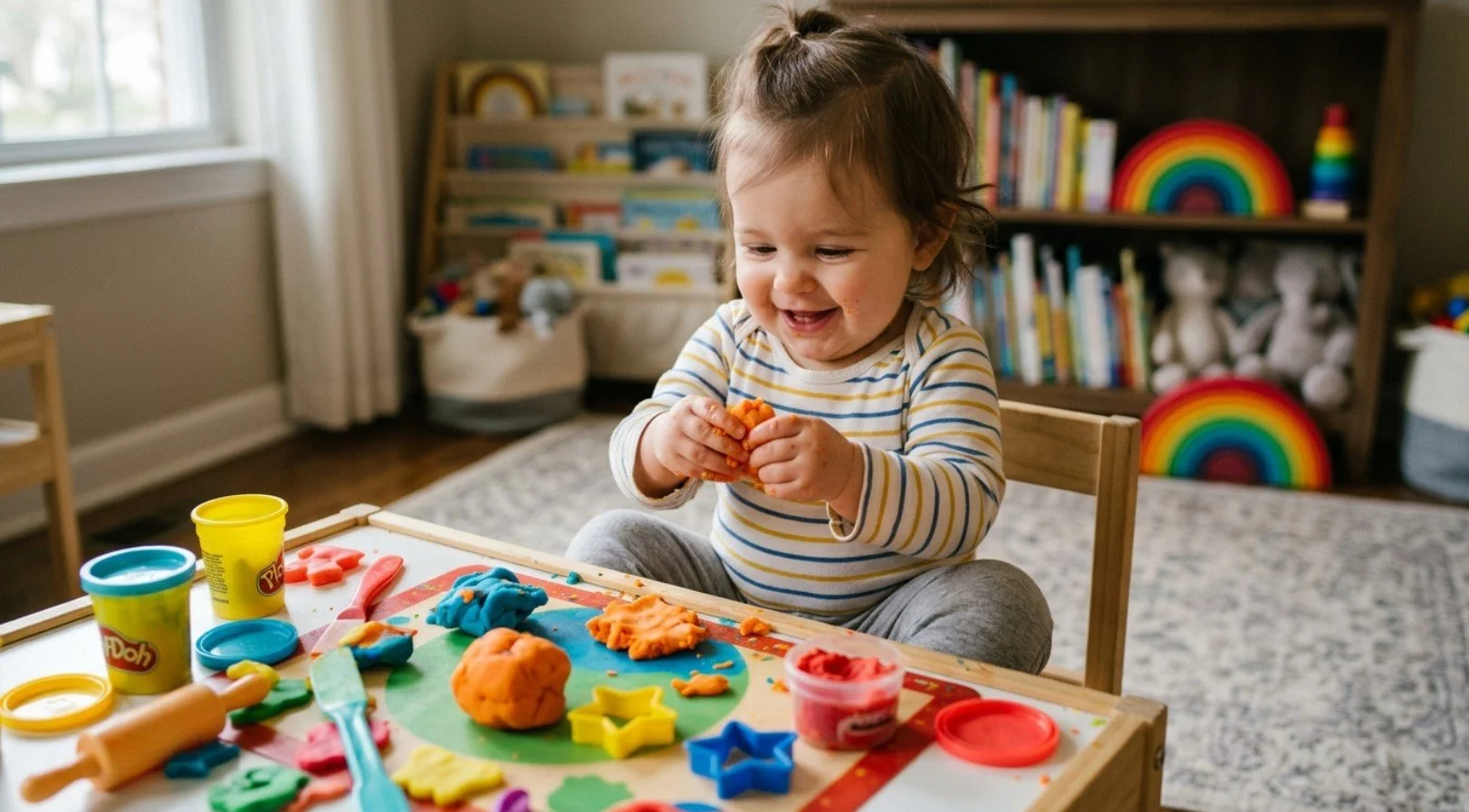
Parents usually like it because it doesn’t dry out quite as fast once opened. That alone can make it feel like a win.
Also Read: Baby Ate Play-Doh
#2 Kinetic Sand
Kinetic Sand is another good alternative to play doh.
It’s one of those sensory toys that’s oddly satisfying for everybody. Even adults end up poking at it while pretending they’re helping the kids.
It feels like soft sand, but it sticks to itself instead of scattering everywhere. That’s the magic.
Kids can mold it, slice it, scoop it, and squish it without dealing with the dusty mess regular sand creates.
A lot of children who lose interest in Play-Doh pretty quickly stay focused longer with Kinetic Sand because the texture is constantly changing. You can pack it tightly into molds or let it slowly crumble apart through your fingers.
It’s easier to clean than beach sand, but you still don’t want it buried in your couch cushions.
#3 Mad Mattr
Mad Mattr feels like a mix between dough and kinetic sand, but somehow even smoother. It has this stretchy, fluffy texture that’s hard to describe until you actually touch it.
Kids can mold it into shapes, pull it apart, and squish it endlessly. It also cuts really cleanly, which makes it extra satisfying for sensory play.
Another nice thing is that it doesn’t dry out quickly. Traditional dough can become hard after being left open for a while, especially during busy play sessions. Mad Mattr holds up much better.
It’s also lightweight and easy to store. Since it sticks mostly to itself, cleanup usually takes less effort than standard modeling compounds.
If your child likes sensory bins or calming tactile activities, this one is a play doh alternative.
Also Read: Nanit Pro Vs Nanit Plus
#4 Homemade Salt Dough
Homemade salt dough is probably the cheapest play doh substitute on this list, and honestly, it still holds up surprisingly well.
You only need a few basic kitchen ingredients:
Flour
Salt
Water
That’s it. Mix everything together and you’ve got a simple modeling dough ready to go.
A lot of parents love salt dough because it turns into a craft project too.
Kids can shape ornaments, handprints, little bowls, or decorations, then bake them and paint them later. Suddenly one afternoon activity becomes two or three.
It also gives kids a more hands-on experience since they get to help make the dough themselves.
The texture feels firmer than Play-Doh, so it’s better for sculpting than soft squishing. And yes, it can get messy. Flour somehow ends up everywhere.
#5 Crazy Aaron's Thinking Putty
Thinking Putty leans a little more toward older kids, but younger ones often enjoy it too with supervision. It’s stretchy, bouncy, tearable, and oddly relaxing to play with.
Unlike Play-Doh, this stuff behaves differently depending on how you use it.
Pull it slowly and it stretches. Yank it quickly and it snaps apart. Roll it into a ball and it can bounce surprisingly well.
Some versions glow in the dark, change colors, sparkle, or have magnetic effects, which makes them feel more exciting than traditional dough toys.
It’s also great for travel because it comes in small tins that fit easily into bags or backpacks.
One warning though: keep it away from fabric and hair.
Putty and long hair are not friends.
#6 Moon Dough
Moon Dough became popular because of its soft, airy texture. It feels lighter and fluffier than regular modeling dough, almost like compressed foam.
Kids can press it into molds and shapes really easily, and it tends to hold details pretty well.
Many sets come with little tools, presses, or themed kits that turn playtime into a mini activity station.
Also Read: Pacifier Alternatives
The texture is probably the biggest selling point here. Some kids who dislike sticky materials enjoy Moon Dough because it feels dry and soft at the same time.
It can crumble a bit during heavy play, though. You may find little pieces around the table afterward. Still, cleanup usually isn’t too bad since it doesn’t smear into surfaces the way softer dough sometimes does.
#7 Modeling Clay
Modeling clay is more of a classic art material, but it still works really well as a Play-Doh alternative.
The biggest difference is that it stays workable for a very long time without drying out.
That makes it perfect for kids who spend days building the same project. They can come back later and keep adding details instead of starting over every time.
Modeling clay is usually firmer too, which helps older kids create more detailed sculptures. Tiny figures, animals, cars, or buildings tend to hold their shape better compared to softer doughs.
There are a few different types available:
Oil-based clay
Polymer clay
Air-dry clay
Each one works a little differently, so it depends on what kind of projects your child enjoys most.
This option leans more artistic than sensory, but creative kids usually love it.
#8 Slime Kits
Slime kits exploded in popularity for a reason. Kids absolutely love making slime from scratch, mixing colors, adding glitter, beads, foam balls, or tiny charms.
The process itself becomes part of the entertainment.
Unlike Play-Doh, slime focuses more on stretching, poking, squeezing, and sensory play instead of sculpting.
A lot of kits come with pre-measured ingredients, which makes things easier for parents who don’t want to hunt down glue and activator supplies separately.
That said, slime can get messy fast if kids go overboard. Setting some ground rules helps a lot.
Still, few sensory toys keep kids entertained quite like slime does. There’s just something satisfying about it. Even our nannies at Karen’s Nanny Agency love it!
Bottom Line
Play-Doh will probably always have its place, but it’s far from the only fun sensory activity out there.
Trying different materials can also help kids explore creativity in new ways.
The nice thing is you don’t have to stick to only one option.
Rotating between a few different play doh alternatives keeps things fresh and makes playtime feel new again without needing complicated activities or expensive toys every week.