Baby Ate Paper (What Should I Do?)
You turn your back for two seconds, and suddenly your baby has something in their mouth that absolutely does not belong there.
If that something happens to be paper, welcome to the club.
This is one of those parenting moments that feels alarming at first, then confusing, and finally leaves you Googling at full speed.
Here’s the good news: in most situations, a baby eating paper is not a big deal.
Annoying, yes. Gross, also yes. Dangerous? Usually no.
In this post, I’ll go over what to do if your baby ate paper, what you can safely ignore, and when it’s time to call for help, to make the situation feel a lot less overwhelming.
Is It Dangerous If A Baby Eats Paper?
No, it's not dangerous if your baby ate a small amount of paper.
Most of the time, paper itself is not toxic. Plain paper is made from wood pulp, and small pieces tend to soften with saliva and pass through the digestive system without issues.
That’s why pediatricians usually don’t panic when parents call about a baby gnawing on a receipt or a page from a magazine.
The real concern is less about poisoning and more about choking or irritation.
A baby who stuffs a big wad of paper into their mouth can gag or struggle to swallow it. Paper with coatings, ink, glue, or chemicals can irritate the mouth or tummy, especially if more than a tiny amount gets swallowed.
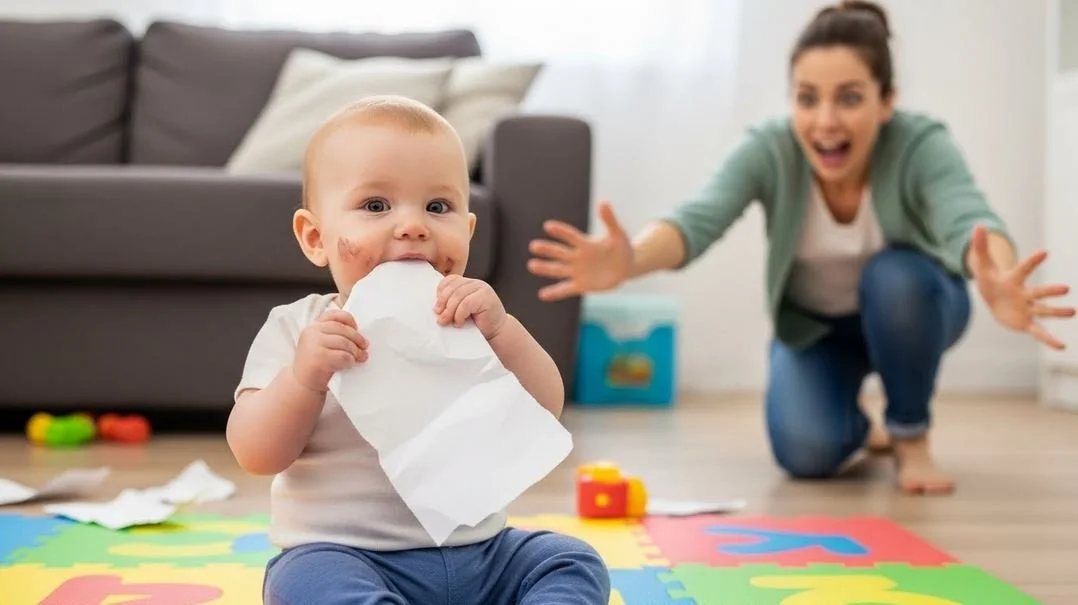
Age matters too. Younger babies who are still mastering chewing and swallowing have a higher choking risk compared to older babies who can handle textures better.
Also Read: Toddler Ate Apple Seeds
Still, even in younger infants, small paper bits usually turn into soggy mush pretty fast.
So yes, it looks scary. But in most everyday cases, this lands firmly in the “keep an eye on them” category, not the “rush to the ER” category.
What To Do Immediately If Your Baby Ate Paper
That initial moment can feel scary, mostly because it happens so fast and catches you off guard.
But slow things down and focus on your baby, not the paper.
Most of the time, a calm response is all that’s needed, and a few simple checks can tell you a lot about how serious the situation is:
Gently check your baby’s mouth and remove any paper you can clearly see
Make sure your baby is breathing normally without coughing or choking
Sit your baby upright to reduce the risk of gagging
Offer milk or water if your baby is old enough to drink
Stay nearby and watch for any changes over the next little while
Signs Your Baby Is Fine After Eating Paper
Babies who are perfectly okay after eating paper often act… completely normal.
No crying. Just business as usual.
Some common signs things are totally fine include calm breathing, normal feeding, regular diaper output, and typical mood. You might even see small paper flecks in a diaper later, which looks weird but is not a problem.
You may notice mild gagging right after it happens, or a brief look of disgust, which honestly feels appropriate. That usually passes quickly.
If your baby eats, sleeps, and plays like they normally do afterward, that’s your biggest reassurance.
Also Read: Baby Poop Smell Like Fish
Warning Signs That Need Medical Attention
While most cases are harmless, there are moments when paper-eating crosses into “call for help” territory.
Trust your instincts here. If something feels off, it’s always okay to reach out to a professional.
Get medical help quickly if you notice:
Trouble breathing, persistent coughing, wheezing, or choking sounds
Repeated vomiting or refusal to feed
A swollen, hard, or painful-looking belly
Blood in stool or black, tar-like stools
These signs can point to choking, blockage, or irritation that needs medical care.
Thankfully, this is SUPER rare, but it’s important to know what to watch for.
Does Paper Digest Or Pass Through The Body?
Paper doesn’t really digest in the same way food does. Instead, it softens and moves through the digestive system.
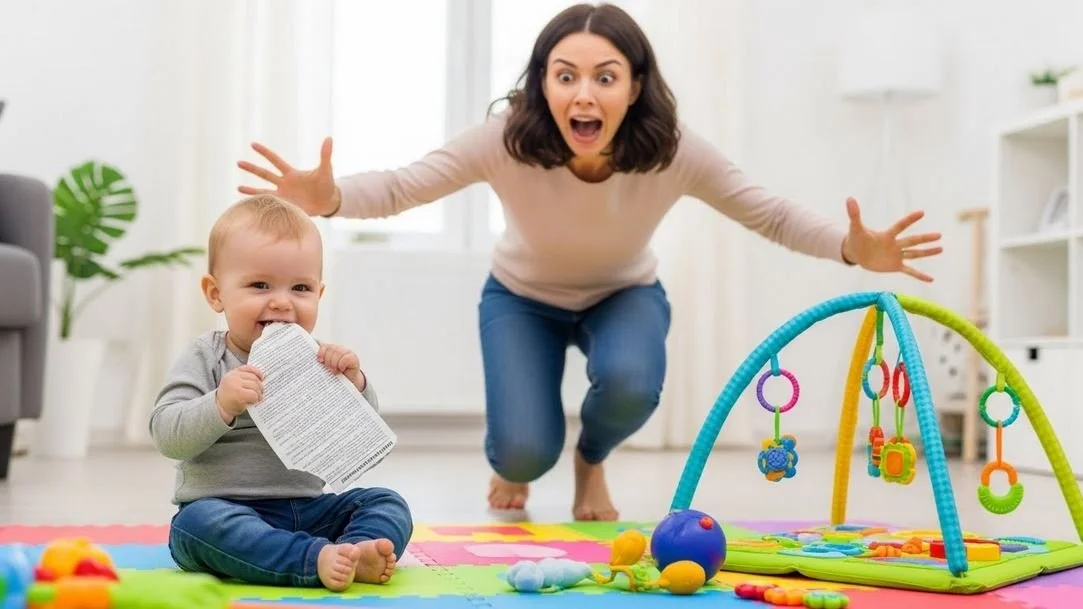
Small amounts usually pass without causing any issues, especially if your baby is well-hydrated.
Problems tend to happen only if a large amount was swallowed or if the paper was thick, stiff, or coated. In those cases, paper can clump together and slow things down, leading to constipation or tummy discomfort.
Also Read: Dropped Phone On Baby’s Head
For most babies, though, paper exits quietly and unceremoniously, often without parents ever noticing.
Different Types of Paper and Potential Risks
There are different types of papers and some types are more irritating than others, and knowing the difference can help you decide how worried to be.
Here’s a quick risk level guide:
Tissue paper: Low (dissolves quickly with saliva)
Plain printer paper: Low (non-toxic and softens easily)
Cardboard: Medium (thicker, harder to break down)
Glossy magazine paper: Medium (coated surface can irritate)
Paper with glue or stickers: Higher (adhesives can upset the stomach)
Receipts: Higher (often coated with chemicals)
If your baby chewed on plain paper or tissue, the risk is minimal. Receipts and glued materials are more of a concern, not because of instant danger, but because they can irritate the digestive system.
When To Call The Pediatrician
Calling the pediatrician doesn’t mean something is terribly wrong. Sometimes it’s just about peace of mind.
If your baby swallowed paper with ink, glue, or chemicals, or if you’re unsure how much they ate, a quick call can help you decide next steps.
It’s also smart to call if symptoms show up hours later, like vomiting or unusual fussiness. Pediatricians hear this question all the time, and they’re used to walking parents through it calmly.
If your baby seems completely fine, eating normally, and acting like themselves, observation at home is often enough.
Bottom Line
Babies explore the world with their mouths. Paper just happens to be one of those things they find fascinating, crinkly, and apparently delicious.
In most cases, a baby eating paper is more of a parenting jump scare than a medical emergency.
Stay calm, check their mouth and breathing, offer fluids, and watch for symptoms. Plain paper usually passes without trouble. Certain types of paper deserve closer attention, but even then, serious problems are rare.
If something feels off, trust that instinct and call your pediatrician. And then, once the moment passes, feel free to laugh a little.
Parenting is full of these bizarre episodes, and this is one of the more harmless ones.