Can Babies Have Whipped Cream? (Solved)
If you’ve ever been halfway through a dessert and suddenly felt a tiny pair of eyes burning into your soul, you already know how this question comes up.
One minute you’re enjoying your treat, the next your baby is leaning forward, mouth open, completely convinced that whatever you’re eating must be life-changing.
And when that treat happens to be whipped cream, things feel even more confusing.
It’s soft. It’s fluffy. It practically disappears the second it touches your tongue. It feels like it should be harmless.
Whipped cream isn’t some forbidden food that needs to be locked away forever, but it’s also not something babies actually need.
In this post, I’ll explain if babies can have whipped cream, when to skip it, and what to offer instead if you’re aiming for something a little more baby-friendly.
What Is Whipped Cream Made Of?
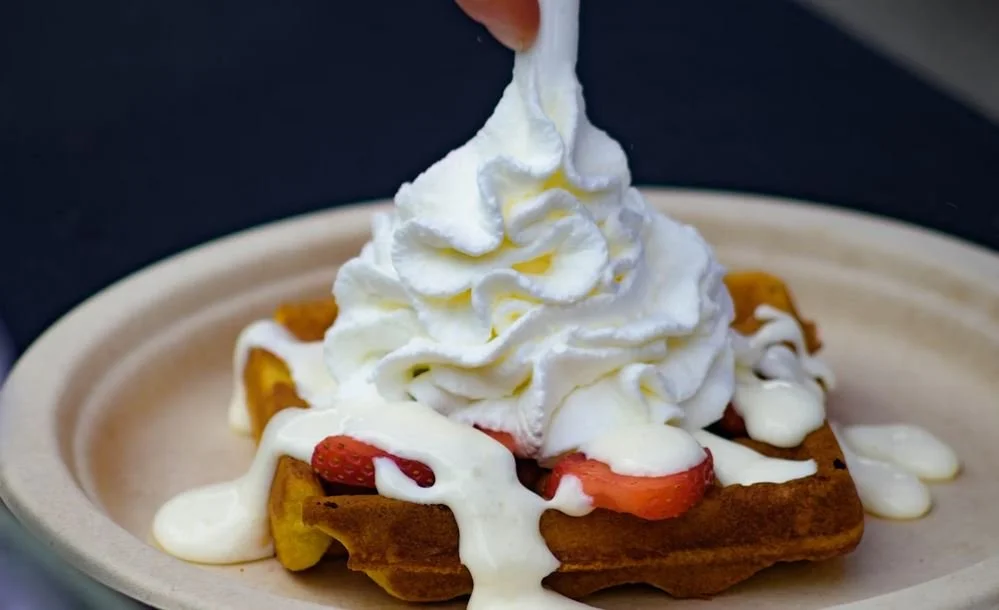
At its simplest, whipped cream starts as heavy cream. When you whip it, air gets trapped inside the fat, which is what gives it that light, cloud-like texture.
Some people add sugar. Others add vanilla. That’s it.
Homemade whipped cream is usually pretty straightforward. You can see every ingredient going into the bowl, which is reassuring when you’re feeding someone so small.
Store-bought whipped cream is another story. The kind that comes in tubs or spray cans often contains stabilizers to help it hold its shape, added sweeteners, and preservatives to keep it shelf-stable longer.
None of this is shocking or unsafe for adults, but it does matter more when you’re talking about babies with brand-new digestive systems.
Also Read: Baby Ate Paper
Is Whipped Cream Safe For Babies?
From a texture standpoint, whipped cream is about as gentle as it gets.
It’s soft, airy, and melts almost instantly in the mouth. Choking risk is very low, especially compared to foods with chunks, skins, or hard edges.
The real conversation around safety has more to do with what whipped cream contains rather than how it feels.
Dairy can be complicated for some babies, especially early on. Sugar doesn’t offer any benefit for babies and can be rough on tiny teeth once they start coming in. And nutritionally speaking, whipped cream doesn’t bring much to the table.
So when people ask if it’s safe, the honest answer is yes, in the sense that it’s unlikely to cause harm in small amounts.
But safe doesn’t automatically mean useful or necessary.
Can Babies Have Whipped Cream?
Babies under six months should NOT have whipped cream.
At that stage, their bodies are designed for breast milk or formula only. Solids haven’t entered the picture yet, and treats definitely shouldn’t either.
Once a baby is around 6 months old and has started eating solid foods, things open up a little.
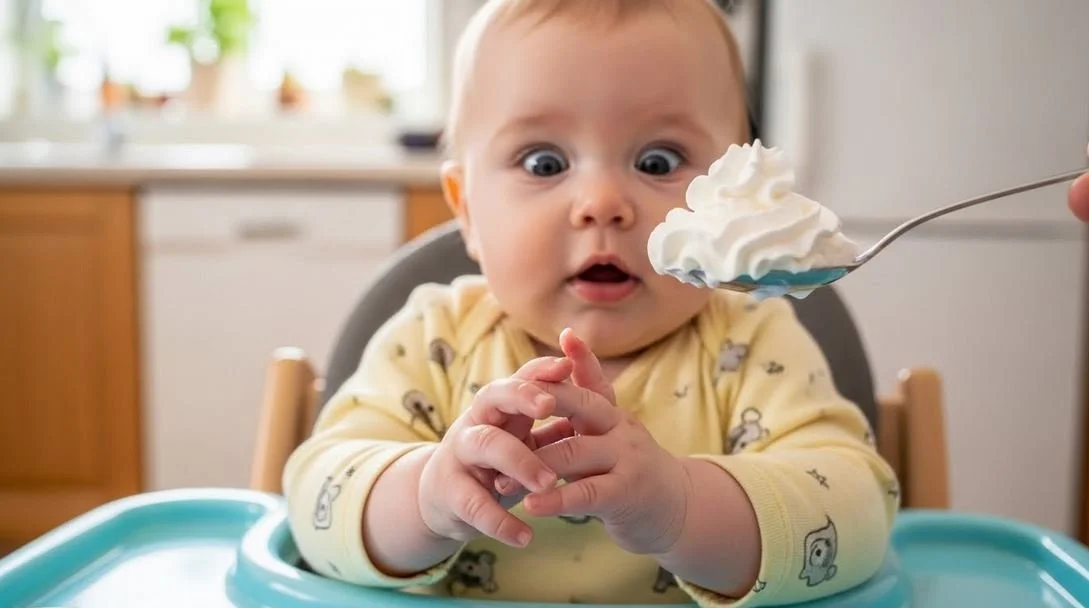
At this point, a very small taste of whipped cream is usually fine.
We’re talking about a tiny lick from a spoon or a fingertip amount during a special moment, not a full spoonful and certainly not a regular snack.
After a baby turns one, whipped cream becomes less of a big deal.
Also Read: Toddler Ate Apple Seeds
Many toddlers are already eating yogurt, cheese, and other dairy products by then. Their digestive systems are more mature, and occasional treats are easier to handle.
Whipped cream at this stage is still a treat, not a staple, but it’s generally not something parents need to panic about.
How Much Whipped Cream Is Ok For A Baby?
For babies under one year old, whipped cream should be a novelty. Something they taste once in a while, usually during a celebration or family moment.
A small swipe on a spoon is more than enough.
It’s about curiosity and experience, not calories.
For toddlers over one year old, the amount can increase slightly, but not by much. A spoonful here and there is fine. It still shouldn’t be piled onto desserts or offered daily.
If whipped cream is showing up often, it’s a sign to pull back. Babies and toddlers have small stomachs, and filling them up with foods that don’t offer much nutrition can crowd out the things they actually need to grow.
Homemade Vs Store-Bought Whipped Cream
If whipped cream is going to make a rare appearance in your baby’s world, the version you choose does make a difference.
Homemade whipped cream gives you full control. You can skip the sugar entirely or use just a tiny amount. You know there are no stabilizers or artificial ingredients hiding in the background.
For parents who like to keep things simple, this is the better option.
Store-bought whipped cream is convenient, but it often comes with added ingredients that don’t offer any benefit to babies.
The aerosol kind is especially processed, even though it looks fun and harmless.
If you’re deciding between the two, homemade wins for babies. It’s fresher, simpler, and easier to adjust based on your comfort level.
Potential Risks Parents Should Know
Whipped cream doesn’t come with scary warnings, but there are a few things parents should keep in mind so it stays a low-key treat instead of a problem:
Added sugar can shape taste preferences early and isn’t helpful for baby teeth
Dairy can cause gas, loose stools, or rashes in babies who are sensitive
Whipped cream doesn’t provide nutrients babies rely on, like iron or protein
Frequent sweet foods can make less-sweet options harder to accept later
Also Read: Baby Poop Smell Like Fish
Healthier Alternatives To Whipped Cream For Babies
Sometimes what babies really enjoy isn’t the sugar, but the texture. That creamy, smooth feel is often the main attraction.
If that’s the case, there are plenty of options that feel just as comforting while offering real nutrition.
Plain full-fat yogurt is a great choice. It’s creamy, easy to eat, and provides fat and probiotics that support growth. Mashed banana or avocado gives a similar soft texture with natural nutrients and no added sugar.
Unsweetened whipped coconut cream can also work for older babies, as long as it’s introduced slowly and in small amounts.
These options let babies enjoy something fun and soft without relying on sugary treats.
Bottom Line
Babies can have whipped cream with a lot of moderation. It’s not something to stress about, and it’s not something that needs to become a habit.
Babies under six months should skip it entirely. Babies between six and twelve months can have a tiny taste once in a while. Toddlers can enjoy small amounts on special occasions without it being a big deal.
Whipped cream is exactly what it looks like: a treat. Light, fun, and completely optional.
As long as most of your baby’s diet is built around nourishing foods, an occasional taste of something sweet isn’t going to undo all your good work.
Parenting is already full of enough pressure. This doesn’t need to be one more thing to worry about.