Baby’s Head Fell Back Unsupported? (Read This)
If you’re here, there’s a good chance your heart is still racing a little.
Your baby’s head fell back without support, and now your brain is doing that fun thing where it jumps straight to worst-case scenarios.
Take a breath.
You’re not alone, and this happens to more parents than anyone likes to admit.
This is incredibly common, especially in the early months. Babies have heavy heads, weak necks, and a talent for surprising even the most careful parent.
In this post, we’ll walk through what usually happens if your baby’s head fell back unsupported, when it’s truly a cause for concern, and how to move forward without carrying unnecessary guilt.
Is It Dangerous If A Baby’s Head Falls Back Unsupported?
In most everyday situations, a brief head flop is not dangerous.
Scary, yes. Heart-stopping, absolutely. But dangerous in the long-term sense? Usually not.
Babies’ neck muscles are still developing, especially in the first few months. Their heads are heavy compared to the rest of their body, so even a tiny shift in support can cause the head to fall backward.
When this happens for just a moment and there’s no hard impact involved, babies generally tolerate it well.

The real concern comes from force and impact.
A gentle flop back in your arms is very different from a head hitting a hard surface.
Pediatricians see parents for this exact worry all the time, and in the vast majority of cases, everything is completely fine.
So if the head tipped back briefly, you caught it quickly, and your baby didn’t slam into anything, that’s reassuring news.
Also Read: Baby Sleeping Sitting Up Folded In Half
Situations Where This Could Happen
This almost never happens because a parent is careless. It usually happens because real life is messy and babies don’t follow instructions.
It can happen during feeding when you’re adjusting your position and your baby suddenly straightens or arches. It can happen while lifting the baby out of a crib or car seat, especially if they surprise you with a wiggle.
Sometimes it happens when handing the baby to someone else and there’s that awkward half-second where both people think the other one has the head.
New parents feel this most, but even experienced parents get caught off guard.
Babies grow quickly, their movements change, and just when you think you’ve got it all figured out, they throw in a new move.
Signs Your Baby Is Likely Okay
After the initial panic fades, most parents start watching their baby like a hawk. That’s normal. What you’re looking for is your baby acting like… well, themselves.
Some reassuring signs include:
Your baby settles after a brief cry or doesn’t cry at all
Feeding continues as usual
Normal movement of arms and legs
Alertness that looks typical for their age
If your baby fussed for a moment and then went back to being their regular self, that’s a very good sign. Babies often cry simply because they were startled, not because they’re hurt.
Also Read: Dropped Phone On Baby’s Head
Warning Signs That Need Medical Attention
While most situations are harmless, there are some signs after your baby’s head fell back unsupported that should prompt a call to your pediatrician or a visit to urgent care.
These don’t mean something is definitely wrong, but they do mean it’s better to get checked.
Watch closely for:
Repeated vomiting, especially forceful vomiting
Extreme sleepiness or trouble waking your baby
High-pitched, unusual, or nonstop crying
Refusing feeds or sucking weakly
Stiffness, weakness, or reduced movement
Seizure-like movements or twitching
If you notice any of these, trust your gut and seek medical care. Doctors would much rather reassure you than have you sitting at home worrying.
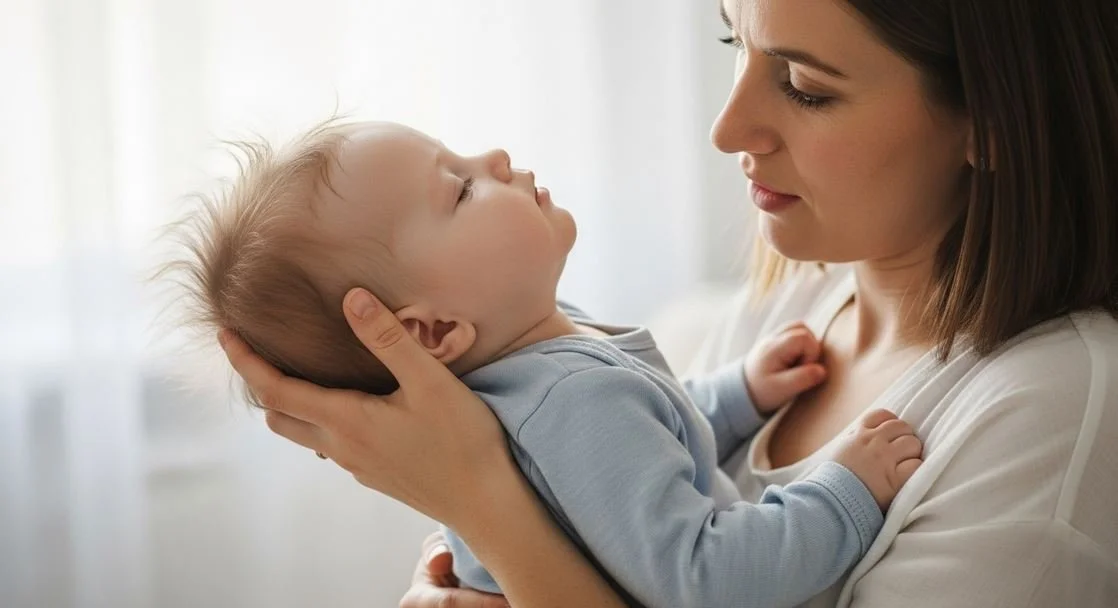
What To Do Right After It Happens
The moment it happens, your instinct might be to panic. Totally understandable.
But the best thing you can do for your baby is to stay calm and observe.
Gently support your baby’s head and neck and hold them close. Look at their face, their breathing, and how they’re moving. If they cry, comfort them like you normally would. Crying alone is not a bad sign.
Also Read: Why Is My Toddler Crossing Fingers?
You don’t need to keep waking your baby repeatedly if they fall asleep afterward and are sleeping normally.
Just keep an eye on their behavior over the next several hours. If something feels off, you’re always allowed to ask a medical professional for advice.
Peace of mind counts for a lot when you’re caring for a tiny human.
How To Prevent It Next Time
You don’t need to become paranoid or tense every time you hold your baby.
A few simple habits go a long way!
Always make sure one hand supports the head and neck when lifting, lowering, or carrying your baby.
When handing your baby to someone else, clearly say “I’ve got the head” or “You’ve got the head” to avoid that awkward handoff moment.
If someone isn’t used to holding babies, don’t hesitate to guide them or show them how to support them properly.
As your baby grows, their neck strength will improve, and these scares become much less common. This phase feels long, but it really does pass faster than you expect.
When To Trust Your Instincts
One of the hardest parts of parenting is learning to trust yourself. You’ll hear a lot of advice, read a lot of articles, and still feel unsure sometimes.
If your baby looks different to you, sounds different, or behaves in a way that makes your stomach drop, listen to that feeling. You know your baby better than anyone else.
Medical professionals take parental concerns seriously, especially when it comes to infants.
At the same time, don’t beat yourself up if everything turns out to be fine. These moments don’t mean you failed. They mean you’re human.
Bottom Line
A baby’s head falling back unsupported is one of those parenting moments that feels much worse than it usually is.
In most cases, a brief head flop without impact causes no harm at all. It’s scary, it sticks in your memory, and it might make you extra cautious for a while, but it doesn’t mean you hurt your baby.
Watch your baby, offer comfort, and look for signs that feel unusual. Reach out for medical advice if something doesn’t sit right with you.
And most importantly, give yourself some grace.