Baby Sleeping Sitting Up Folded In Half (Is This Normal?)
You walk into the room to check on your baby, expecting to see them stretched out peacefully. Instead, there they are. Sitting straight up. Head flopped forward. Body folded in half like a tiny sleepy accordion.
Your heart does a little jump, because honestly… how is that comfortable?
If you’ve seen your baby sleeping sitting up folded in half, you’re not alone. This is one of those baby things that looks deeply wrong but is often surprisingly normal.
Babies have a special talent for sleeping in positions that would absolutely wreck an adult’s back by sunrise. And yet, they snooze on.
In this post, I’ll explain why this happens, when it’s fine, when to step in, and how long this awkward-looking phase usually sticks around.
Why Do Babies Sleep Sitting Up Folded In Half?
There isn’t one single reason this happens. It’s usually a mix of development, timing, and plain old baby logic. Here are the most common ones:

#1 They Fall Asleep Where They Land
Babies don’t always plan sleep the way adults do.
They don’t think, “Ah yes, I shall now recline comfortably.” If they get sleepy while sitting, playing, or wobbling around the crib, they might just… stop.
So they slump forward. Their head drops. And suddenly, they’re out cold.
At this stage, many babies haven’t figured out how to smoothly lower themselves from sitting to lying down. That skill comes later.
Until then, they may just freeze in place and sleep exactly where sleep happens.
Also Read: Why Is My Toddler Crossing Fingers?
#2 Milestone Phase
This behavior often shows up right in the middle of a big developmental leap like:
Sitting independently
Crawling
Standing attempts
Brain growth
Physical growth
Sleep can get a little strange during these phases.
Babies love practicing new skills. Sometimes they practice them while falling asleep. Sometimes they forget to stop.
That’s how you end up with a baby sleeping sitting up folded in half.
#3 Developing Core Strength
Sitting up uses muscles babies are still learning to control. Their core, back, and neck strength are improving fast, but they’re not quite there yet.
When those muscles relax during sleep, gravity takes over.
That’s why you’ll often see babies folded forward, chin dipping down, back curved.
It’s just physics meeting a half-trained core.
The good news is this is often a sign of progress. Your baby is strong enough to sit independently, just not strong enough to keep perfect posture while fully asleep.
Fair enough. Most adults don’t manage that either.
#4 Self-Soothing
Some babies find this position comforting.
Sitting up, leaning forward, head tucked down can feel secure, almost like curling up.
It’s similar to how some babies like being held upright on a chest or fall asleep during feeding. The position may help them feel grounded and calm, especially when they’re overstimulated or extra tired.
It looks awkward from the outside, but babies aren’t judging aesthetics. They’re just doing what helps them settle.
Also Read: Baby Ate Paper
Is It Safe For Babies To Sleep Sitting Up?
This is the big question, and it’s completely fair to ask it. In many cases, the answer is yes, it can be safe, with a few important conditions.
Generally, it’s considered okay if your baby:
Can sit up independently without support
Has good head and neck control
Is sleeping on a firm, flat surface like a crib mattress
Is not in a container like a car seat, swing, or bouncer
Babies who meet these milestones can usually move their head or body if they become uncomfortable. They may shift positions, straighten up, or eventually tip over onto their side or back once they relax more deeply.
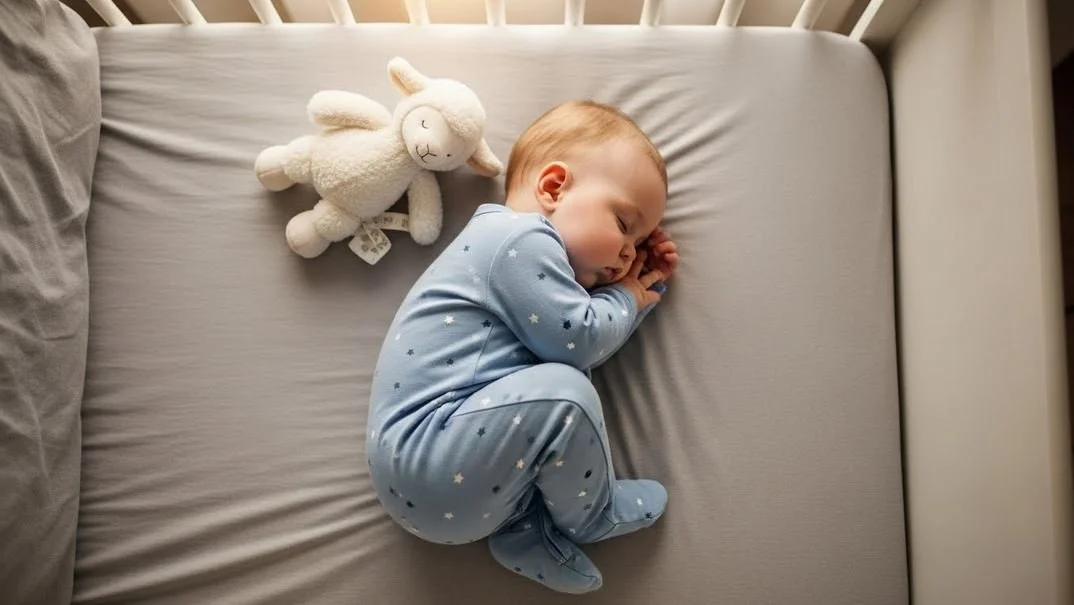
That said, you’re not wrong to feel uneasy seeing the chin pressed down toward the chest. Airway safety matters, and parents are wired to notice these things for a reason.
If your baby looks comfortable, is breathing normally, and is sleeping in a safe sleep space, short periods in this position are usually fine.
Many babies naturally adjust after a little while.
When Parents Should Be Concerned
There are times when it’s a good idea to step in or at least keep a closer eye.
You’ll want to be cautious if:
Your baby’s chin is tightly pressed to their chest for a long stretch of time
Breathing looks labored, noisy, or unusual
Your baby cannot yet sit independently
Sleep is happening in a car seat, swing, stroller, or bouncer
Your baby seems uncomfortable, restless, or keeps waking suddenly
Those container naps are especially important to watch. Sitting folded forward in a car seat outside of travel time can affect breathing because of the angle and positioning.
That’s one situation where repositioning or moving your baby to a crib is a smart move.
Trust your instincts here. If something looks off, it’s okay to gently adjust them.
Also Read: Dropped Phone On Baby’s Head
What Parents Can Do If Baby Falls Asleep Sitting Up
You don’t have to panic or rush in every time you see this.
There are a few simple, calm things you can do.
First, take a moment to observe. Is your baby breathing normally? Do they look relaxed? Are they in a safe sleep space? Sometimes just watching for a minute brings a lot of reassurance.
If you decide to act, you can gently lay your baby down once they’re fully asleep. Slow movements help avoid waking them.
Supporting the head and torso as you lower them onto their back usually works best.
Make sure the crib or sleep space stays clear. No pillows, rolled towels, or positioning props. Babies should always sleep on a firm mattress with nothing else around them.
And remember, you’re not required to fix it every single time. Many babies move on their own once they hit a deeper sleep cycle.
How Long This Phase Usually Lasts
Thankfully, this isn’t a forever thing.
Most babies sleep sitting up folded in half for a few weeks, sometimes a couple of months.
It tends to show up between around six and ten months, right when sitting becomes solid but transitioning out of sitting is still clumsy.
As babies learn how to lie down on purpose, roll more confidently, or pull up and crash from standing instead, this folded-sitting sleep position fades out.
One day you’ll realize you haven’t seen it in a while. And then your baby will probably find a new weird sleep position to replace it. Babies like to keep things interesting.
Also Read: Baby Poop Smell Like Fish
When To Talk To A Pediatrician
While this is usually harmless, there are times when checking in with your pediatrician is a good idea.
Reach out if:
Your baby consistently struggles with head control
Breathing seems affected in multiple positions
You notice frequent color changes around lips or face
Your baby seems unusually floppy or stiff
Your gut keeps telling you something isn’t right
You don’t need to wait for a dramatic symptom. Pediatricians hear questions like this all the time, and they’d much rather reassure you than have you worry at home.
Bottom Line
Seeing your baby sleeping sitting up folded in half can be shocking, funny, and stressful all at once. It looks uncomfortable. It looks unsafe. It looks like something you should fix immediately.
In most cases, it’s just a normal developmental phase tied to learning how to sit and control a growing body.
As long as your baby can sit independently, is breathing normally, and is sleeping in a safe environment, this position is usually not a problem.
And know that this phase, like so many baby phases, passes faster than you expect. Soon enough, you’ll be worrying about an entirely different strange thing your baby does in their sleep.
And you’ll look back on this one and laugh, coffee in hand, wondering how something so tiny managed to sleep like that at all.